Abstract
Background: Toxoplasma gondii is a prevalent protozoan parasite infecting a large number of the general worldwide population. In immunocompetent individuals, infections are often asymptomatic but may remain latent for extended periods of time. Despite latency, T. gondii stays biologically active, establishing a chronic presence within host cells and may trigger ongoing immune responses.
Objectives: This scoping review explores existing evidence of T. gondii interactions with the host immune system and responses in regards to cancer development and protection against neoplastic processes.
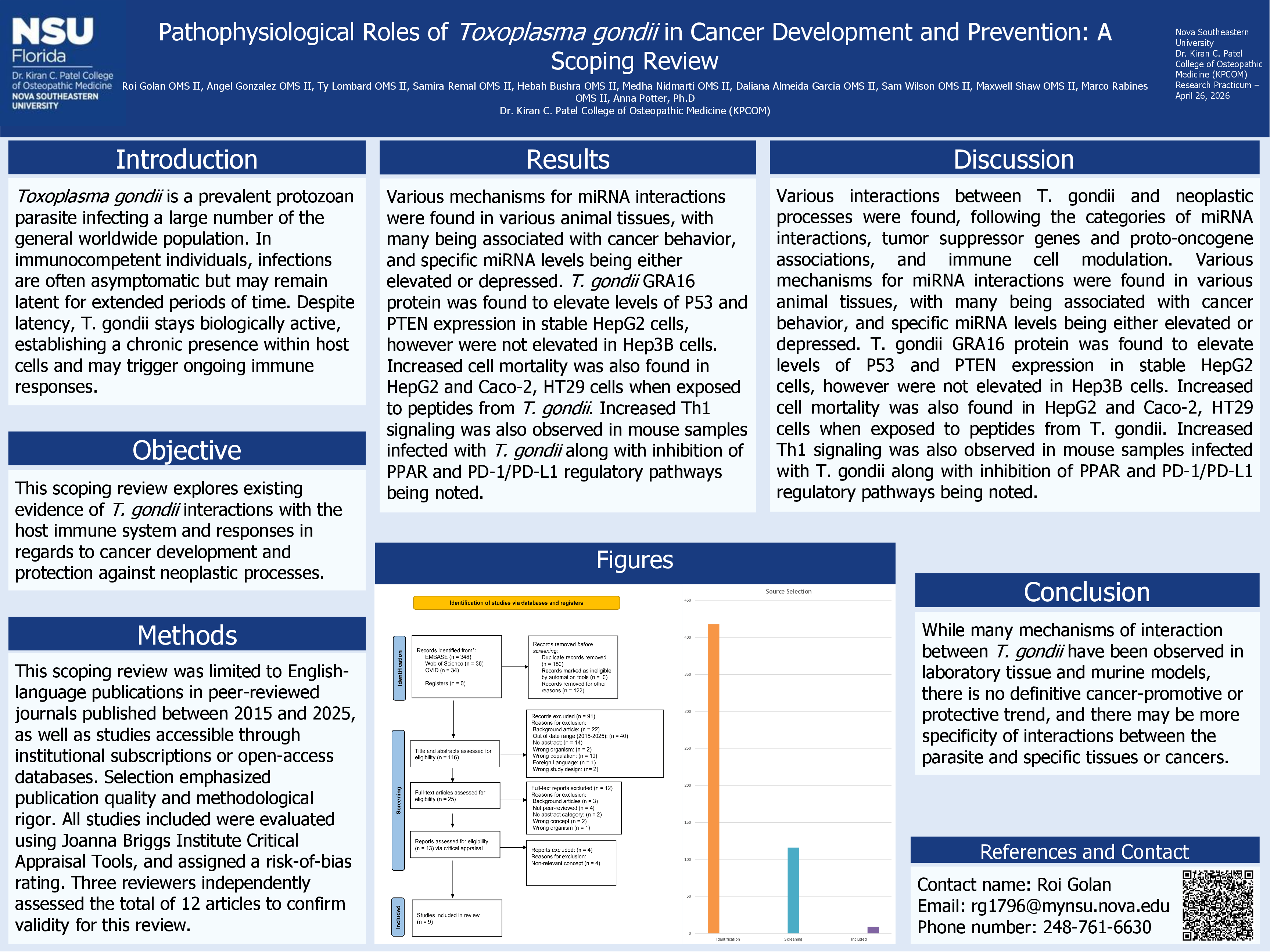
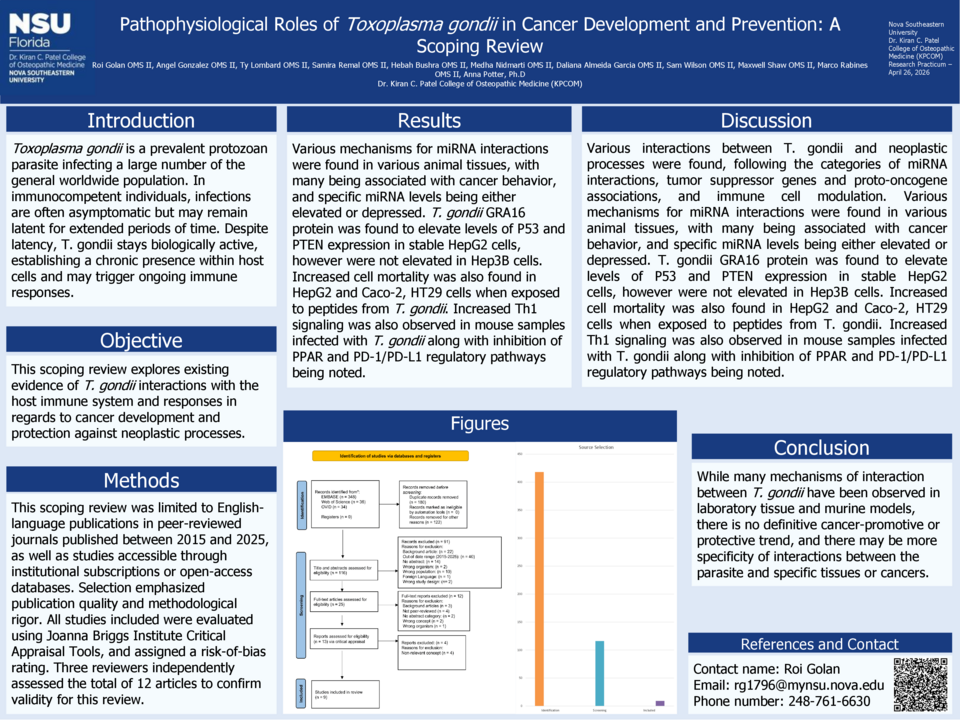
Methods: This scoping review was limited to English-language publications in peer-reviewed journals published between 2015 and 2025, as well as studies accessible through institutional subscriptions or open-access databases. Selection emphasized publication quality and methodological rigor. All studies included were evaluated using Joanna Briggs Institute Critical Appraisal Tools, and assigned a risk-of-bias rating. Three reviewers independently assessed the total of 12 articles to confirm validity for this review.
Results: Various interactions between T. gondii and neoplastic processes were found, following the categories of miRNA interactions, tumor suppressor genes and proto-oncogene associations, and immune cell modulation. Various mechanisms for miRNA interactions were found in various animal tissues, with many being associated with cancer behavior, and specific miRNA levels being either elevated or depressed. T. gondii GRA16 protein was found to elevate levels of P53 and PTEN expression in stable HepG2 cells, however were not elevated in Hep3B cells. Increased cell mortality was also found in HepG2 and Caco-2, HT29 cells when exposed to peptides from T. gondii. Increased Th1 signaling was also observed in mouse samples infected with T. gondii along with inhibition of PPAR and PD-1/PD-L1 regulatory pathways being noted.
Conclusion: While many mechanisms of interaction between T. gondii have been observed in laboratory tissue and murine models, there is no definitive cancer-promotive or protective trend, and there may be more specificity of interactions between the parasite and specific tissues or cancers.