Abstract
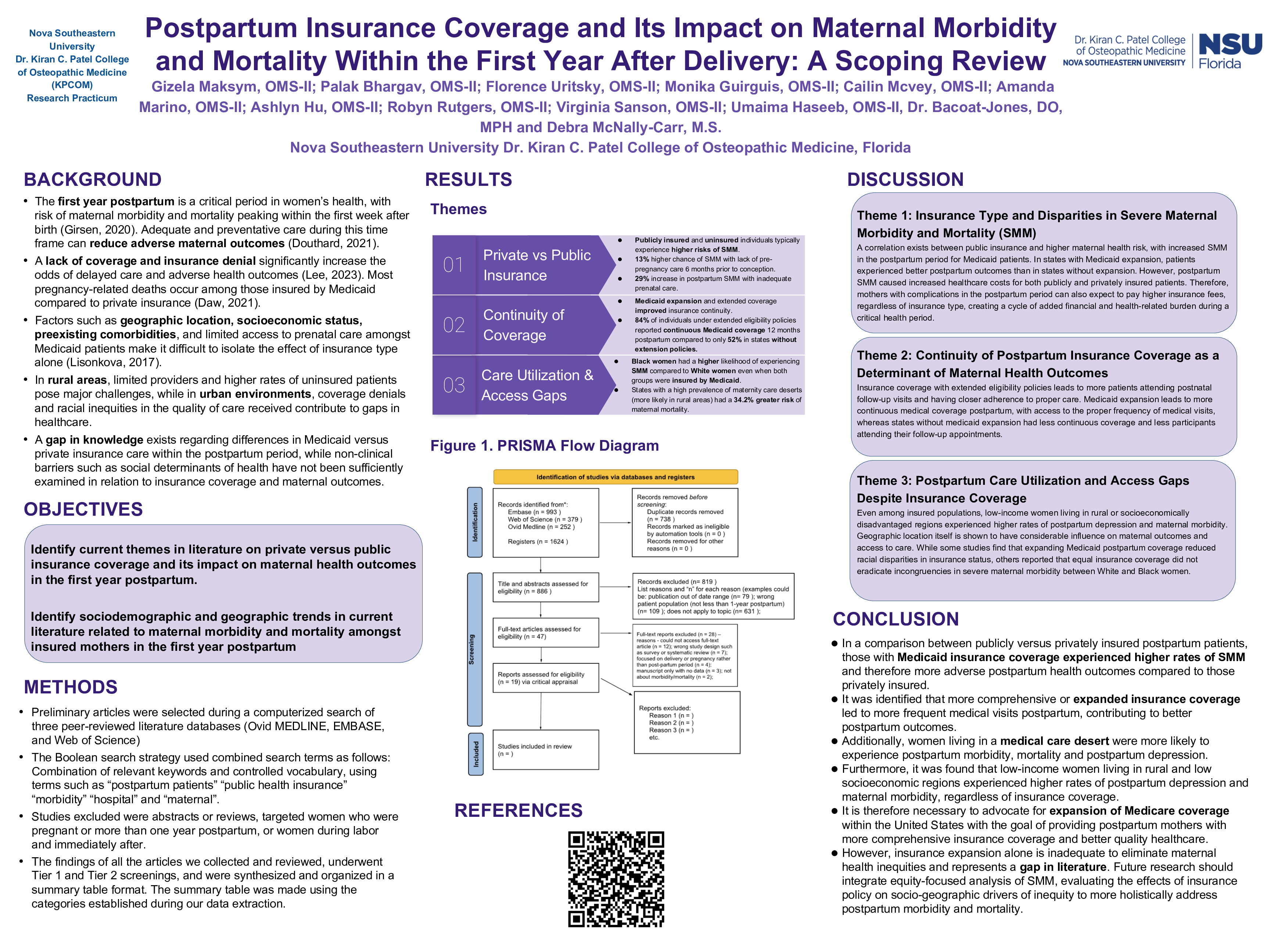
Background: Access and quality of postpartum care is a significant determinant of maternal health outcomes. While postpartum causes of severe maternal morbidity and mortality (SMM) are multifactorial, insurance coverage can impact availability and quality of care. The goal of this scoping review was to identify themes in current literature on the relationship between private versus public insurance and SMM within the first year postpartum, as well as distinguish related factors such as sociodemographic and geographic patterns to improve postpartum healthcare in the United States.
Objectives: The primary objectives of this study are to identify current themes in literature on private versus public insurance coverage and their impact on maternal health outcomes in the first year postpartum, as well as identify sociodemographic and geographic trends in current literature related to SMM amongst insured mothers in the first year postpartum.
Methods: This scoping review was conducted per the JBI methodology and reported following the PRISMA-ScR guidelines. The search strategy used Ovid MEDLINE, EMBASE, and Web of Science to identify peer-reviewed studies published between 2015–2025, examining insurance coverage and its effects on maternal postpartum outcomes. Studies excluded were abstracts or reviews, targeted women who were pregnant or more than one year postpartum, or women during labor and immediately after.
Results: In total, 19 studies were included in this scoping review. Three themes were identified that served as determinants of postpartum maternal health outcomes: private versus public insurance coverage, continuity of insurance coverage, and postpartum care utilization and access gaps. Among all insurance types, preexisting comorbidities and inadequate prenatal care were the most prevalent risk factors for SMM. However, studies demonstrated that publicly insured and uninsured individuals experienced higher SMM compared to those privately insured, attributable to disparities in continuity of care, patient utilization of insurance and care access. Medicaid expansion efforts and extended coverage were shown to improve outpatient care continuity while decreasing mortality in expansion versus non-expansion states. However, disparities in race, socioeconomic status, rural living, maternal care deserts and insurance churn persist and were correlated with greater SMM, regardless of insurance status.
Conclusion: This study explored major trends in current postpartum healthcare studies in an effort to impact insurance policy and improve maternal outcomes. However, insurance expansion alone is inadequate to eliminate maternal health inequities and represents a gap in literature. Future research should integrate equity-focused analysis of SMM, evaluating the effects of insurance policy on sociogeographic drivers of inequity to more holistically address postpartum morbidity and mortality.