Abstract
BACKGROUND
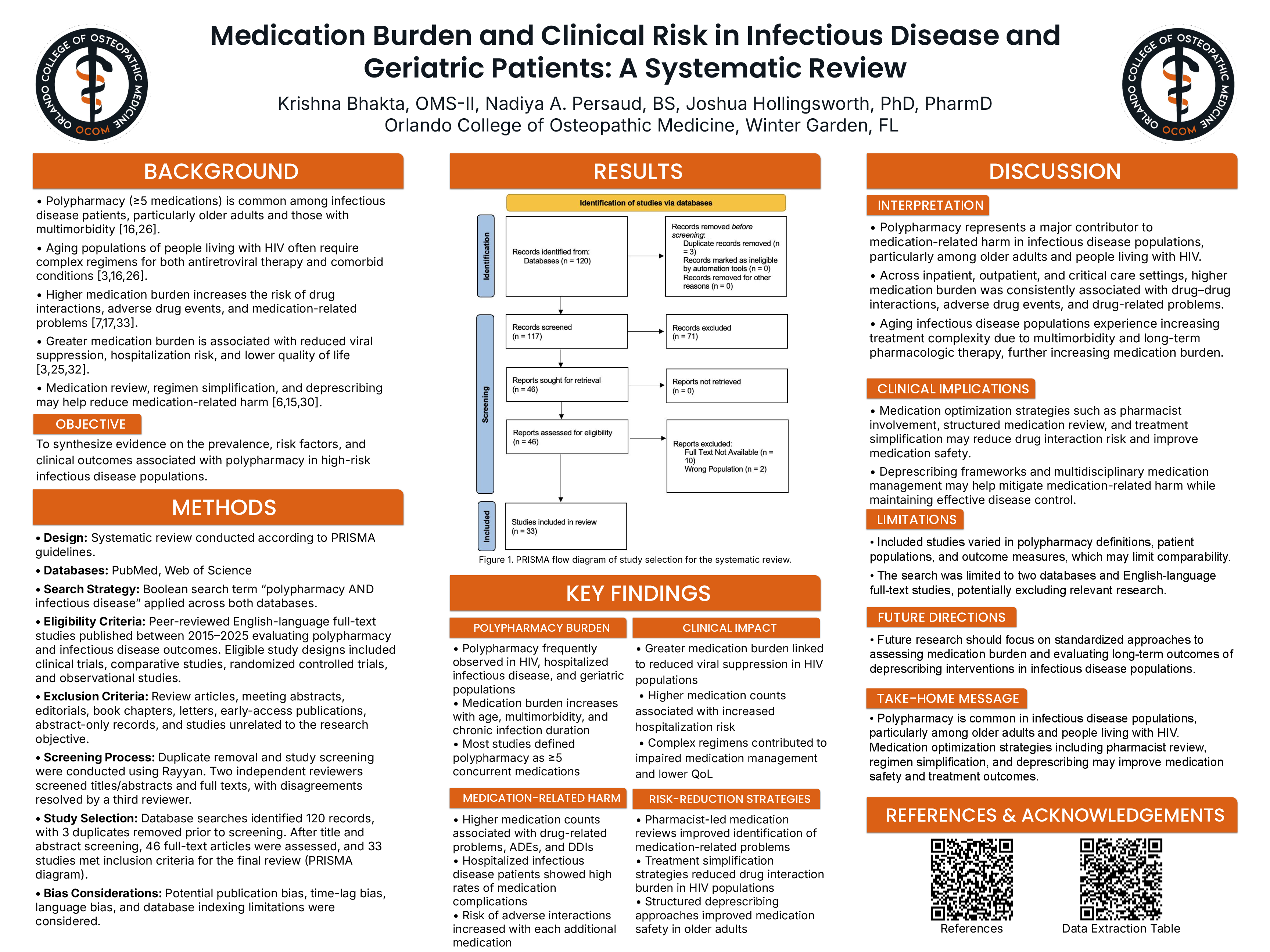
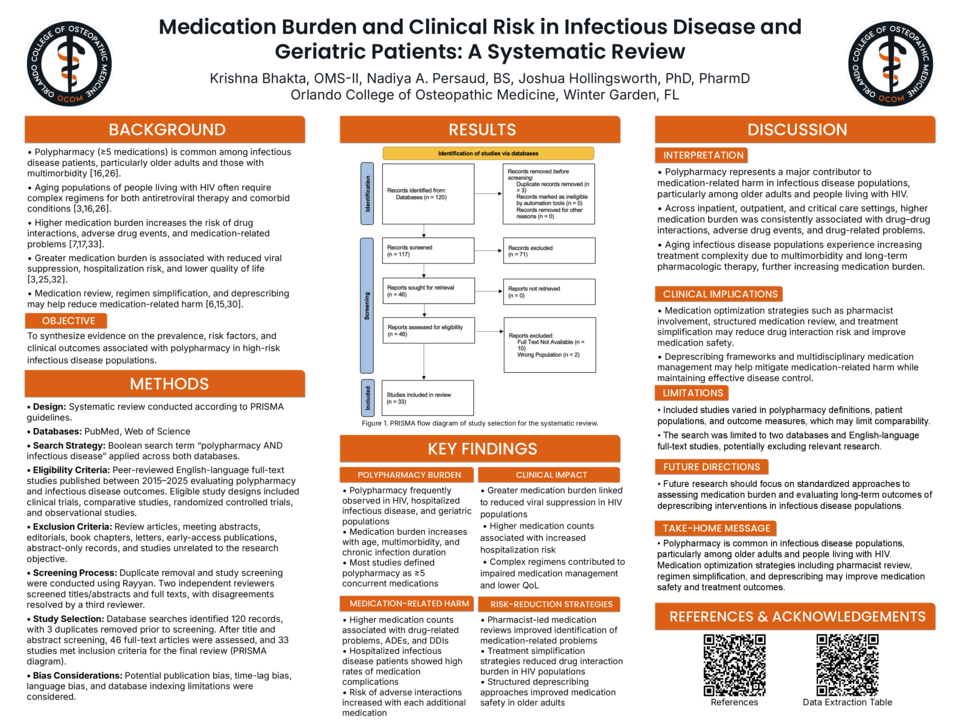
Polypharmacy is increasingly common among patients with infectious diseases, particularly among older adults and individuals with multiple chronic conditions. Advances in treatment for chronic infections such as HIV have improved survival but have also led to more complex medication regimens required to manage comorbidities and long term therapy. As patients age and accumulate additional health conditions, medication burden often increases. This growing complexity may contribute to adverse drug events, drug interactions, reduced adherence, and lower quality of life. Older adults may be especially vulnerable because age related physiological changes and multimorbidity can complicate medication management. This systematic review evaluates the risks and clinical outcomes associated with polypharmacy in infectious disease populations and examines strategies to improve medication safety in aging and medically complex patients.
METHODS
This systematic review was conducted in accordance with Preferred Reporting Items for Systematic Reviews and Meta Analyses guidelines. Literature searches were performed in PubMed and Web of Science using the terms polypharmacy AND infectious disease. Eligible studies included peer reviewed original research articles published in English between 2015 and 2025 that examined the relationship between polypharmacy and infectious disease related outcomes. Study designs included clinical trials, comparative studies, and observational studies. Two reviewers independently screened titles and abstracts using predefined eligibility criteria, followed by full text review. Disagreements were resolved through discussion with a third reviewer. Data were extracted on study populations, medication burden, outcomes, and intervention strategies.
RESULTS
Thirty-six studies met inclusion criteria. Most examined people living with HIV, hospitalized infectious disease patients, and aging populations with multiple comorbidities. Polypharmacy was consistently associated with increased risk of drug related problems, adverse drug events, and clinically significant drug interactions. Higher medication counts were also linked to reduced viral suppression in some HIV populations, increased hospitalization risk, and impaired medication management among older adults. Greater medication regimen complexity was associated with lower health related quality of life. Several studies reported that pharmacist led medication reviews and regimen simplification strategies improved medication safety.
DISCUSSION
Polypharmacy reflects the growing complexity of infectious disease care and contributes to medication related harm, particularly among aging patients and those with chronic infections. Structured medication review, multidisciplinary care, and deprescribing strategies may reduce medication related risks while maintaining effective disease management.