Newsroom
The Link Between Rheumatoid Arthritis and Dementia
An article on the link between Rheumatoid Arthritis and Dementia published in Cureus was recently picked up by the Rheumatoid Arthritis Advisor. Read the Cureus article: The Link Between Rheumatoid Arthritis and Dementia: A Review Click the link below to see the news story.
Nov 20, 2020

Potential Role of Xylitol Plus Grapefruit Seed Extract Nasal Spray Solution in COVID-19
An article on the potential role of Xylitol plus grapefruit seed extract nasal spray solution in Covid-19 published in Cureus was recently picked up by News.Medical.net Read the Cureus article: Potential Role of Xylitol Plus Grapefruit Seed Extract Nasal Spray Solution in COVID-19: Case Series Click the link below to see the news story.
Nov 17, 2020

The Democratization of Medical Publishing as Seen on NBC, FOX, and more
Since the dawn of the medical journal at the beginning of the 18th century, politics, elitism and costs have heavily restricted the publishing of important medical research and clinical observations. The Cureus Journal of Medical Science (pronounced “curious”) was conceived by neurosurgeon and entrepreneur John R. Adler, M.D., with a mission to democratize medical knowledge thereby making it more accessible to physicians, researchers, patients, caregivers and the general public. Cureus is the first and only medical journal to offer a DIY approach to scientific publishing, providing unique step-by-step article templates to speed the publication process while ensuring 100 percent free access for readers. In 2020 Cureus’ submissions tripled relative to last year, partly attributable to the velocity with which important new medical knowledge was being generated around Covid-19. Many of these articles were case reports documenting critical observations from the frontlines of the pandemic. Cureus believes in the unique value of patient case reports, the observations contained within being necessary first steps for driving all of medical science. Invaluable first-hand experience acquired in the trenches of harried hospitals and clinics, mandates efficient documentation and communication; that is what Cureus case reports enable. “We subscribe to the belief that all credible medical knowledge can and should have an audience,” said Dr. Adler, founder and chief executive officer of Cureus, and editor-in-chief of The Cureus Journal of Medical Science. “Authors trust Cureus for rigorous yet efficient peer-review, and then for us to provide an entire world of readers unimpeded free access to the content within” Cureus aims to publish millions of articles per year. Published articles are discussed and rated by a Cureus audience of more than 3.5 million readers. This is accomplished via the journal’s unique post-publication peer review rating process, Scholarly Impact Quotient, or SIQ™ score. Readers assign their rating to help determine article quality and clinical significance. SIQ™ harnesses the innate “wisdom of the crowd,” including peer reviewers, editors, colleagues, and doctors and researchers, to assess article importance. Cureus is indexed in PubMed, Google Scholar, Web of Science and other indexing services. About Cureus The Cureus Journal of Medical Science is a no-cost peer-reviewed online medical publishing platform that leverages a unique crowd-sourced post-publications review process. Relying on the collective intelligence of its clinical community, Cureus enables faster publication, greater access, and ultimately, better research. For more information about publishing and peer reviewing with the Cureus Journal of Medical Science, or to access cutting edge medical research visit www.cureus.com. Media Contact Company Name: The Cureus Journal of Medical Science Contact Person: Henrik Bacho Email: Send Email Phone: 415-308-5586 Country: United States Website: https://www.cureus.com/
Nov 11, 2020
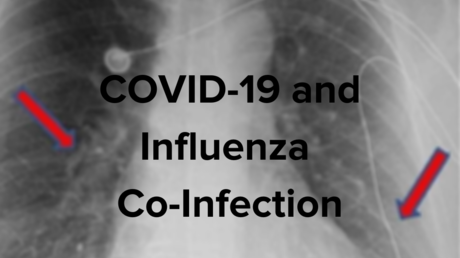
What Will Happen When COVID-19 and the Flu Collide This Fall?
Read the Cureus article: COVID-19 and Influenza Co-Infection: Report of Three Cases. Please note the bolded text below from an excerpt of this news story demonstrating the importance of publishing case reports as quickly as possible - a goal Cureus proudly tries to achieve. Click the link below to see the news story.
Oct 06, 2020

Healthcare Professionals, Trauma, and Resilience
An article published in Cureus on burnout among United States healthcare professionals was recently picked up by MultiBriefs. Read the Cureus article: Burnout in United States Healthcare Professionals: A Narrative Review Click the link below to see the news story.
Aug 29, 2020

New Mutation That Causes Fabry Disease Found in GLA Gene
An article published in Cureus on the rare etiology of renal failure in a 25-year-old caucasian man was recently picked up by Fabry Disease News. Read the Cureus article: Rare Etiology of Renal Failure in a 25-Year-Old Caucasian Man: Fabry Disease With a Novel Mutation of GLA Gene Click the link below to see the news story.
Aug 20, 2020
Pulmonary Arterial Hypertension Caused by Undiagnosed Systemic Sclerosis
An article on multifactorial pulmonary hypertension in systemic sclerosis published in Cureus was recently picked up by Pulmonary Hypertension News. Read the Cureus article: Multifactorial Pulmonary Hypertension in Systemic Sclerosis Click the link below to see the news story.
Aug 20, 2020

The Science Behind Mindfulness Meditation
An article on mindfulness-based cognitive behavioral therapy published in Cureus was recently picked up by Northrop Grumman's publication, Now. Read the Cureus article: Mindfulness-Based Cognitive Behavioral Therapy as an Adjunct Treatment of Attention Deficit Hyperactivity Disorder in Young Adults: A Literature Review Click the link below to see the news story.
Aug 18, 2020

Since When is “Fast and Efficient” a Shortcoming?
Read the latest blog post from Cureus Editor-in-Chief, John R. Adler, Jr., M.D. This past winter, I was notified in a short email that a scientific journal directory intended to drop Cureus from its list of preferred Open Access journals. No matter how specious any claim to exclusivity might be, who doesn’t crave getting past the big burly doorman guarding “The Club”? I reached out to this burly “Editor-in-Chief” of a “fraternity of journals” asking him how and why he arrived at his decision. After six email requests over nearly five months, I finally received a terse three-sentence 72-word response. In the eyes of the “Editor-in-Chief”, Cureus’ primary shortcoming was “submission to publication times are extremely short and you advertise your speed.” Basically, as I interpret this email rejection, Cureus’ sin is that it’s just too damn fast and efficient. Ahh… yeah, I guess Cureus is guilty as charged. What am I, or any of us here to make of this criticism? Totally dumfounded, I sent my parting shot to the doorman: “I find it more than ironic that the unique attributes of Cureus which we the journal editors most celebrate as virtues, are antithetically interpreted as shortcomings.” Ultimately, the issue at hand here is not really just about an indexing service and its gatekeeper. For me, what’s really at stake is a common understanding of the role medical knowledge plays in our modern world and, most importantly, does the existing journal paradigm serve this function? Unfortunately, I suggest not. In fact, the obliviousness with which the doorman dismissed efficient journal peer review and publication is emblematic of what happens today at nearly all journals. All too typically the journal industry is run by a self-righteous professional editorial class which seeks to reinforce tradition and aristocracy at the expense of efficiency and low costs, while laughing all the way to the bank. A quick search of PubMed and Google revealed that our critic had published a modest collection of basic science articles and nearly all published in the past decade were about scholarly publishing itself. Yet even more telling, he had zero obvious experience in clinical medicine. Somehow this guy deemed himself anointed by some unknown entity to judge how we physicians generate, curate and disseminate potentially life-saving medical knowledge amongst ourselves. What entitles him to be such a judge? Sure, it is always nice to be part of “The Club”, but ultimately, I would much rather be appreciated as THE peer-reviewed journal that offers fast and cost-efficient service to our community of hardworking clinically-oriented authors. If Cureus is to be judged, I want it to be our user community that gets the last word. In the meantime, I intend Cureus’ technology and processes to improve relentlessly thereby making the process of peer review and publication in Cureus even faster. Hopefully you can bank on that, Mr. Doorman!
Aug 11, 2020

Doctors' Health and Burnout
An article on burnout in the United States among healthcare professionals published in Cureus received press in MD Links. Read the Cureus article: Burnout in United States Healthcare Professionals: A Narrative Review Read the story from MD Links: The top factors devastating doctors' health.
Aug 06, 2020

Study Suggests: Women With Sarcoidosis Have Higher Mortality Risk From Heart Conditions
Read the Cureus article: Gender Differences in Rates of Arrhythmias, Cardiac Implantable Electronic Devices, and Diagnostic Modalities Among Sarcoidosis Patients Click the link below to see the news story.
Jul 17, 2020
Wear a Damn Mask, PLEASE!
Read the latest blog post from Cureus Editor-in-Chief, John R. Adler, Jr., M.D. When Covid first appeared in the US, several Asian physician friends had simple advice for me, “Wear a mask.” Having dealt with various coronaviruses for over a decade, this was the fundamental lesson taken from dealing with and controlling these respiratory viruses. Now, I may only be a dumb neurosurgeon, (said with humility, irony and in jest), but I know a thing or two about masks, having spent 30 years of life wearing them, sometimes for 12 or more hours at a time. There is nothing pleasurable about wearing a mask, but I have experienced first-hand how masks can protect patients and physicians from illness. More broadly I have seen how masks can protect healthcare workers from the worst of infectious diseases, even giving them supernatural-like protection when they must enter the belly of the beast while caring for highly contagious and fatal illnesses like Ebola. Meanwhile, each and every day, healthcare workers all over the world, including my own family members are able to avoid infection while caring for hospitalized Covid patients who are often spewing the virus everywhere. It’s incontrovertible - masks truly work!; they prevent Covid infections. So why is it that some people contest the efficacy of masks and refuse to wear them? Perhaps they’ve heard claims that wearing a mask poses a health risk such as hypoxia (when the body is deprived of oxygen) or hypercapnia (excessive carbon dioxide in the bloodstream). A plastic bag might do such a thing but certainly never a cloth mask, the preferred personal protection equipment (PPE) for the public. More sophisticated surgical masks and N95 respirators tend to fit more tightly than a cloth mask but they never result in hypoxia or hypercapnia. Meanwhile these more sophisticated tight fitting masks are generally reserved for healthcare professionals who sometimes can be literally engulfed in a cloud of airborne Covid-19 particles when dealing with very sick patients. No matter, masks trap only a tiny bit of carbon dioxide which is why as a surgeon I could wear one all day while performing very demanding surgeries. Even most patients with asthma and chronic obstructive pulmonary disease, or COPD, can AND SHOULD wear masks unless they are in the middle of an extreme exacerbation of their disease. So damn it, why can’t y’all just wear masks when in public? Deep down I am a lifelong libertarian, and truly cherish freedom as much as any, but to equate wearing a mask with subjugation is just plain stupid. Neither is going maskless some expression of courage! I am asking you to wear a mask not to protect yourself, but so that you might protect other people, especially truly vulnerable individuals. OK, maybe you don’t give a sh*t about yourself or others; then wear a mask because you don’t want to be poor. Rampant Covid infections are interfering with US domestic economic activity but especially between the US and the rest of the world. If you haven’t heard, or experienced first-hand, Covid is really REALLY bad for the US economy. So what is it? What is your excuse for not wearing a mask when you are in public? Damn it, you are out of excuses. Covid-19 may be one badass virus, but it turns out it is no match for masks. So please, please, please wear a mask… and by the way, wash your hands too!
Jul 06, 2020