Most Discussed Articles
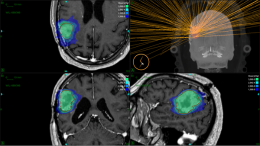
Reirradiation of Large or Multifocal High-Grade Gliomas With Gyroscopic Radiosurgery in Combination With Modulated Electro-Hyperthermia
High-grade gliomas (HGG), grade 3 and 4, according to the 2021 World Health Organization (WHO) CNS5 classification system, are the most prevalent malignancies of the central nervous system (CNS)...read more.
What Readers Are Saying:
“It is vital to continue studying new approaches in patients with recurrent high-grade gliomas (HGG), especially those with target-volume multifocal disease, which generally have a worse prognosis. It is also very important to form specialized teams with experience that include CT, MRI, and, ideally, nuclear medicine to categorize the behavior of these tumors with greater precision. This is impressive, high-level work.”
— Silvia Hansing Sr., PhD
“It is a very promising way to approach those patients that have spent their treatment options. Congrats. Just to start this protocol in my hospital.”
— Jorge Camarona M, MD, MMSc
“This medical article provides an exceptionally clear and comprehensive overview of its complex topic, presenting well-researched evidence and insightful conclusions that are highly valuable for both clinicians and researchers. Congratulations.”
— Beatriz Martín, MSc
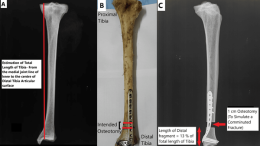
Evaluation of the Stability of Internal Fixation Constructs in a Low Distal Tibia Extra-articular Cadaveric Fracture Model: A Comparative Biomechanical Study
Distal tibial fractures are complex injuries that present with a unique set of problems, owing to the subcutaneous nature of the bone, relatively poor blood supply, and proximity to the ankle joint…read more.
What Readers Are Saying:
“This is a well-constructed and executed study that has clinical relevance and helps guide implant selection in certain types of distal tibia fractures. There are limitations in any study, as the authors alluded.”
— Vinod Panchbhai, MD, Professor
“Excellent cadaver study investigating the stability of internal fixation constructs in a low distal tibia extra-articular fracture model. Provides valuable insights for orthopedic procedures. Assessing biomechanical factors in cadaveric models can offer significant contributions to improving surgical techniques and patient outcomes.”
— Daman K. Jha, MBBS
“It is a unique original article with a well-constructed study which is going to guide us for implant selection in certain types of distal tibia fractures.
There is always a great controversy while choosing the implant for internal fixation of extra-articular distal tibia fractures.
This biomechanical study on cadavers evaluates the stability of internal fixation constructs in AO type 43A.3 fractures. The authors have recommended the use of a locked nail for these fractures and emphasized that the anterolateral plate construct has the least biomechanical stability.”
— Dr. Hari O. Aggarwal, Professor
|