Newsroom

Research Integrity at Cureus: Upholding Ethical Standards in Modern Medical Publishing
One of the most important responsibilities in medical publishing is ensuring that published research remains ethical, transparent, and scientifically trustworthy. As global research output continues to grow, maintaining strong research integrity standards is essential for protecting scientific credibility, supporting evidence-based medicine, and fostering trust between journals, researchers, clinicians, and patients. At Cureus, ethical publishing practices are embedded throughout the editorial and peer review process. Our newly launched Research Integrity page outlines the principles, policies, and procedures that guide how Cureus supports responsible medical publishing while maintaining rigorous scientific oversight. The new Research Integrity page highlights Cureus’ commitment to ethical publishing, scientific transparency, independent peer review, and responsible editorial oversight. It also outlines how the journal addresses concerns including plagiarism, data falsification, duplicate publication, undisclosed conflicts of interest, and peer review manipulation in accordance with established publishing standards. To support research credibility, all submissions undergo multiple stages of editorial and peer review evaluation by independent reviewers, editors, and advisers. The Research Integrity page also provides additional information on: Retractions and corrections Transparency and reporting standards Ethical publishing expectations COPE-aligned misconduct investigations Author support resources Editorial compliance guidance As medical publishing continues to evolve, Cureus remains committed to balancing publishing efficiency with rigorous ethical oversight and scientific responsibility. Explore the new Research Integrity page to learn more about how Cureus supports ethical, transparent, and trustworthy medical publishing.
May 08, 2026
Why I Chose Cureus Video Guide
Are you a clinician, or healthcare researcher who’s published with Cureus? This guide is for you, whether you're early in your publishing journey or have years of academic experience. Why Make a Video? You’ve already taken a big step by publishing your work. Now it’s time to share why. These short videos will be featured on Cureus’ social media platforms (YouTube, LinkedIn, Instagram, Facebook, X) and in other promotional ways to: Help Others Discover the Right Path Your story can guide new authors, students, trainees, and researchers who are unsure how or where to start. Elevate Your Academic Profile and Get Noticed Showcase your voice and leadership through video testimonials demonstrating communication skills, initiative, and a strong professional presence. Inspire a Global Community Highlight the knowledge and diversity of authors publishing with Cureus from around the world. Who Should Submit? We welcome videos from: First-time authors: Share your excitement and how Cureus helped you publish your first paper. Please mention the senior author who supervised your research in your video to ensure proper acknowledgment. Experienced clinicians and researchers: Reflect on the benefits of publishing with Cureus and why you keep coming back. Authors from all over the world: We aim to spotlight a diverse mix of voices and experiences, your story matters. What Should I Say? This short video is a reflection of your journey with Cureus. Think: “If a colleague asked me why I published with Cureus, what would I say?” Here’s a simple structure to follow. Feel free to make it your own! 1. Introduction Your name, title/role, institution “I’m Dr./Mr./Ms. [Name], a [role/specialty] at [Institution]. I recently published in Cureus.” 2. Your Article Clearly state the title of your article. If this is your first Cureus publication, you’re welcome to mention that. If you’ve published with us before, let viewers know how many times. 3. Why Cureus? What drew you to publish here? E.g., quick publication, user-friendly process, peer-review quality, visibility, or author support. 4. Your Experience Describe the journey: E.g., “The editorial team was very responsive,” or “The peer review feedback was thoughtful.” 5. What Stood Out? What made Cureus unique for you? E.g., “I appreciated the open-access model,” or “The author dashboard made things simple.” 6. Advice for Future Authors Share any tips or suggestions you have for new contributors. E.g., “Make sure your figures are clear,” or “Reach out to co-authors early in the process.” 7. Encourage Others A closing message: E.g., “I highly recommend Cureus to any researcher looking for a credible and efficient publishing experience.” Tips for Recording Keep it short: Aim for 1-2 minutes. Tone: Warm, confident, and authentic. Lighting: Face a window or use soft lighting. Sound: Use earphones with a mic or record in a quiet room. Camera: Use your phone or webcam and keep it eye-level and steady. (use a tripod if you have one). Background: Clean, neutral, or professional setting Suggested Video Editing Tools To help you create a polished and professional video, here are some easy-to-use (and mostly free!) tools we recommend: CapCut – Great for mobile and desktop editing, with templates and text overlays. iMovie – Trusted by Mac/iOS users for simple and clean editing. InShot – A mobile-friendly app perfect for trimming and adding subtitles. Clipchamp – Built into Windows; great for quick, clean edits. Canva Video Editor – Browser-based and beginner-friendly with drag-and-drop features. Adobe Premiere Rush – A lighter, more accessible version of Premiere Pro, ideal for quick edits on the go. Submission You can share your video using Google Drive, WeTransfer, or any other method that works best for you; just be sure the sharing settings allow us to download the file. Once you're done, please email your video file or a link to download it (MP4 or MOV) to: [email protected] What Happens Next? Your video will be reviewed by the Cureus team. (We reserve the right to decline or suggest edits.) Approved videos will be posted to the Cureus’ YouTube, LinkedIn, Instagram, Facebook, and X accounts. We’ll tag you when your video goes live. Feel free to reshare! Need Help? Whether you're unsure what to say, need help editing, or want to brainstorm your message, We're here to support you! Reach out to: [email protected] Let your voice be heard. Inspire the next wave of medical publishing. We can't wait to hear your story
Mar 06, 2026
Cureus in 2025: A Year of Global Growth and Impact
Happy New Year From Cureus! As we reflect on an extraordinary year, we’re thrilled to celebrate the incredible momentum we built together in 2025: amplifying medical knowledge, expanding our global reach, and breaking down barriers in publishing. With more than 250,000 brand new members joining the Cureus community, your contributions helped shape a more connected, collaborative, and inclusive future for medical science. Thank you for being a vital part of this movement. We couldn’t have done it without you. Citations Are Climbing. Fast. According to Crossref, Cureus articles were cited 65,909 times in 2025, a 53% increase over 2024’s 43,146 citations. That’s part of a five-year trend of accelerating impact. We’ve now surpassed 163,000 total citations, proving that Cureus articles aren’t just being read, they’re shaping clinical conversations and driving real-world impact. More Submissions and Article Reads. In 2025, Cureus received nearly 50,000 article submissions, marking continued growth in author participation. On top of that, on-site article reads increased by 30%, reflecting a surge in global readership and demand for accessible, high-quality medical research. New Market Growth Momentum is building around the world. In 2025, Cureus saw article publication growth across many countries, demonstrating our expanding global presence and commitment to accessible publishing for all. Here’s a sampling of the regions where author activity surged this year: 🇬🇧 +89% more articles published from the United Kingdom 🇲🇽 +65% from Mexico 🇦🇪 +60% from the United Arab Emirates 🇲🇦 +49% from Morocco 🇯🇵 +30% from Japan 🇬🇷 +18% from Greece 🇨🇳 +15% from China Cureus is rapidly becoming the journal of choice for researchers around the globe, driven by regional momentum, institutional trust, and global peer referrals. New Indexing. Greater Discoverability. Cureus was newly indexed in EBSCO, ProQuest, CNKI, Baidu Scholar, CiNii, and Dimensions, further strengthening the visibility and accessibility of our authors' work across the global research landscape. Coming in 2026: The Institute of Medical Information and Chinese Academy of Medical Sciences (IMICAMS) and EMBASE indexing! Expanding Our Academic Network In 2025, Cureus proudly partnered with a diverse range of institutions to launch new academic channels, each dedicated to advancing specialized research and showcasing institutional thought leadership. Toronto Metropolitan University School of Medicine Arizona College of Osteopathic Medicine King George’s Medical University, India UCSD Department of Medicine University of Texas The Hong Kong Institute of Musculoskeletal Medicine University of Arizona College of Medicine Centro Médico Episcopal San Lucas, Puerto Rico Stavya Spine Hospital and Research Institute, India These collaborations reinforce Cureus as a trusted partner to leading academic and clinical institutions around the world, expanding visibility for their research and strengthening our shared mission to democratize medical knowledge. Medical Knowledge in Action Cureus isn’t just a place to publish. It’s a place to learn, grow, and connect. In 2025, participation in our weekly Picture Prognosis quizzes skyrocketed by 1,173%, with over 50,000 answers submitted by clinicians and researchers across the globe. This surge reflects a thriving community committed to continuous learning and clinical curiosity. Think you can spot the right diagnosis? Take the quiz now This growth signals our continued commitment to welcoming diverse voices and expanding opportunities for authors around the world. Ready to contribute to our momentum in 2026?
Jan 12, 2026

Cureus Peer Review Explained: Fast, Transparent, and Built for Modern Medical Publishing
One of the most common questions we hear from authors is “How does Cureus publish so quickly without compromising quality?” In an academic publishing environment where peer review decisions often take months, Cureus has taken a deliberate approach to designing a technology-optimized process that respects the time of both authors and reviewers while maintaining rigorous editorial standards. Our newly launched informational peer review page outlines how Cureus combines streamlined workflows, thoughtful automations and technology, and human editorial oversight to support timely, constructive, and accountable scientific evaluation. The Cureus peer review model is structured and collaborative. Manuscripts are matched with relevant experts based on specialty and keywords, reviews are completed directly within the platform, and editors assess feedback to ensure it is professional, appropriate, and aligned with journal standards. All manuscripts receive at least two independent reviews, with timelines driven by reviewer engagement rather than artificial delays. Authors’ testimonials across specialties and regions highlight the clarity, efficiency, and constructive nature of Cureus' peer review, particularly its emphasis on meaningful feedback and speed. The Cureus peer review page offers a comprehensive look at how Cureus supports robust and efficient peer review in modern medical publishing
Jan 08, 2026

Understanding Cureus: An Introduction to the Journal
The Cureus Journal of Medical Science was started in 2009 in the basement of a building on Stanford’s School of Medicine campus. Originally named PeerEmed, Cureus is the brainchild of two accomplished academics who had grown disillusioned with what they perceived to be an overly political and opaque medical publishing process. With a goal of eliminating barriers to the publication and dissemination of medical science, Dr. John Adler, a neurosurgeon at Stanford, and Dr. Alexander Muacevic, a neurosurgeon at the University of Munich, Germany, joined forces to create a new way to publish peer-reviewed medical science. With a focus on equity, efficiency and transparency, Cureus was born. Cureus has long aimed to level the playing field by providing clinicians and researchers with equal opportunity and access to legitimate, peer-reviewed research regardless of their perceived status (country, institutional affiliation, and so on). Initially featuring a revenue model focused on online advertising, Cureus later introduced fees for some authors in the form of an editing fee for articles submitted in poor condition. With this change, the journal moved away from an advertising-dependent model while still offering free publication to roughly one-third of all authors. Authors are provided an opportunity to publish original studies, case reports, technical reports and editorials for free and if their articles fall short of this standard, the required editing fees vary according to the amount of editorial work needed and average $385 an article–still an order of magnitude less than typical article processing charges (APCs). Our editing fee is required for review articles as the editing work is more involved and exceeds that of other article types. The ability to provide authors an opportunity for free publication remains paramount as it is consistent with our emphasis on equity and access for authors around the world. The bedrock of this philosophy is our approach to publication standards. While the vast majority of academic journals only publish articles they deem novel or impactful, Cureus takes a different approach. Credible and legitimate science is the standard for publication, assessed by objective, specialist peer reviewers and editors, thereby removing the subjectivity (and, we would argue, inherent unfairness) of anonymous editors determining the so-called importance of articles. This innovative approach has spurred Cureus to incredible heights with some of the fastest growth in the entire academic publishing industry, from a modest total of 86 articles published in 2014 to over 23,000 articles in 2025. By offering equitable, fair and no or low-cost publishing, Cureus has amassed a large audience of devoted authors and, in turn, an equally large pool of ready and willing peer reviewers. All articles require at least two completed peer reviews from reviewers vetted and invited by the journal. Mentors and colleagues often have excellent advice and feedback for authors, but should not serve as peer reviewers due to the potential conflict of interest per COPE guidelines. That’s why we’ve introduced Advisers to the Cureus publishing process. During the initial manuscript submission, authors must invite at least five colleagues or mentors to provide feedback in an advisory capacity. Advisers are not considered peer reviewers and their comments are not considered part of the formal peer review process. In a unique twist on traditional peer review deadlines, reviewers are pitted against one another in a race to review articles as we’ve found that deadlines just create artificial delays. And lest you think we will accept any peer review regardless of content, all peer reviews are reviewed themselves, and those lacking in critical feedback and thoroughness are summarily rejected. The result is a median turnaround time of just 26 days from submission to publication. Cureus was created to disrupt the medical publishing industry, and judging by the journal’s incredible growth, it’s fair to say we are doing just that. With multiple revenue streams including editing fees, online advertising, sponsored publishing competitions and academic channel subscriptions, Cureus doesn’t rely on often unaffordable APCs, thereby ensuring that all authors, regardless of socioeconomic status, have the opportunity to publish. Cureus channels deserve special mention as the journal’s portfolio of channels has grown to include over 80 university and hospital departments, medical schools, and medical societies. Broadly speaking, channels are a branded section of the journal devoted to publishing, highlighting and promoting the scholarly output of channel organizations and their members. Channel administrators (“Channel Admins”) and curators (“Channel Curators”) take an active role in attracting and reviewing initial submissions and ensuring that journal guidelines are met and post-review revisions are made. Cureus journal editors will still review all submissions and requests for publication, appoint peer-reviewers, determine if authors have applied necessary changes, and remain the final authority on whether to publish or reject each and every channel article. It’s important to note that channels are not independent journals and the ultimate decision on whether to publish these articles resides not with the channel, but with the journal’s editors, who are empowered to act independently. We’d also like to highlight a relatively new addition to the journal, Cureus Collections. Collections feature guest editors vetted and approved by the journal. These guest editors determine whether articles already approved by Cureus journal editors are a good fit for inclusion in their collection. Approved articles will appear within the collection, while articles rejected by the Collection guest editors will still be published, just not in the designated collection. In accordance with our focus on equitable publishing, all articles submitted to Cureus, whether via a channel, competition, collection or none of the above, are subject to the same acceptance and publication criteria and standards. Speed of consideration, peer review and final editorial review and copy editing does not change due to the type of submission. Cureus will continue to challenge the established norms of academic publishing by focusing on equitable and efficient publication of credible and legitimate research and access for all, no matter their status. The journal’s growth is a testament to the need for this approach and we do not take it for granted. On behalf of the editors and staff of the Cureus Journal of Medical Science, we thank you for entrusting us with publishing your scholarly and clinical work. Updated on January 8, 2026
Jan 08, 2026

Why I Chose Cureus: Reflections from Authors Around the World
The Cureus community continues to grow, shaped by authors who value accessible, credible medical science and the opportunity to share their work with a global audience. In our author spotlight series Why I Chose Cureus, physicians and researchers reflect on their publishing experience, including what led them to Cureus, what stood out in the process, and how it helped increase the visibility of their work. Each reflection offers both guidance for peers considering Cureus and a platform for authors to highlight their research, professional journey, and area of expertise. Featured videos are shared across Cureus channels, extending each author’s reach to our international community of clinicians, researchers, and readers. To assist authors interested in participating, our Video Guide offers practical tips on framing and recording short videos. Recording is simple and can be done on a phone or computer. Once complete, videos can be sent to [email protected] for review and inclusion in the series. New author videos are shared every Tuesday across our social media channels and highlight diverse contributors across specialties. These reflections collectively illustrate what makes Cureus unique, fostering a collaborative, transparent, and supportive publishing environment that values both accessibility and author recognition. You can see the current submitted videos here. By sharing your experience, you not only help inform and encourage colleagues exploring where to publish their work, but also enhance the visibility of your own research within a growing, collaborative Cureus author community.
Nov 04, 2025
An Update on Cureus and Web of Science Indexing
Effective October 27th, 2025, the Cureus Journal of Medical Science is no longer indexed in Web of Science. As Journal Impact Factor is also awarded to journals included in Web of Science, Cureus will not be receiving a 2025 Journal Impact Factor next June. The 2024 2-year and 5-year Impact Factor of 1.3 is still valid and all prior articles indexed in Web of Science (2018-2024) will remain in the index. The Cureus Journal of Medical Science plays a vital role in sharing freely available independently peer-reviewed original research and clinical case reports that have real-world impact and can be applied by doctors and clinicians to support better health outcomes. By embracing the bold evolution our publishing industry needs harnessing technological innovation and the strength and support of over 1 million clinicians and researchers in our network, Cureus has successfully reduced or eliminated barriers to publication for many around the world. So while we are disappointed to no longer be indexed in Web of Science, it does not change our commitment to providing fast, affordable, trusted and quality-assured publishing for the global medical community. This commitment is backed by Springer Nature’s integrity standards, specialist teams, internal audits and significant investment in dedicated tools to help editors and reviewers spot problematic content.
Oct 31, 2025

Cureus Stands for Human Thought: New AI Restrictions in Our Terms & Conditions
Who Owns YOUR Ideas & Hard Work: Cureus Believes YOU do! In this new era of AI bots, Silicon Valley’s Big Bad Tech are all getting super rich training their large language models (LLMs) by using the published work of real creators like you. By arguing that the intent of existing Creative Commons licenses are ambiguous, the AI industry is vacuuming up human ingenuity claiming this to be “fair use” of open access content. Cureus is hereby the first medical journal to say, NO! Your ideas are YOUR ideas, so if the AI industry wants to use YOUR published ideas, they must now ask for YOUR permission. Protecting Human Intelligence in an Age of Algorithms At Cureus, we believe in the radical notion that authors still matter. That human beings (not machines) are the true drivers of knowledge, insight, and progress. We believe authorship is sacred. And today, we’re making a declaration to instill these values into the fabric of our existence. New AI Restrictions in Our Terms & Conditions We’ve updated our Terms & Conditions to explicitly restrict the use of Cureus content by artificial intelligence systems, including use for training, data mining, or generating derivative works. These Use Restrictions are designed to protect both the originality of your work as an author and the sanctity of human thought. “In connection with your Use of the Site Content, you must:…not use the Site Content in combination with artificial intelligence, including, without limitation, to train an algorithm, machine learning tool, or other artificial intelligence technology; to conduct data mining; or to generate any output or derivative work based on Site Content.” This is not merely a legal update. It’s a bold affirmation of our author-first mission. A global call to respect the irreplaceable creativity of the human mind. Why This Matters We are the first medical journal to take this stand. Why? Because the publishing world is slipping toward a dangerous precipice, where ease trumps integrity and derivatives outnumber originals. Cureus refuses to be complicit. We are not anti-technology. We are pro-human. We are not anti-progress. We are pro-author. In an age where AI can mimic the form of knowledge without understanding its meaning, Cureus believes in preserving the thoughts of real people — clinicians, scientists, educators, and thinkers, whose lived experiences, training, and personal insights and discoveries cannot be replicated by machines. This isn’t just policy. It’s a principle. Authorship is a Human Right From the beginning, Cureus was designed to democratize medical publishing, not digitize it into oblivion. Our platform exists to elevate your voice, not dilute it in an algorithm’s endless remix. As AI grows more powerful, so too must our resolve to protect what is authentically human. Our authors and their ideas are not training data. This is about preserving history. About honoring great thinkers, not absorbing their genius into a machine's predictive soup. It’s about safeguarding knowledge as a living, human legacy. We invite other journals and institutions to follow our lead. To advocate for authors. To defend originality. To be human-first. We are Cureus. And we’re here to protect what matters most — your voice.
Aug 25, 2025
How to Drive Submissions and Visibility: Guest Editor Video Guide
Why Make a Video? Guest editor videos are a powerful tool to spotlight your Cureus Collection and amplify its reach. Promote your collections with short intro videos that boost visibility, encourage submissions, and drive engagement. Engage Your Audience: Creating a video adds a personal touch to your message, making it more engaging and memorable. It’s an effective way to boost visibility and attract quality submissions, all while showcasing your leadership as a guest editor. Elevate Your Collection: A video helps bring your collection to life, fostering deeper connections with potential contributors. With Cureus’ social media reach, your video will increase visibility, encourage submissions, and highlight your role as a thought leader in your field. Maximize Impact: Videos are powerful tools for engagement. By sharing your vision and the importance of your collection, you’ll not only raise awareness but also inspire more researchers to contribute, all while enhancing the credibility of your collection. How to Structure Your Video? Introduction: Name, title, institution Quick sentence about your area of research About the Collection: Topic, significance, impact Who should submit? (specific fields, specialties) Call to Action: Why submit to Cureus (quick and efficient, PubMed indexing, Open Access benefits) Invite researchers to contribute Example Script Opening: "I'm Dr. [Name], a [Specialty] at [Institution] and Guest Editor for the Cureus Collection on [Topic]. This collection addresses [key challenge/importance], and we’re inviting submissions on [themes or article types]. Cureus offers fast, Open Access publishing with PubMed indexing helping your work reach a global audience quickly and effectively." Filming Tips for Professional Results Camera: Phone or webcam Lighting: Face natural light or use a soft ring light Audio: Clear microphone, quiet space Background: Neutral, tidy, professional setting Length: 1-2 minutes Tone: Professional but approachable Recommended Editing Tools (Free or Easy-to-Use): CapCut iMovie InShot Canva Video Editor Adobe Premiere Rush Submission & Promotion Send your video (MP4 or MOV) to [email protected] Approved videos will be promoted on Cureus’ YouTube, LinkedIn, Instagram, Facebook, and X We’ll tag you so you can reshare with your network Need Help? We’re happy to provide additional guidance on filming, messaging, or editing. Bring Your Collection to Life Your video is more than a promotion. It’s an invitation for collaboration, visibility, and meaningful contributions to your specialty.
Jul 25, 2025
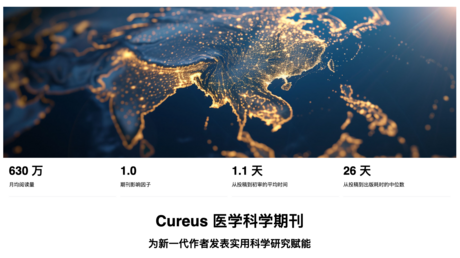
Cureus Launches Chinese Website
Cureus Launches Chinese Website to Expand Access to Global Medical Research Cureus, the Springer Nature open-access medical journal known for disrupting academic publishing, is proud to announce the launch of its Chinese-language website. This initiative is a major step forward in Cureus’ mission to democratize medical publishing by eliminating language barriers and empowering researchers around the world, especially in regions with fast-growing scientific output and academic interest like China. Accessible. Inclusive. Author-Driven. The new website provides simplified Chinese navigation and access to essential Cureus resources, making it easier for Chinese-speaking users to: Learn how to publish with Cureus Explore our publishing model and platform benefits Access author guidance While editorial submissions and peer review remain in English, this platform serves as a major gateway for Chinese medical professionals to discover and contribute to Cureus’ global medical community. Why Publish with Cureus? Fast Publishing: Median submission-to-publication time of just 26 days Affordable Pricing: Preferred editing services average only $370 — no hidden fees or inflated APCs Multidisciplinary Scope: Over 60 recognized medical specialties represented Inclusive Article Types: We publish original research, case reports, technical reports, reviews, and editorials Unmatched Visibility: Your work reaches a global audience through our Open Access platform, Springer Nature partnership, and indexing in PubMed, Baidu, CNKI, Google Scholar, and more Trusted Quality and Integrity: Rigorous peer review and strict research integrity policies ensure your work meets international publishing standards A Global Platform, Now More Local As medical science becomes increasingly international, Cureus is dedicated to building bridges. The launch of our Chinese website reflects our commitment to expanding access, promoting integrity, and accelerating discovery across borders.
Jun 13, 2025

Introducing the Cureus New Authors Hub
Introducing the Cureus New Authors Hub: A New Resource for First-Time Contributors We’re excited to announce the launch of the Cureus New Authors Hub, a collection of resources helping researchers publish with Cureus for the first time. Created in direct response to user feedback, the New Authors Hub offers straightforward, practical support for navigating the publishing process. From choosing the right journal to avoiding common pitfalls, these resources are built for students and early-career physicians. What’s Inside: Submission guidance tailored to the Cureus platform Writing and formatting tips to support clear, compelling manuscripts Advice from Cureus editors on what editors and reviewers look for Common mistakes to avoid during submission and revision Post-publication strategies to help authors expand their article’s reach The Cureus New Authors Hub is part of our ongoing commitment to make academic publishing more accessible, transparent, and author-driven. Whether you're preparing your first article or mentoring someone through theirs, this is your new starting point.
Jun 13, 2025

Understanding the Overlap: Menopause, Hormonal Changes, and Hypoactive Sexual Desire Disorder (HSDD) in Women
Sponsored Menopause marks a pivotal shift in a woman’s life, often accompanied by a variety of physical and emotional changes. While hot flashes, night sweats, and mood swings are well-known symptoms, one of the less-discussed but equally impactful changes is the decline in sexual desire. This is where Hypoactive Sexual Desire Disorder (HSDD) enters the conversation. Characterized by a persistent lack of interest in sexual activity, HSDD is a recognized medical condition that can significantly impact a woman’s well-being. As highlighted in the Cureus article, "Understanding Hypoactive Sexual Desire Disorder (HSDD) in Women: Etiology, Diagnosis, and Treatment," hormonal fluctuations during menopause play a crucial role in the onset of HSDD. Shifts in estrogen and testosterone levels affect blood flow, sensitivity, and mood, all of which contribute to decreased libido. Yet, it’s essential to recognize that HSDD is not an inevitable consequence of menopause—it is a treatable condition. By raising awareness about the connection between menopause and HSDD, women can be empowered to seek treatment, explore lifestyle modifications, and access the support they need for optimal well-being and sexual health. Understanding Menopause Menopause typically occurs between the ages of 45 and 55, with the average onset around 51. It is defined as the time when a woman has not had a menstrual period for 12 consecutive months. This period is marked by changes in hormone levels, particularly estrogen and progesterone, leading to various physical and emotional symptoms. Common symptoms of menopause include hot flashes, night sweats, mood swings, weight gain, and vaginal dryness. Each of these symptoms can significantly impact a woman's quality of life. However, one of the more subtle yet profound effects of menopause is HSDD, which often goes unrecognized and untreated. The Link Between Menopause and HSDD The hormonal fluctuations that occur during menopause can lead to a decreased libido for many women. Changes in estrogen levels can affect blood flow and sensitivity in the genital area, causing discomfort during sexual activity and leading to a decline in sexual desire. Additionally, psychological factors such as stress, anxiety, and body image issues can further contribute to HSDD. It is essential to acknowledge that HSDD in women is not a natural part of aging or menopause. It is a medical condition that can be managed. Women experiencing a significant decrease in sexual desire should consult healthcare providers to explore options for treatment and support. Strategies for Managing Menopause Symptoms and HSDD Managing menopause and HSDD can feel challenging, but understanding your options can make a significant difference. With a mix of medical treatments, lifestyle changes, and emotional support, women can effectively navigate these changes and improve their quality of life. Here are some steps you can take: 1. Consult a Healthcare Professional: Seeking professional guidance is essential when managing menopause symptoms and HSDD. A healthcare provider can assess your medical history, symptoms, and lifestyle to provide personalized treatment options. They may recommend blood tests to evaluate hormone levels or discuss medication options, ensuring your care plan is tailored to your unique needs. This approach can help alleviate symptoms and address underlying concerns. 2. Hormone Replacement Therapy (HRT): Hormone Replacement Therapy is a common treatment for managing menopause symptoms such as hot flashes, night sweats, and mood swings. By supplementing the body with estrogen, progesterone, or both, HRT helps stabilize hormone levels and reduce discomfort. Healthcare providers often weigh the benefits against any potential risks, ensuring that this treatment aligns with your health profile. Many women experience significant improvements in their symptoms with HRT. 3. Lifestyle Modifications: Adopting a healthy lifestyle can significantly enhance physical and emotional well-being during menopause. Regular physical activity, such as walking, yoga, or strength training, boosts energy levels and reduces mood swings. A diet rich in whole foods, lean proteins, and healthy fats supports hormonal balance, while adequate hydration prevents fatigue and headaches. Stress management techniques like meditation, mindfulness, or deep-breathing exercises can further alleviate symptoms and promote emotional resilience. 4. Treatment Options for HSDD: For women experiencing Hypoactive Sexual Desire Disorder (HSDD), flibanserin like Addyi may be an option. This HSDD treatment can work for most women and works by targeting brain chemicals linked to sexual desire. A healthcare provider can help determine if this treatment is appropriate for you. 5. Counseling and Support Groups: Emotional health is just as important as physical well-being during menopause. Therapy can provide a safe space to discuss concerns, process emotions, and develop coping strategies for challenges related to menopause and HSDD. Support groups offer opportunities to connect with others experiencing similar issues, fostering a sense of community and understanding. Many women find it empowering to share their stories and learn from the experiences of others. 6. Sexual Health Education: Gaining knowledge about sexual health and how menopause affects intimacy can empower women to navigate these changes confidently. Understanding one’s body and discussing concerns with a partner or healthcare provider can foster a more fulfilling and open approach to intimacy. Resources like books, workshops, or online forums on sexual wellness can provide valuable insights and support a positive perspective on sexual health during menopause. Conclusion Menopause is a significant transition in a woman’s life that can present various challenges, including HSDD. However, it is important to recognize that effective management strategies can lead to improved quality of life and sexual health. By consulting with healthcare professionals, exploring treatment options, and adopting a proactive approach to lifestyle changes, women can navigate this phase with confidence and vitality. Empowerment through education and support will enable women to embrace this new chapter while managing menopause symptoms effectively.
Jan 09, 2025