Simulating the Effect of Serotonin on the Generation of Spontaneous Neural Activity in the Neocortex
Abstract
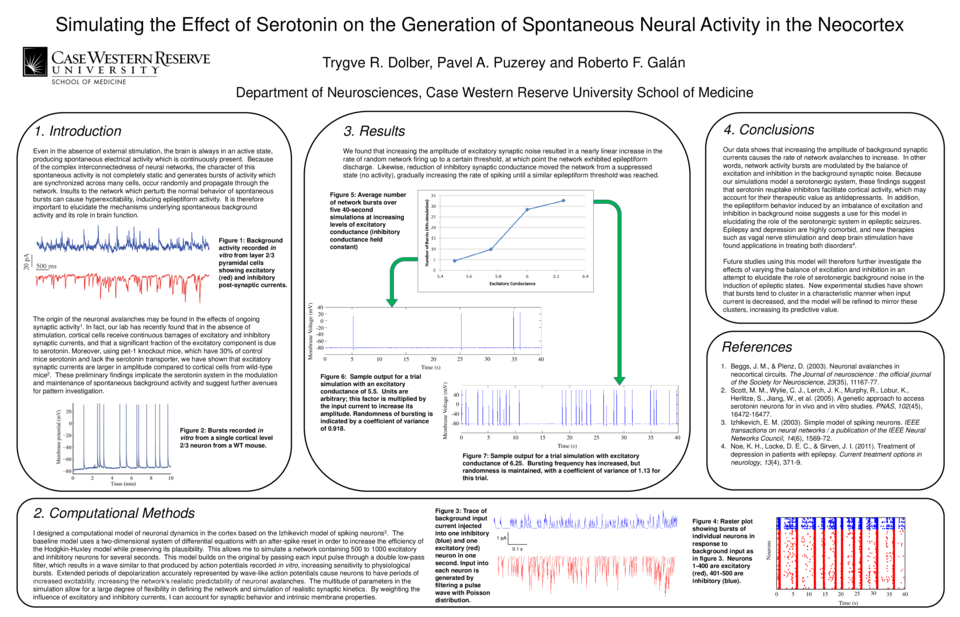
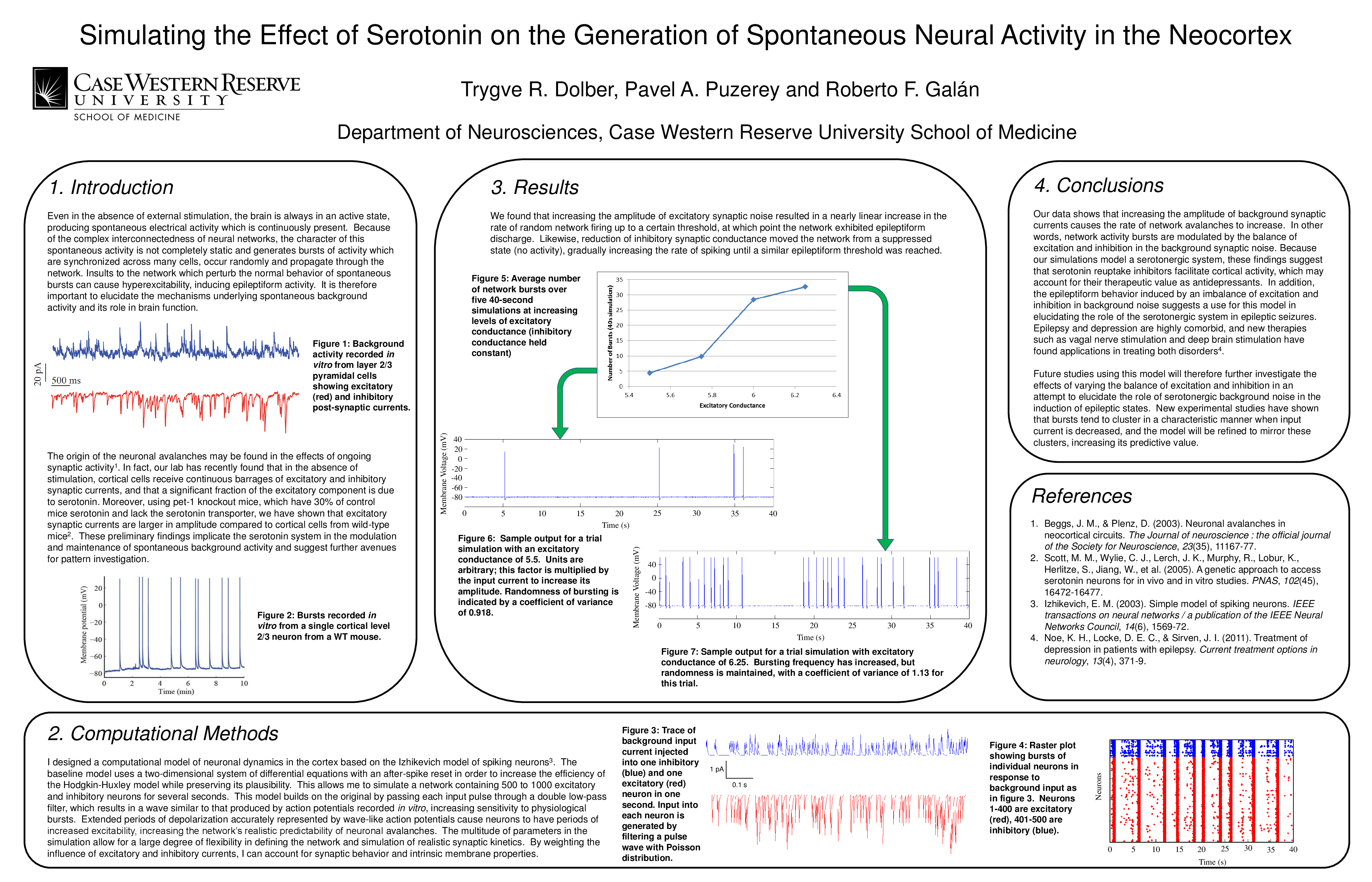
Even in the absence of external stimulation, the brain cortex produces bursts of activity that propagate through the network. This form of activity may have several functions, such as regulating the arousal response to a stimulus or consolidating memory traces. Experimental evidence from our lab indicates that the frequency of these bursts is sensitive to the ratio between excitation and inhibition in the network. Moreover, we have found that a significant part of excitatory synaptic activity occurring spontaneously in the cortex is mediated by ionotropic serotonin receptors. To investigate the role of this synaptic “noise” on the frequency of activity bursts, I implemented a computational network model simulating 500 excitatory and inhibitory neurons driven by a random synaptic background approximating experimentally-determined cortical connectivity and synaptic noise. Under general conditions, this model produced patterns of firing very similar to recordings made in vitro, and may therefore be highly predictive of changes in electrical behavior caused by variation in network status. I found that increasing excitatory synaptic noise resulted in a nearly linear increase in the rate of random network firing up to a certain threshold, at which point the network exhibited epileptiform discharge. Likewise, reduction of inhibitory synaptic conductance moved the network from a suppressed state (no activity), gradually increasing the rate of spiking until a similar epileptiform threshold was reached. Thus, network activity bursts are modulated by the balance of excitation and inhibition in the background synaptic noise. These findings suggest that serotonin reuptake inhibitors facilitate cortical activity, which may account for their therapeutic value as antidepressants. Future studies using this model will further investigate the role of serotonin and other biophysical mechanisms regulating resting cortical activity.
Related articles