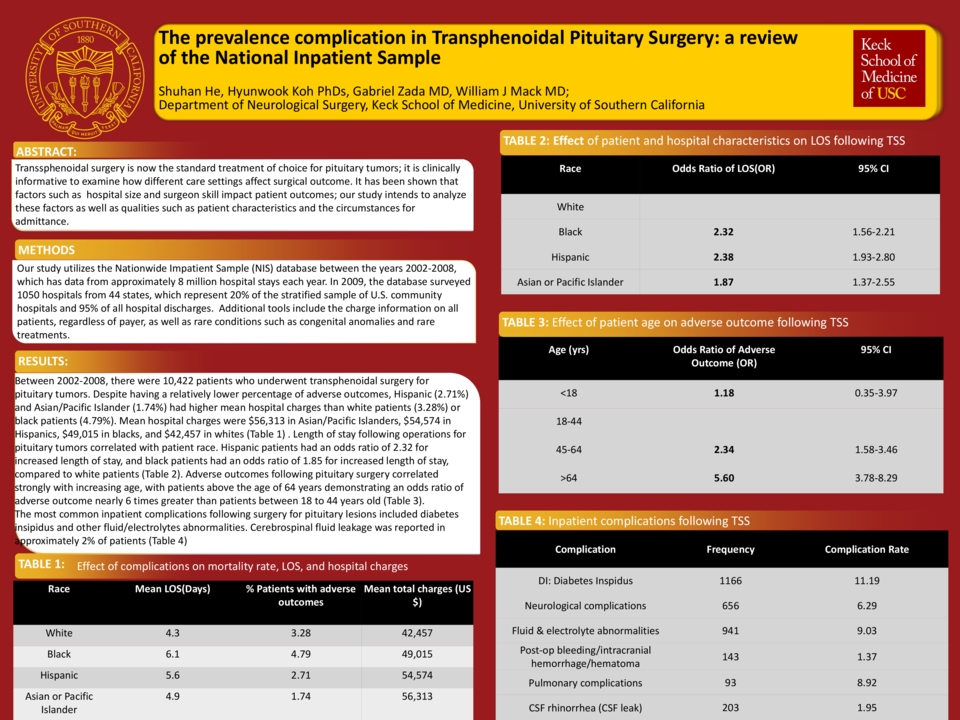
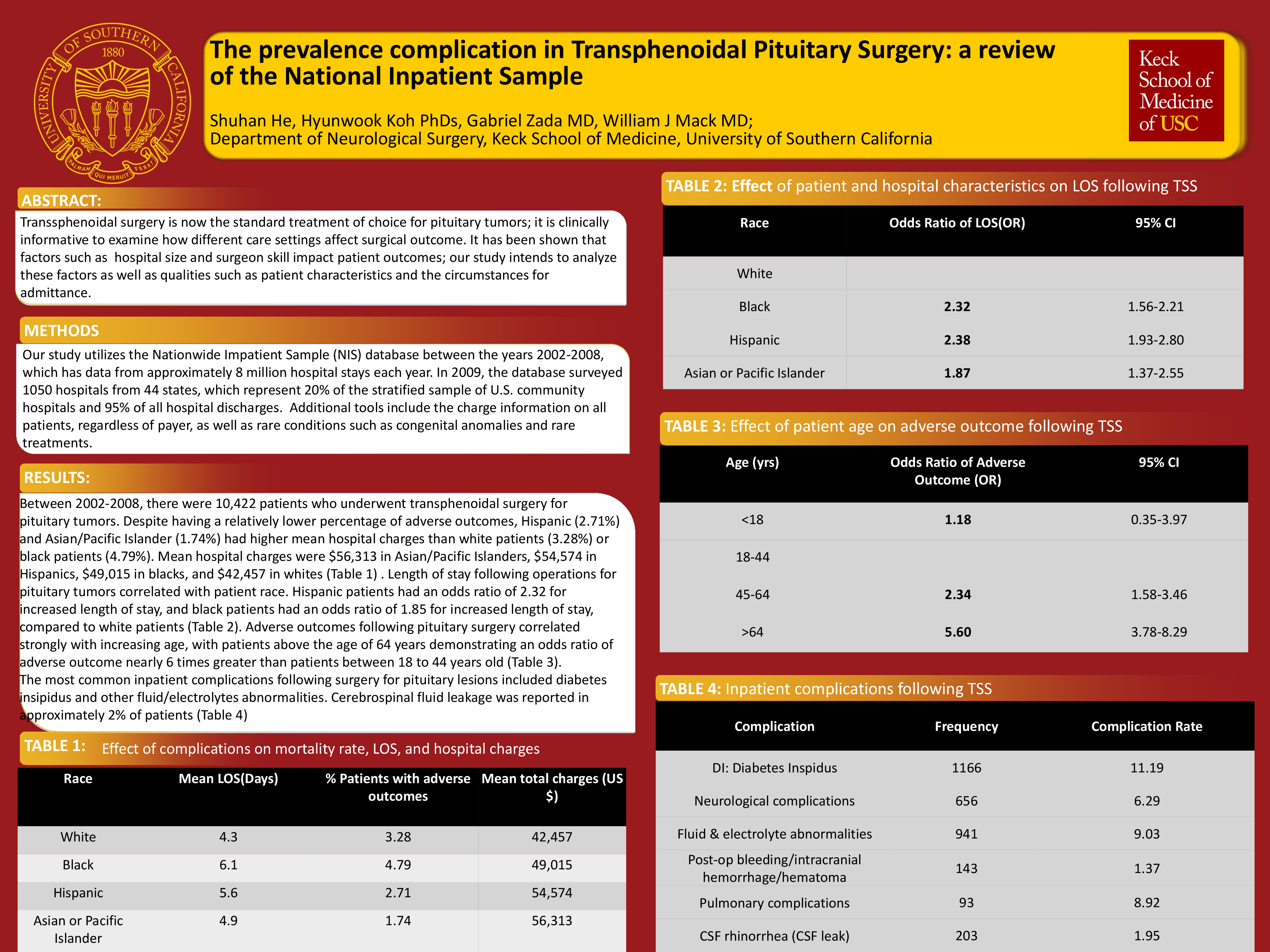
The Prevalence Complications in Transphenoidal Pituitary Surgery: a Review of the National Inpatient Sample
Poster Information
Publication history
Published: October 09, 2012
Copyright
© Copyright 2012
He. This is an open access poster distributed under the terms of the Creative Commons Attribution License CC-BY 3.0., which permits unrestricted use, distribution, and reproduction in any medium, provided the original author and source are credited.
License
This is an open access poster distributed under the terms of the Creative Commons Attribution License, which permits unrestricted use, distribution, and reproduction in any medium, provided the original author and source are credited.