Abstract
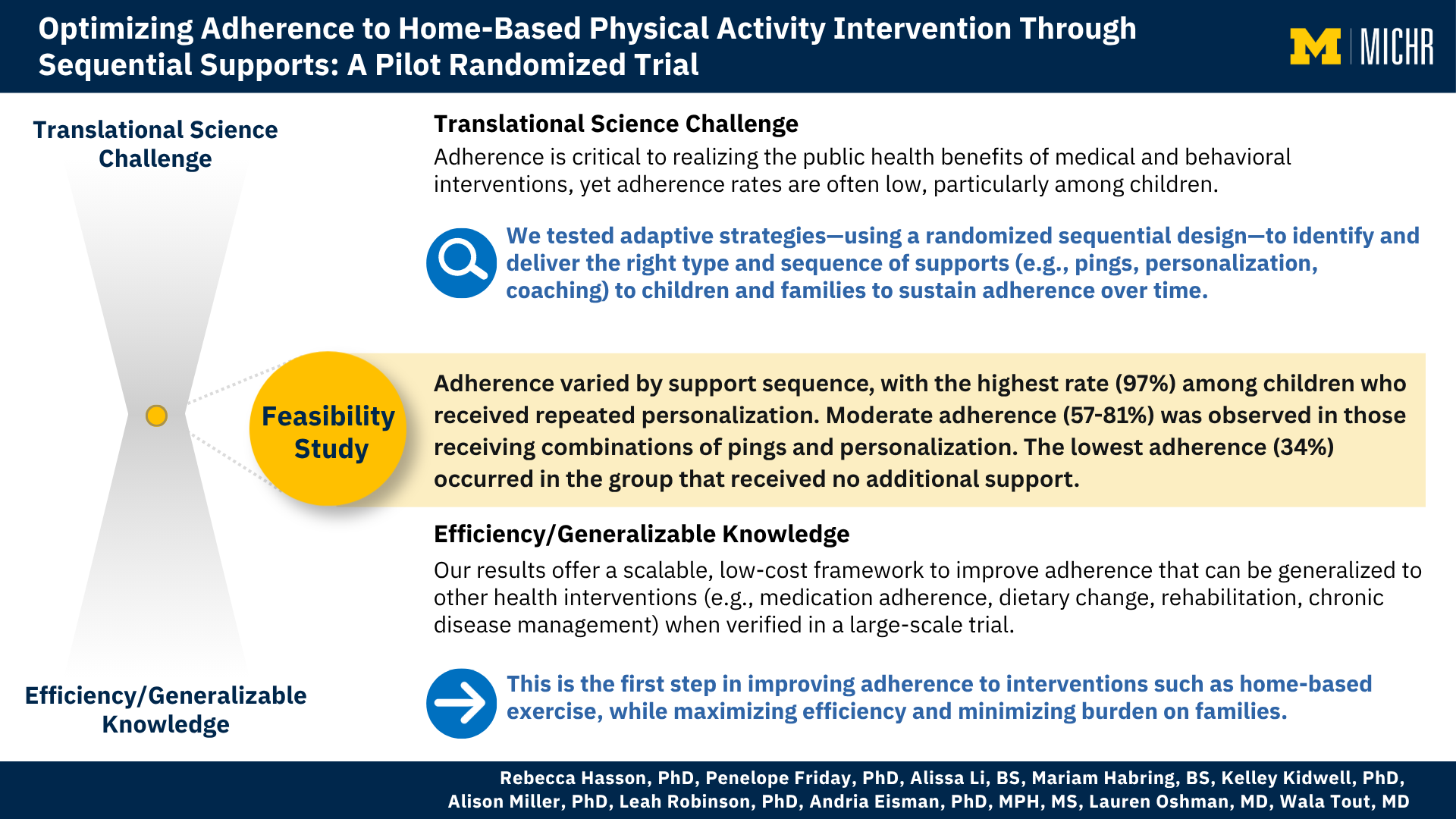
Translational Science Challenge: Adherence is critical to realizing the public health benefits of medical and behavioral interventions, yet adherence rates are often low, particularly among children.
Pilot Project: We tested adaptive strategies—using a randomized sequential design—to identify and deliver the right type and sequence of supports (e.g., pings, personalization, coaching) to children and families to sustain adherence over time. Adherence varied by support sequence, with the highest rate (97%) among children who received repeated personalization. Moderate adherence (5781%) was observed in those receiving combinations of pings and personalization. The lowest adherence (34%) occurred in the group that received no additional support. Our results offer a scalable, low-cost framework to improve adherence that can be generalized to other health interventions (e.g., medication adherence, dietary change, rehabilitation, chronic disease management) when verified in a large-scale trial.
Efficiency/Generalizable Knowledge: This is the first step in improving adherence to interventions such as home-based exercise, while maximizing efficiency and minimizing burden on families.
Need a more accessible version? Email [email protected].