Abstract
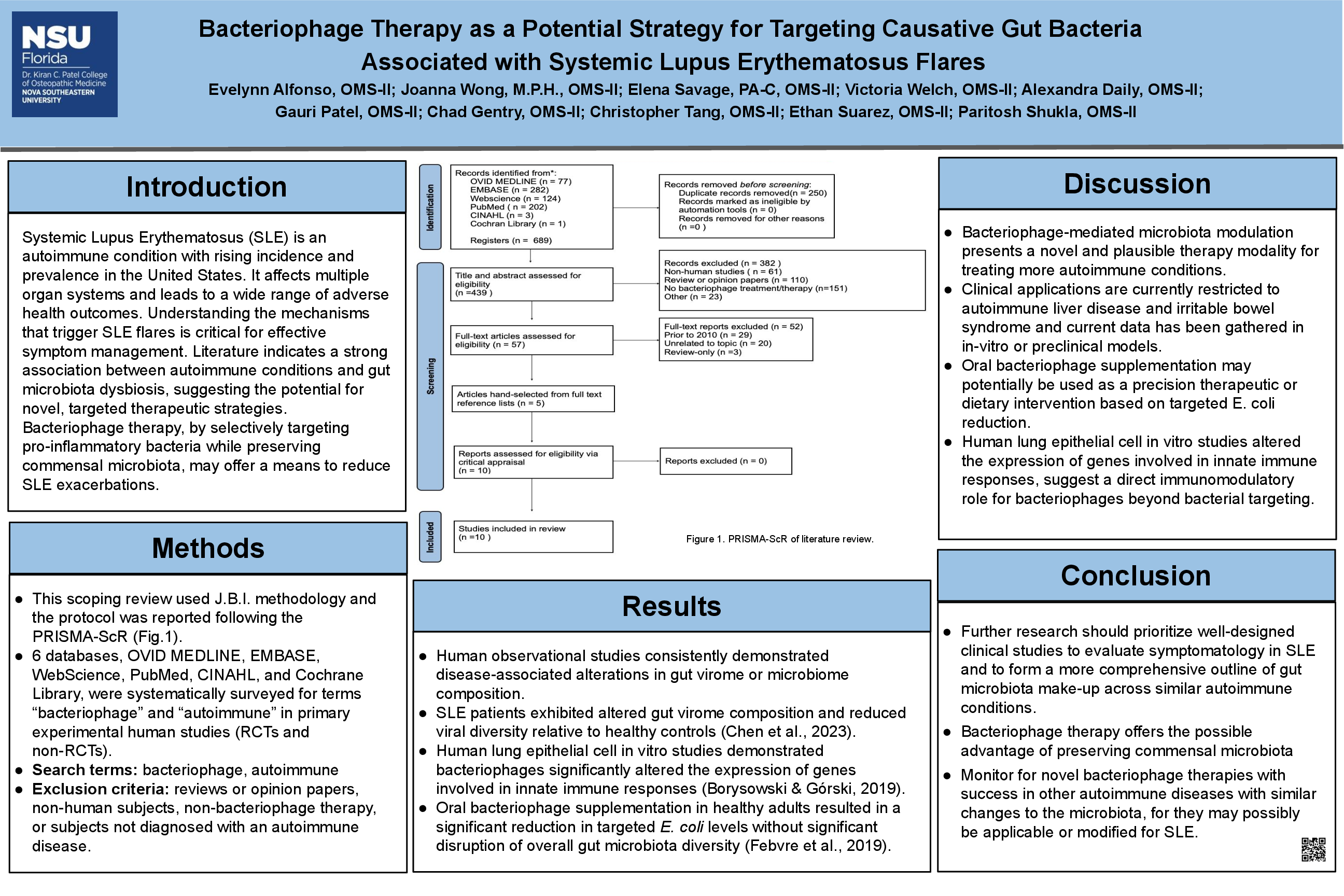
Background: Systemic Lupus Erythematosus (SLE) is an autoimmune condition with rising incidence and prevalence in the United States. It affects multiple organ systems and can lead to a wide range of adverse health outcomes. Therefore, understanding the mechanisms that trigger SLE flares is critical for effective symptom management. Current literature indicates a strong association between autoimmune conditions, including SLE, and gut microbiota dysbiosis, highlighting the potential for novel, targeted therapeutic strategies. Bacteriophage therapy offers a novel approach by selectively targeting pro-inflammatory bacteria while preserving commensal microbiota, potentially reducing disease flares.
Objectives: The main objective of this study was to identify mediators of microbiome dysregulation across autoimmune diseases and determine which therapies have demonstrated successful bacteriophage-mediated therapeutic outcomes.
Methods: This scoping review followed Joanna Briggs Institute (JBI) methodology and was reported according to PRISMA-ScR guidelines. Six databases (OVID MEDLINE, EMBASE, Web of Science, PubMed, CINAHL, and the Cochrane Library) were systematically searched to identify studies evaluating bacteriophage therapy in autoimmune disease. Reviews, opinion papers, non-human studies, non-bacteriophage interventions, and studies involving participants without an autoimmune disease diagnosis were excluded.
Results: The studies demonstrated disease-associated alterations in gut virome and microbiome composition across autoimmune, inflammatory, and neurological disorders and key bacteriophage–immune interactions, including phage display of autoantigens to modulate host defense systems.
Conclusions: Bacteriophage-mediated immune modulation may represent a novel and plausible approach to addressing gut microbiome dysbiosis in autoimmune conditions such as SLE. However, clinical evidence for this proposed application of bacteriophages remains limited, and future research should prioritize clinical trials to assess whether bacteriophage therapy can effectively modulate the gut microbiome to reduce SLE flares and improve health outcomes.