Abstract
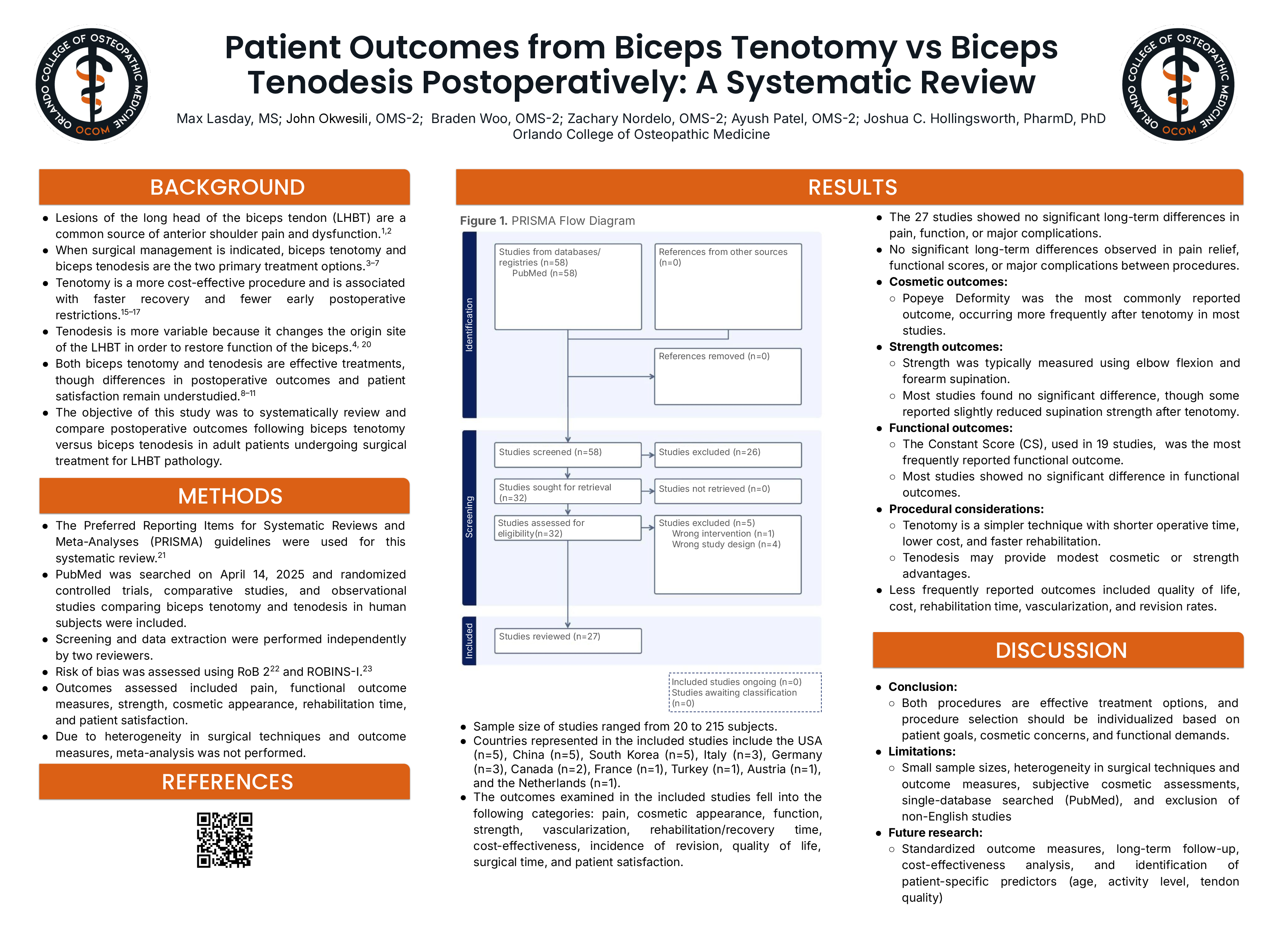
BACKGROUND: Lesions of the long head of the biceps tendon (LHBT) are a common source of anterior shoulder pain and dysfunction. When surgical management is indicated, biceps tenotomy and biceps tenodesis are the two primary treatment options. Both biceps tenotomy and tenodesis are effective treatments, though differences in postoperative outcomes and patient satisfaction remain debated.
OBJECTIVE: To systematically review and compare postoperative outcomes following biceps tenotomy versus biceps tenodesis in adult patients undergoing surgical treatment for LHBT pathology.
METHODS: A PRISMA-compliant systematic review was performed. PubMed was searched on April 14, 2025. Randomized controlled trials, comparative studies, and observational studies comparing biceps tenotomy and tenodesis in human subjects were included. Screening and data extraction were performed independently by two reviewers. Risk of bias was assessed using RoB 2 and ROBINS-I. Due to heterogeneity in surgical techniques and outcome measures, meta-analysis was not performed. Outcomes assessed included pain, functional outcome measures, strength, cosmetic appearance, rehabilitation time, and patient satisfaction.
RESULTS: A total of 27 studies comprising 2,523 patients met inclusion criteria. Sample sizes ranged from 20 to 180 patients. Across studies, there were no consistent long-term differences between tenotomy and tenodesis in pain relief or overall functional outcomes. Tenotomy was consistently associated with a higher incidence of cosmetic deformity (Popeye sign) and, in some studies, slightly reduced forearm supination strength. Tenodesis demonstrated modest advantages in cosmetic appearance and strength in select populations but was associated with longer operative time and rehabilitation. Major complications and revision rates were rare and comparable between procedures.
DISCUSSION: Biceps tenotomy and tenodesis provide comparable functional and pain outcomes for LHBT pathology. Tenotomy offers procedural efficiency and faster recovery, whereas tenodesis may reduce cosmetic deformity and preserve strength in select patients. Surgical decision-making should be individualized based on patient specific priorities and functional requirements.
REGISTRATION NUMBER: Not registered.