Abstract
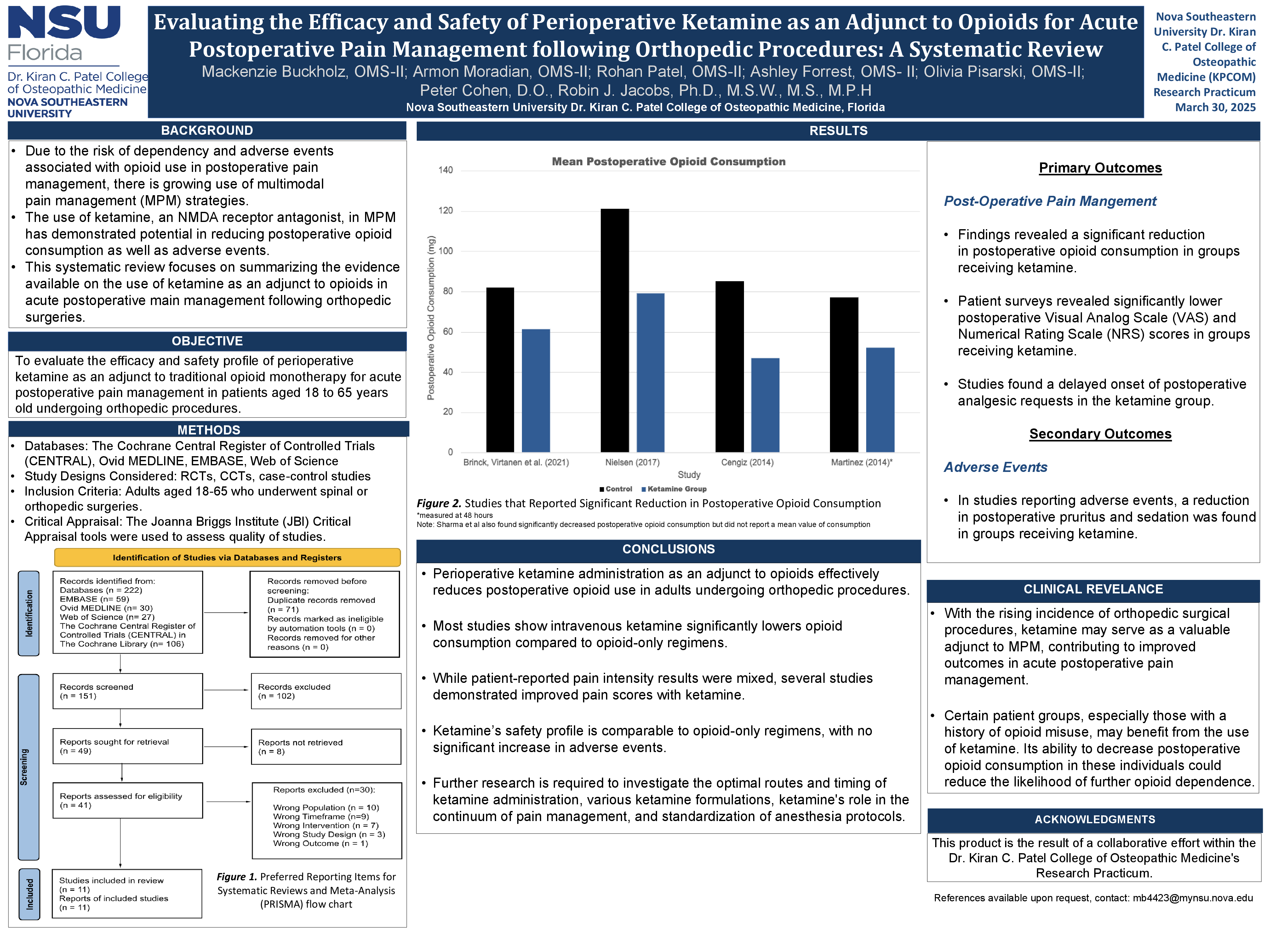
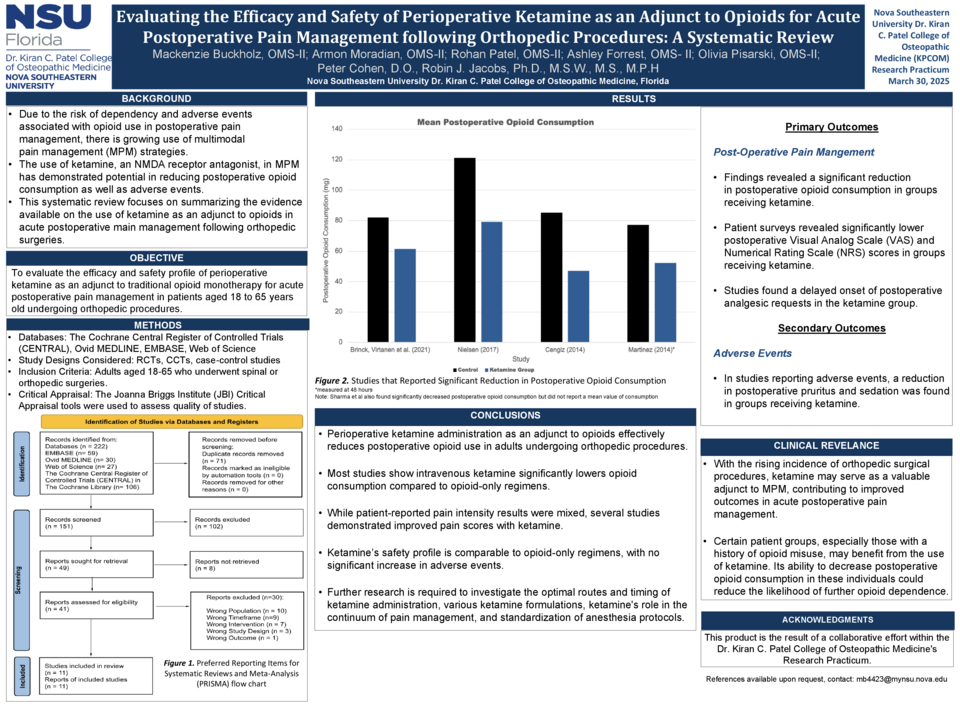
Background: Opioids have historically served as the primary postoperative analgesic agents. However, potential concerns regarding adverse effects and the risk of dependency have led to the incorporation of adjunctive therapies. Ketamine, an NMDA receptor antagonist, has demonstrated potential in providing post-procedure analgesia, thereby reducing opioid consumption and mitigating opioid-related adverse effects in the acute postoperative setting. Despite its promising role, gaps remain in the analytical efficacy of ketamine-opioid combination therapy in optimizing pain management and patient outcomes following orthopedic procedures.
Objective: To evaluate the efficacy and safety profile of perioperative ketamine as an adjunct to traditional opioid monotherapy for acute postoperative pain management in patients aged 18 to 65 years old undergoing orthopedic procedures.
Methods: This study was designed as a systematic review to further investigate the efficacy and safety of perioperative ketamine as an adjunct to traditional opioids for acute postoperative pain management. The Cochrane Central Register of Controlled Trials (CENTRAL), Ovid MEDLINE, EMBASE, and Web of Science were the electronic databases utilized to search for randomized controlled trials, controlled clinical trials, and case-control studies. We restricted the search to adults aged 18 to 65 who underwent spinal or orthopedic surgeries between January 2014 and October 2024. Initial literature search yielded 222 articles, of which 11 final articles were included after a two-tier screening process.
Results: Findings revealed a significant reduction in postoperative opioid consumption in groups receiving ketamine. Patient surveys revealed significantly lower postoperative Visual Analog Scale (VAS) and Numerical Rating Scale (NRS) scores in groups receiving ketamine. Additionally, studies found a delayed onset of postoperative analgesic requests in the ketamine groups. In studies reporting adverse events, a reduction in postoperative pruritus and sedation was found in groups receiving ketamine, while other adverse events remained comparable.
Conclusion: Perioperative ketamine use reduces postoperative opioid consumption in the context of acute pain management following orthopedic procedures, especially among protocols using intravenous administration. Comparable outcomes in adverse events between ketamine and control groups were reported. Future studies should focus on investigating different routes of administration, standardization of the anesthesia protocol, and follow-up for subacute and chronic pain levels.