Abstract
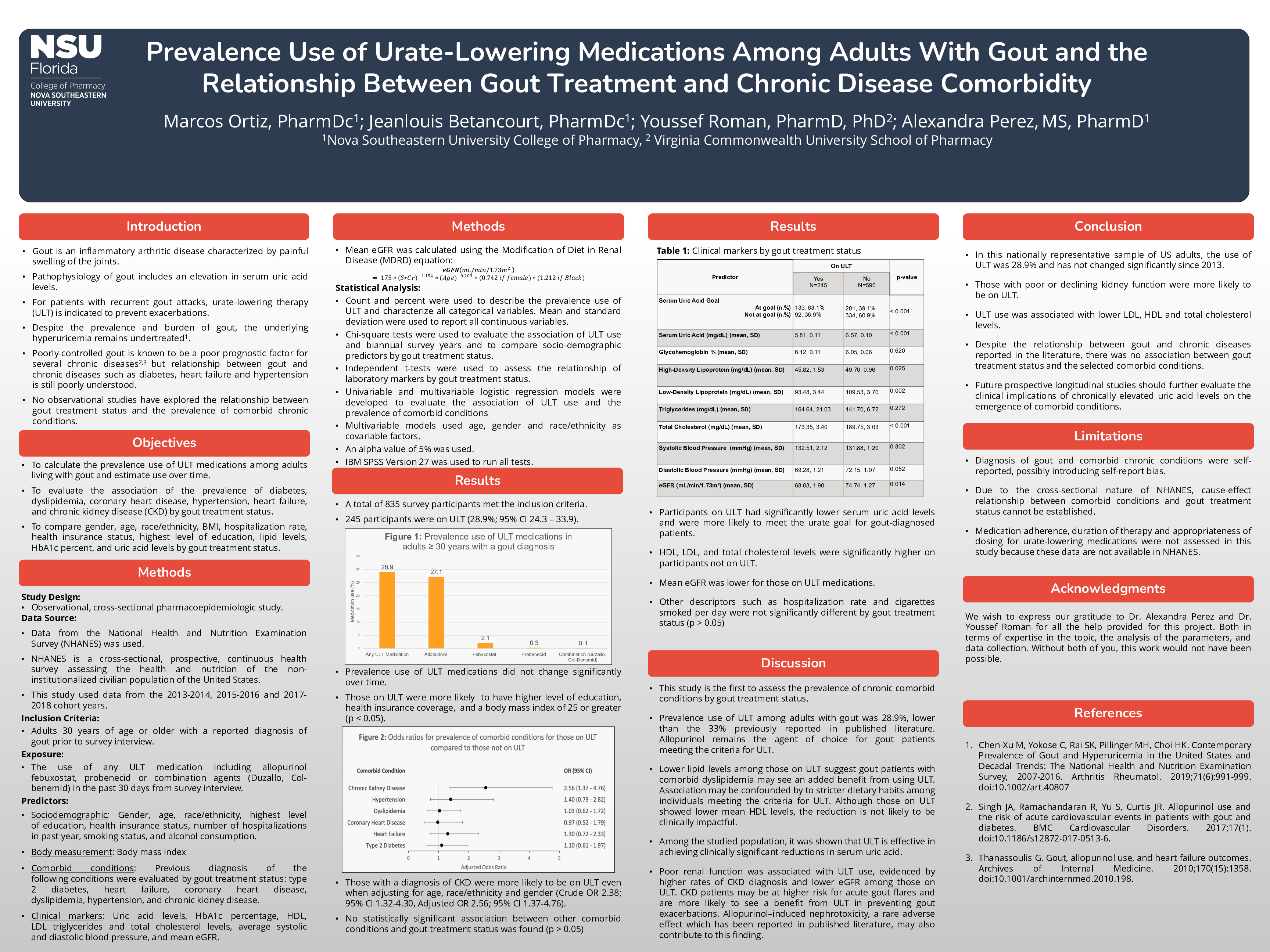
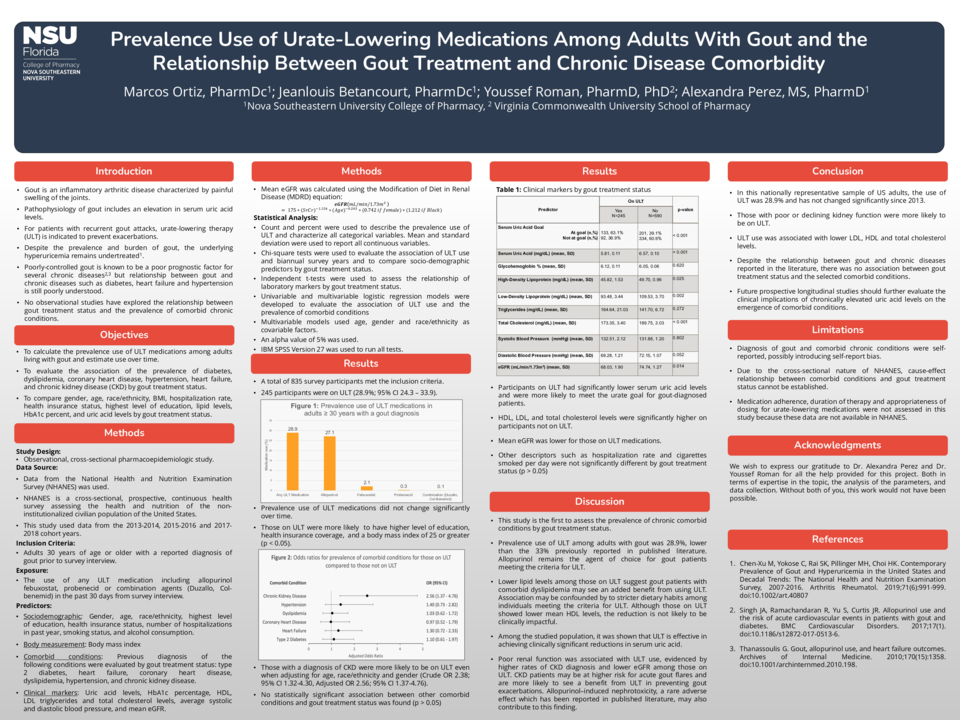
Purpose: The objectives of this study were to estimate the prevalence use of urate-lowering therapy among adults with gout and evaluate the association of the prevalence of comorbid conditions by gout treatment status.
Background: Gout is a chronic inflammatory arthropathy and an independent risk factor for developing hypertension, dyslipidemia, and diabetes. The relationship between gout treatment status and gout comorbidities is unknown. For patients with recurring gout flares, urate-lowering therapy (ULT) is the mainstay of treatment. No observational studies have explored the relationship between ULT use and prevalence of comorbid conditions.
Methods: This observational cohort study used data from the National Health and Nutrition Examination Survey (NHANES) cohort years 2013-2018. Adults 30 years or older diagnosed with gout were included. The exposure was defined as the use of any ULT medications (yes/no) including allopurinol, febuxostat, probenecid, or combination agents. Chronic conditions of interest were diabetes, dyslipidemia, coronary heart disease, heart failure, hypertension, and chronic kidney disease (CKD). Urate levels, estimated glomerular filtration rate (eGFR), and lipid levels were compared by gout treatment status.
Results: Prevalence use of ULT was 28.9% (95%CI 24.3%-33.9%) and did not significantly change from 2013-2018 (P>0.05). Mean urate levels were 5.81 mg/dL (SD=0.11) among those on ULT and 6.57 mg/dL (SD=0.10) among those not on ULT (p<0.001). Those on ULT also had significantly lower LDL, HDL, and total cholesterol levels (P<0.05). There was no significant association between ULT use and the prevalence of diabetes, heart failure, coronary heart disease, hypertension, or dyslipidemia (P>0.05). When adjusting for age, race/ethnicity, and gender, those with CKD were 2.56 times more likely to be on ULT (95%CI 1.37-4.76). Those on ULT also had significantly lower mean eGFR of 68.03mL/min/1.73m² compared to 74.74 for those not on ULT (p=0.014).
Conclusion: In a nationally representative sample of US adults with gout, ULT use remained low despite the high incidence of gout observed in published epidemiologic studies. ULT use was associated with lower lipid levels. Reduced kidney function was also associated with ULT use. The clinical benefit of ULT was apparent with more individuals achieving urate level target of less than 6 mg/dL.