Cytochrome P450 Interacting Medication Use in Adult Solid Tumor Patients Enrolled in Phase I Trials
Abstract
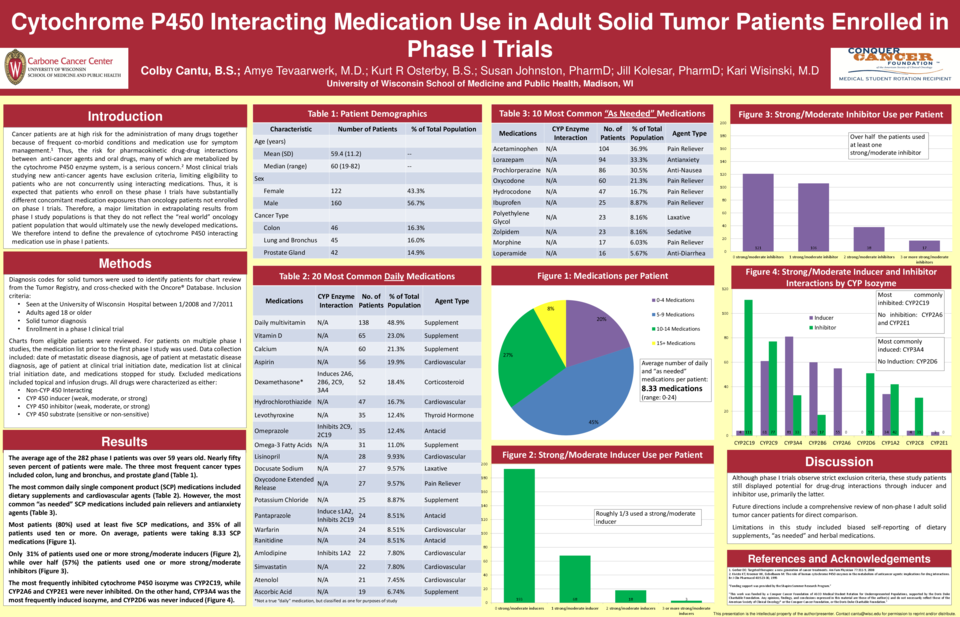
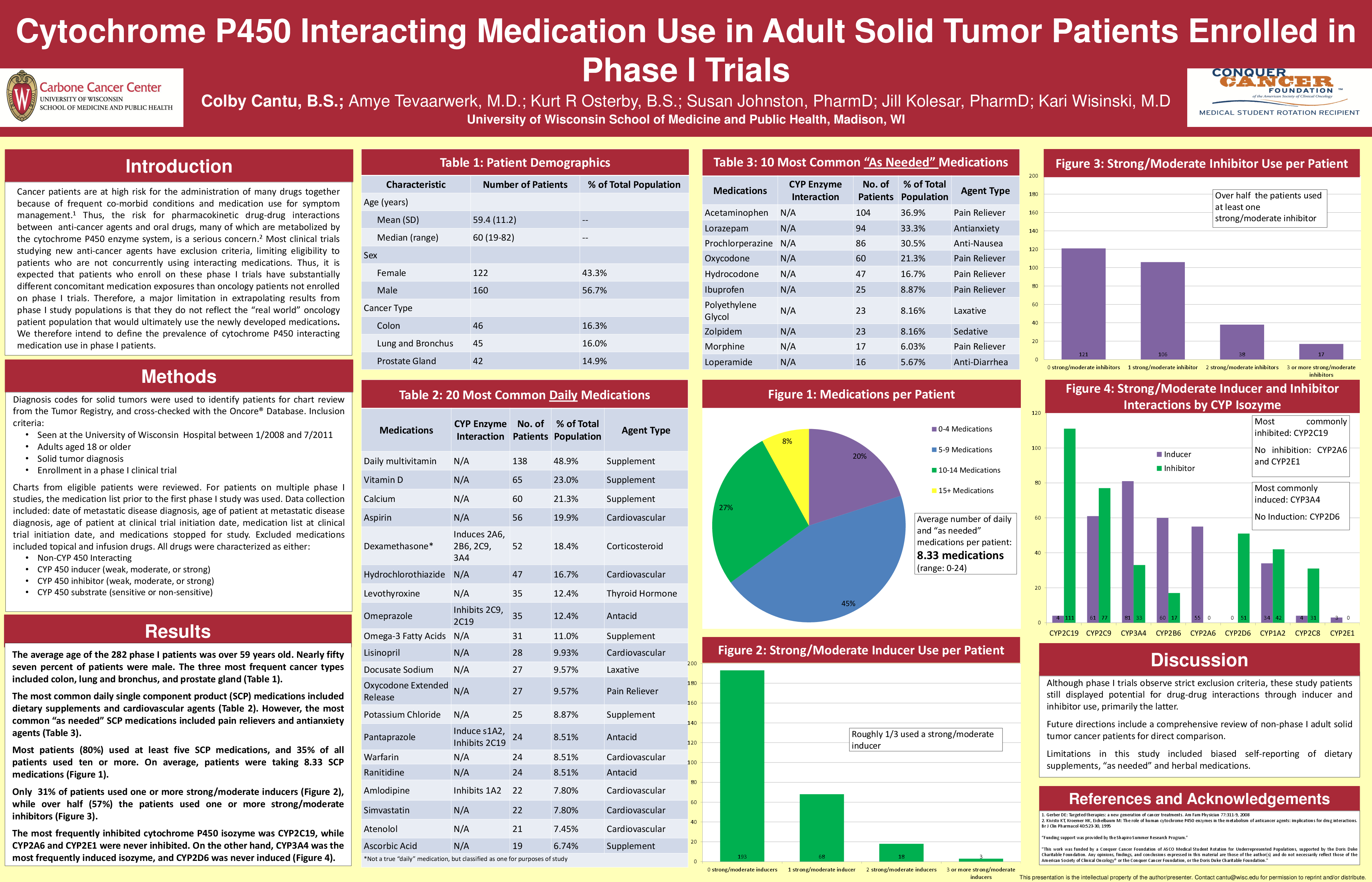
BACKGROUND: Cytochrome P450 enzyme system metabolism has been noted in anti-cancer agents and the majority of oral medications. This poses a risk for pharmacokinetic drug-drug interactions. Most clinical trials studying new anti-cancer agents have exclusion criteria, limiting eligibility to patients who are not concurrently using interacting medications. Thus, it is expected that patients enrolled in phase I trials have substantially different concomitant medication exposures than oncology patients not enrolled in phase I trials. Therefore, a major limitation in extrapolating results from phase I populations is that they do not reflect the “real world” oncology patient population that would ultimately use the newly developed medications. We therefore intend to define the prevalence of cytochrome P450 interacting medication use in phase I patients.
METHODS: Diagnosis codes for solid tumors were used to identify patients for chart review from the Tumor Registry and Oncore® Databases. Included patients were seen at the University of Wisconsin between 1/2008 and 7/2011, aged 18 or older, had solid tumor diagnosis, and enrolled in at least one phase I trial. Patients who consented for clinical trial but never began were excluded. Charts from 282 eligible patients were reviewed. The medication list at trial initiation and medications stopped for study were collected, excluding only topical and infusion drugs. All drugs were characterized as either: non-CYP Interacting, CYP substrate (sensitive, nonsensitive), or CYP inducer/inhibitor (strong, moderate, weak).
RESULTS: The most common daily single component product (SCP) medications included supplements and cardiovascular agents, while the most common “as needed” SCPs included pain relievers and antianxiety agents. Average total SCP medications per person totaled 8.33. Over half (57%) used one or more strong/moderate inhibitors, and 31% of patients used one or more strong/moderate inducers. The most frequently inhibited and induced cytochrome P450 isozymes were CYP2C19 and CYP3A4, respectively.
CONCLUSIONS: Although phase I trials observe strict exclusion criteria, these study patients still displayed potential for drug-drug interactions via inducers and inhibitors. Future directions include a comprehensive review of non-phase I adult solid tumor cancer patients for direct comparison. Limitations in this study included biased self-reporting of dietary supplements, “as needed” and herbal medications.
Related articles