Abstract
M McGuffin, L Tathanhlong, B Bristow
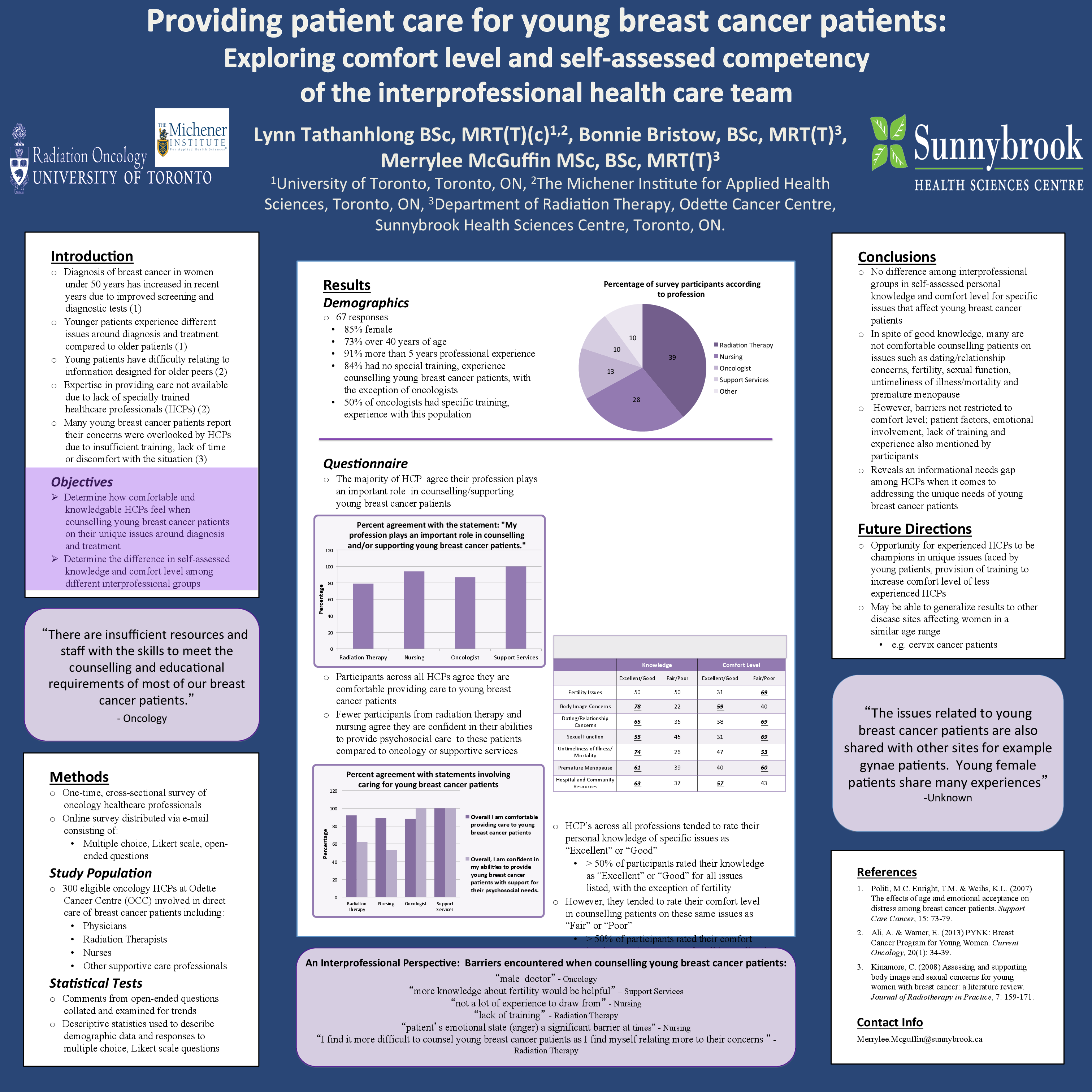
Background: Women are being diagnosed with breast cancer at a younger age. Younger patients have unique concerns including fertility, relationships, body image, and premature menopause. Most information and studies about breast cancer focus on older patients; healthcare providers may be ill-equipped to counsel younger patients.
Materials and Methods: The study was conducted as a one-time, cross-sectional survey of oncology healthcare professionals, including physicians, radiation therapists, nurses, and other supportive care professionals. All oncology healthcare professionals involved with breast cancer patients at a large cancer centre were invited by email to participate in the online survey. The survey consisted of multiple choice, Likert scale, and open-ended questions regarding the issues that concern young breast cancer patients.
Results: A total of 67 surveys were returned. The majority of participants were female (85%) with more than five years experience (91%) and no special training in counselling young breast cancer patients (84%). The professions with the largest representation were radiation therapy (39%) followed by nursing (28%). Over 90% of respondents felt comfortable providing care to young breast cancer patients and over 70% were confidant in their ability to provide support for the psychosocial needs of this population. With the exception of fertility issues, the majority of participants rated their knowledge of specific issues experienced by these patients to be excellent or good. Physicians more frequently rated their knowledge as excellent. When asked about their comfort level in supporting and counselling patients on these same issues, the majority of respondents rated their comfort level as good or fair. Physicians and nurses more frequently rated their comfort level as excellent or good while radiation therapists and supportive care professionals tended to rate their comfort level as fair. Overall, 92% felt they would benefit from additional education.
Conclusions: While most professionals surveyed feel they have good knowledge of most issues faced by young breast cancer patients, many feel less confident when it comes to addressing these issues with their patients. This is particularly true for the allied health professions. This gap presents an opportunity for the emergence of champions to heighten awareness and encourage colleagues to address the unique needs of this patient population.