Abstract
Laurence Masson-Côté, Christian Iorio-Morin, Youssef Ezahr, Jocelyn Blanchard, Annie Ebacher, David Mathieu
Unversité de Sherbrooke, Sherbrooke, QC
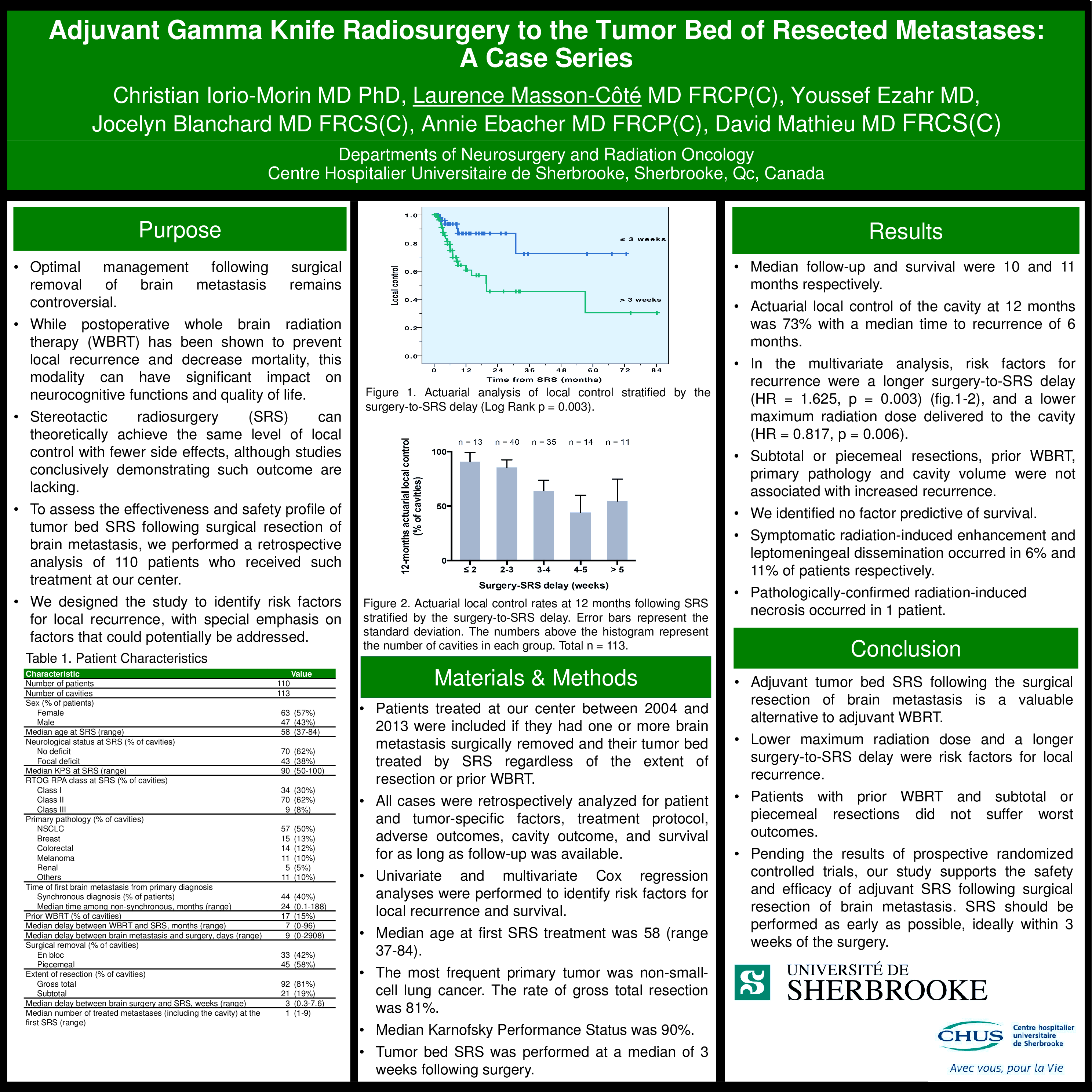
Purpose: Optimal management following surgical removal of brain metastasis remains controversial. While postoperative whole brain radiation therapy (WBRT) has been shown to prevent local recurrence and decrease mortality, this modality can have significant impact on neurocognitive functions and quality of life. Stereotactic radiosurgery (SRS) could theoretically achieve the same level of local control with fewer side effects, although studies conclusively demonstrating such outcome are lacking. To assess the effectiveness and safety profile of tumour bed SRS following surgical resection of brain metastasis, we performed a retrospective analysis of 130 patients who received such treatment at our centre.
Materials and Methods: Patients treated at our centre between 2004 and 2013 were included if they had one or more brain metastasis surgically removed, their tumour bed treated by SRS and at least six months of available follow-up. Patients were excluded if they had been treated by SRS prior to the surgical resection or if WBRT was used following the surgery. All cases were retrospectively analyzed for treatment protocol, evidence of radiation necrosis, cavity outcome, clinical outcome and survival for as long as follow-up was available. Average age at first SRS treatment was 59 (range 37-84). The most frequent primary tumour was non-small-cell lung cancer. At the time of SRS, gross total resection of the brain metastasis had been achieved in 80% of cases and systemic disease was inactive in 59% of patients. Median Karnofsky Performance Status was 90%. Tumour bed SRS was performed on average 3.7 weeks following surgery. Mean cavity volume was 12 cc with an average maximal and marginal dose of 36 Gy and 18 Gy respectively.
Results: Results for the full cohort will be presented at the meeting. Preliminary analysis of 56 of the 130 patients reveals local control at the tumour bed was achieved in 86% of cases (average follow-up of 13 months). Transient enhancement or radiation necrosis was observed in 16% of cases. New brain metastases following SRS were identified in 63% of patients. Median survival was 8 months, with 67% of patients dying from a systemic rather than neurological cause. A limitation of our case series is that it does not include, by its very nature, a WBRT or observation control group.
Conclusions: SRS is a safe and effective adjuvant modality following surgical resection of brain metastasis. Pending completion of randomized control trials, our results support the use of SRS for local control of brain disease