Abstract
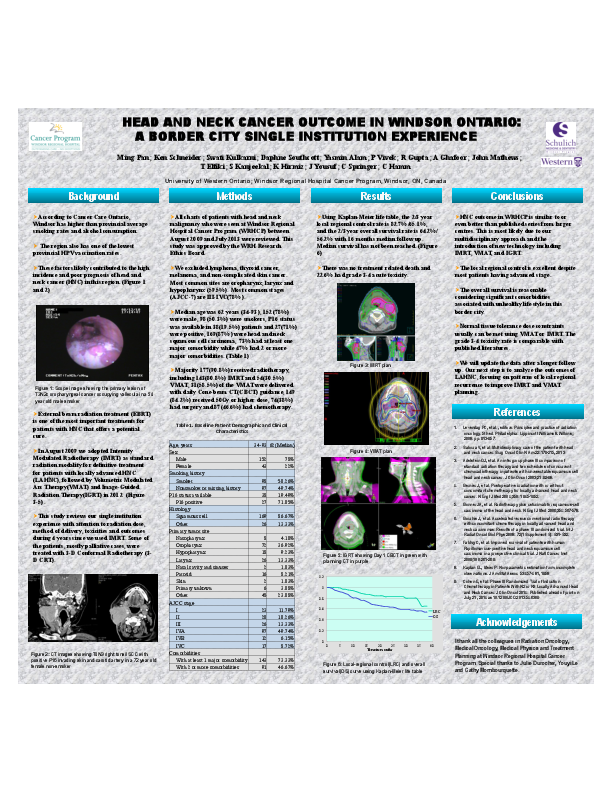
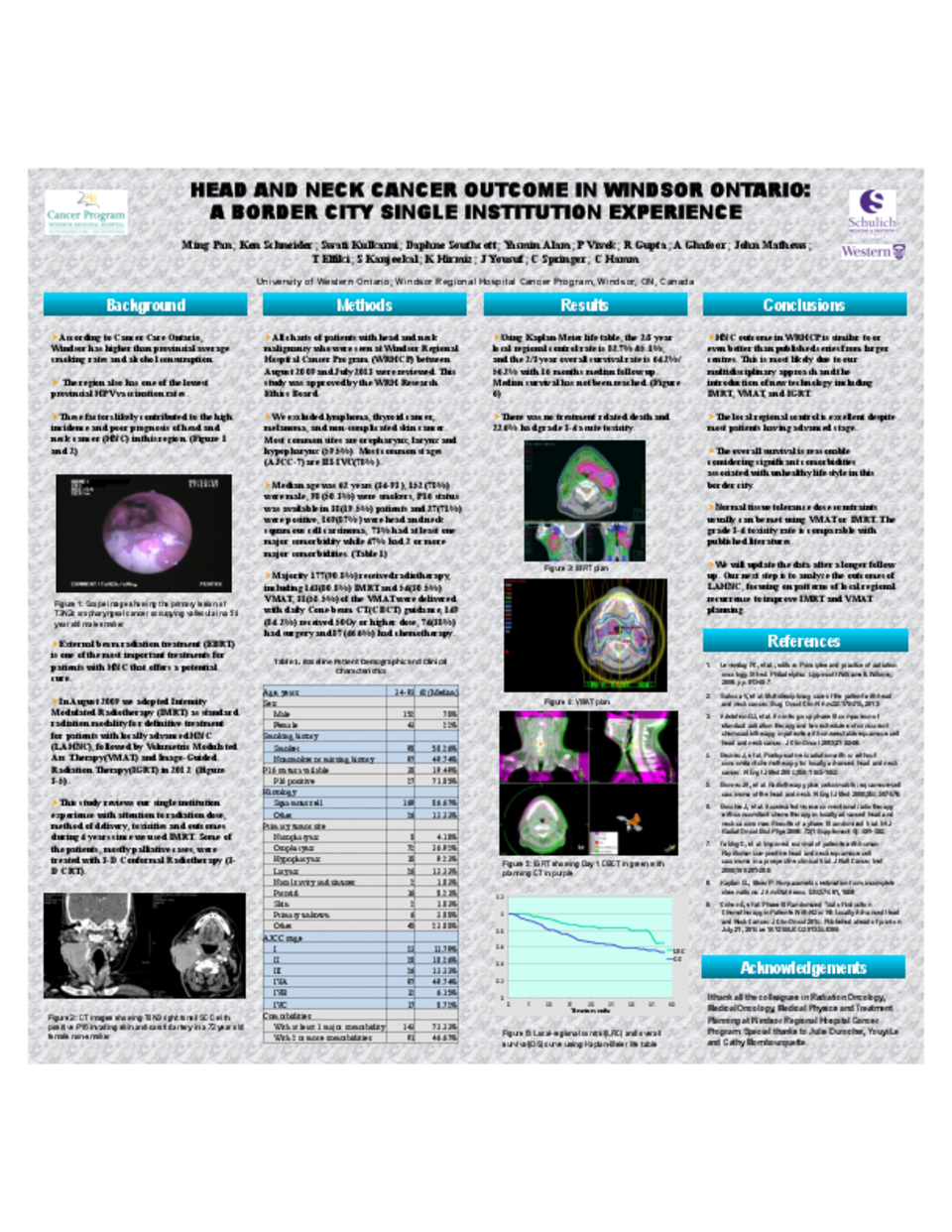
Purpose: Our region has higher than provincial average smoking rates and alcohol consumption and low HPV vaccination rates. These have contributed to high incidence and poor prognosis of head and neck cancer (HNC) in the past. This study reviews our single institution experience with attention to treatment outcomes during four years since we adopted Intensity Modulated Radiotherapy (IMRT).
Method: All charts of patients with head and neck malignancy who were seen at our institution between August 2009 and July 2013 were reviewed. We excluded lymphoma, thyroid cancer, melanoma, and non-complicated skin cancer. Total of 195 consecutive patients met the selection criteria for analysis.
Results: Median age was 62 years (34-93), 152 (78%) were male, 98 (50.3%) were smokers, P16 status was available in 38 (19.5%) patients and 27 (71%) were positive, 169 (87%) were head and neck squamous cell carcinoma, 73% had at least one major comorbidity while 47% had two or more major comorbidities. Most common sites are oropharynx, larynx and hypopharynx (59.5%). Most common stages (AJCC7) are III-IVC (78%). Majority 177 (90.8%) received radiotherapy, including 143 (80.8%) IMRT and 54 (30.5%) Volumetric Modulated Arc Therapy (VMAT), 149 (84.2%) received 50 Gy or higher dose. Using Kaplan-Meier life table, the two-year local regional control rate is 82.7%, and the two-year overall survival rate is 64.2% with 16 months median follow-up. Median survival has not been reached. There was no treatment-related death and 22.6% had Grade 3-4 acute toxicity.
Conclusions: HNC outcome in our institution is similar to or even better than published series from larger centres. This is most likely due to our multidisciplinary approach and the introduction of new technology including IMRT, VMAT, and Image-Guided Radiation Therapy (IGRT). The local control is excellent although most patients have advanced stage. The overall survival is reasonable despite significant comorbidities associated with unhealthy life style in this border city.