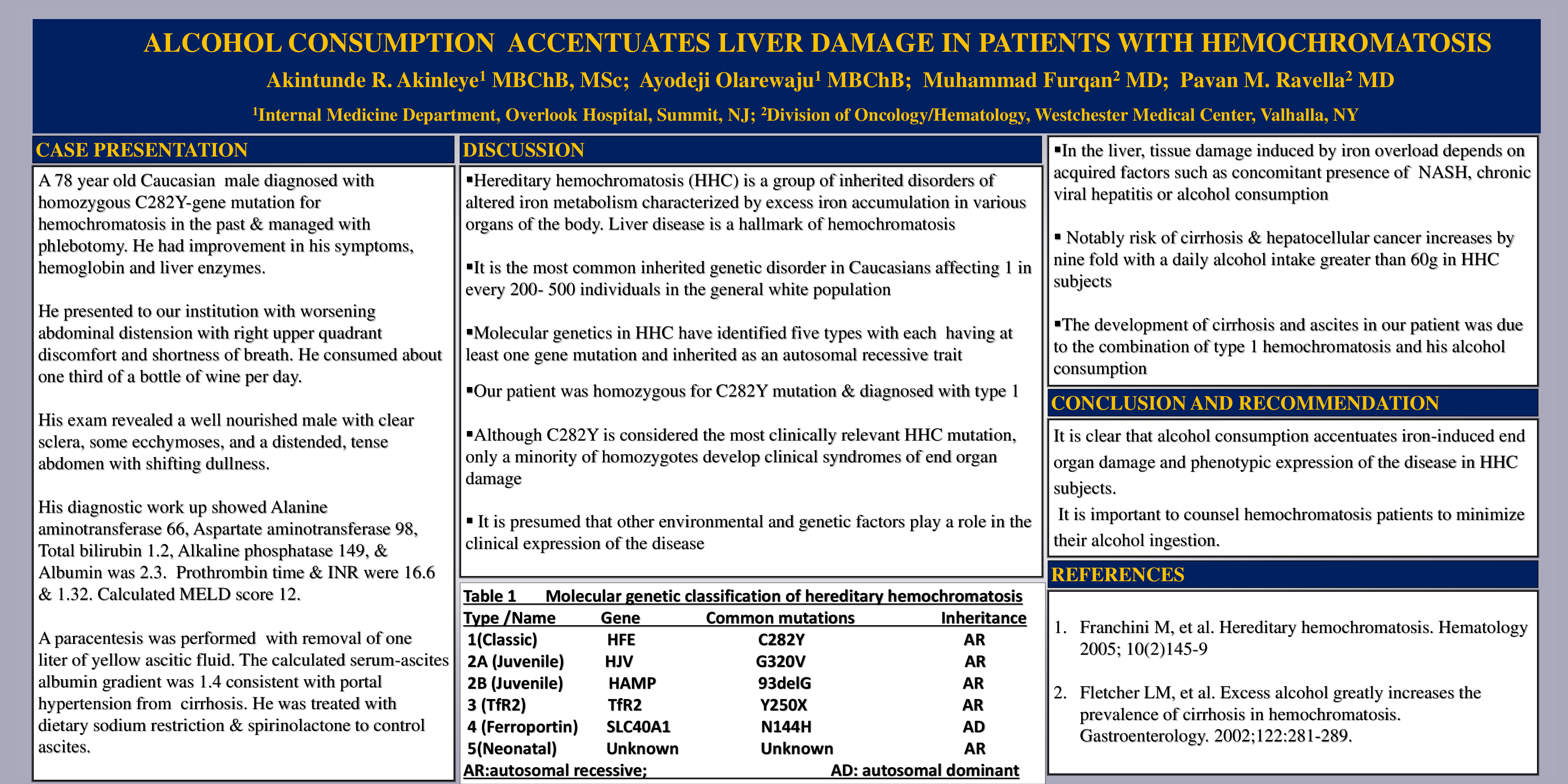
Alcohol Consumption Accentuates Liver Damage In Patients With Hereditary Hemochromatosis
Abstract
Introduction
Hereditary hemochromatosis (HHC) is a group of genetic disorders of altered iron metabolism characterized by excess iron accumulation in various organs of the body. Though liver disease is the most consistent feature and one of the hallmarks of hemochromatosis, most patients with HHC are asymptomatic and do not develop frank clinical symptoms of hepatic fibrosis unless there is concomitant comorbidity such as alcohol consumption, NASH or chronic viral hepatitis, etc1,2. Here we report a patient with HHC and history of exposure to excess alcohol.
Case Presentation
History
A 78 year old Caucasian male diagnosed with homozygous C282Y-gene mutation for hemochromatosis in the past and managed with phlebotomy. He had improvement in his symptoms, as well as his hemoglobin and liver enzymes.
He was well up until three weeks prior to admission when he complained of worsening abdominal distension with right upper quadrant discomfort, shortness of breath and diarrhea. He denied any fevers, nausea, jaundice, dark urine, confusion, joint pain, or pruritus. He consumed about one third of a bottle of wine per day.
Physical Examination
His exam revealed a well nourished male with clear sclera, some ecchymosis, and a distended, tense abdomen with shifting dullness
Diagnostics
Hemoglobin 12.1, Alanine aminotransferase 66, aspartate aminotransferase 98, total bilirubin 1.2, alkaline phosphatase 149, and albumin was 2.3. Prothrombin time and INR were 16.6 & 1.32 respectively.
Hospital Course
A paracentesis was performed with presumptive diagnosis of cirrhosis. They removed one liter of yellow ascitic fluid and the calculated serum-ascites albumin gradient was 1.4 with WBC 1,756/µL and no growth on culture. He was treated with dietary sodium restriction & spirinolactone to control ascites and discharged.
Literature Review
Introduction
Hereditary hemochromatosis (HHC) is a group of inherited disorders of altered iron metabolism characterized by excess iron accumulation in various organs of the body. Liver disease is a hallmark of hemochromatosis.
Prevalence.
HHC is the most common inherited genetic disorder in Caucasians with a fairly high prevalence among Northern European descents of Nordic or Celtic ancestry. The disease affects 1 in every 200- 500 individuals in the general white population.
Genetics and Clinical Relevance
Molecular genetics in HHC have identified five types with each having at least one gene mutation and inherited as an autosomal recessive trait. Type 1 (classic) is most common HHC and associated HFE gene mutations (C282Y & H63D). Homozygosity for C282Ymutation carries the greatest risk of iron accumulation and organ damage.
Discussion
Although C282Y is considered the most clinically relevant HHC mutation, only a minority of homozygotes develop clinical syndromes of end organ damage. It is presumed that other environmental and genetic factors play a role in the clinical expression of the disease. The liver is the most frequently involved organ and tissue damage induced by iron overload depends on acquired factors such as concomitant presence of chronic viral hepatitis or alcohol consumption. Notably the risk of cirrhosis and hepatocellular cancer increases by nine fold with a daily alcohol intake greater than 60g. The age and mean HIC at which cirrhosis developed in alcoholic HHC was lower than in subjects without exposure to alcohol
Recommendation
It is important to counsel hemochromatosis patients to minimize their alcohol ingestion.
Related articles