LX4211, a Dual SGLT1/SGLT2 Inhibitor Shows a Favorable Gastrointestinal and Genitourinary Safety Profile in Type 2 Diabetes Mellitus (T2DM) Patients and Healthy Subjects
Abstract
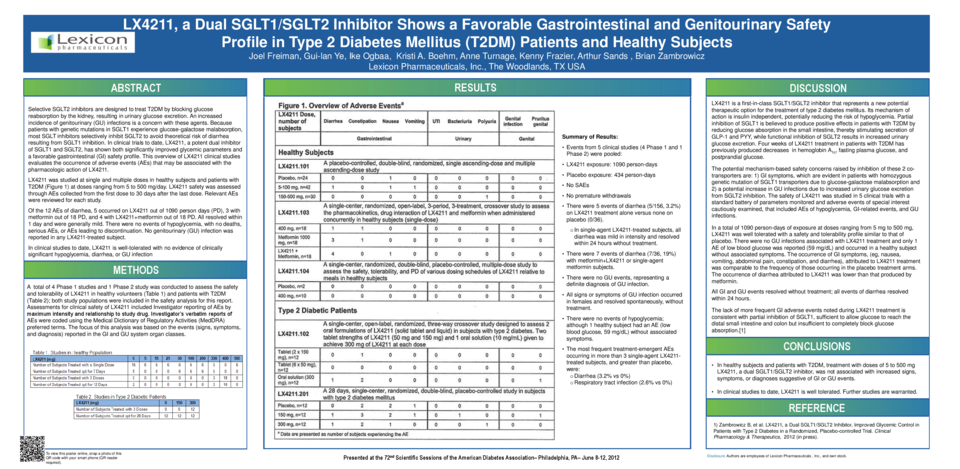
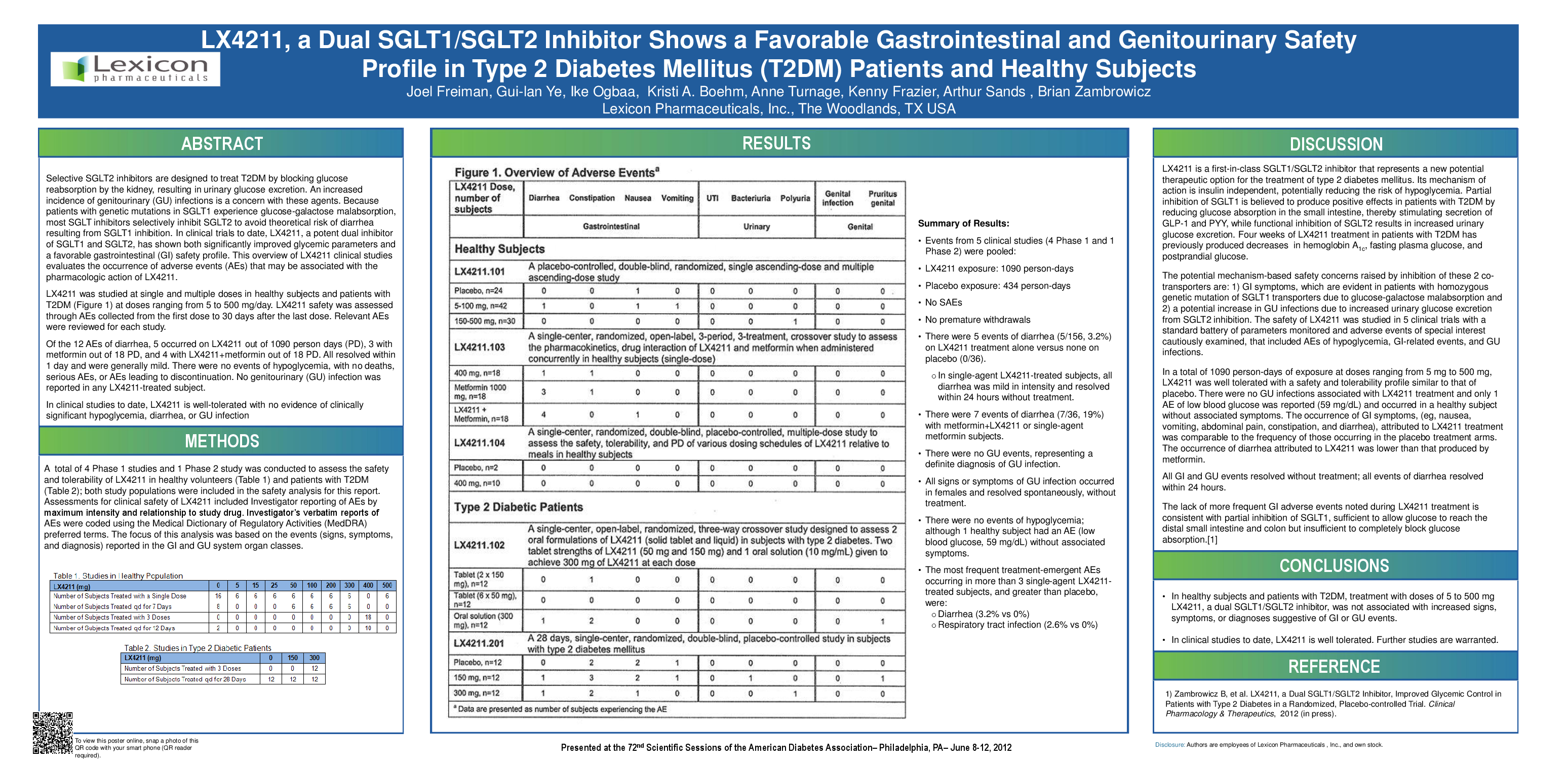
Selective SGLT2 inhibitors are designed to treat T2DM by blocking glucose reabsorption by the kidney, resulting in urinary glucose excretion. An increased incidence of genitourinary (GU) infections is a concern with these agents. Because patients with genetic mutations in SGLT1 experience glucose-galactose malabsorption, most SGLT inhibitors selectively inhibit SGLT2 to avoid theoretical risk of diarrhea resulting from SGLT1 inhibition. In clinical trials to date, LX4211, a potent dual inhibitor of SGLT1 and SGLT2, has shown both significantly improved glycemic parameters and a favorable gastrointestinal (GI) safety profile. This overview of LX4211 clinical studies evaluates the occurrence of adverse events (AEs) that may be associated with the pharmacologic action of LX4211.
LX4211 was studied at single and multiple doses in healthy subjects and patients with T2DM (Figure 1) at doses ranging from 5 to 500 mg/day. LX4211 safety was assessed through AEs collected from the first dose to 30 days after the last dose. Relevant AEs were reviewed for each study.
Of the 12 AEs of diarrhea, 5 occurred on LX4211 out of 1090 person days (PD), 3 with metformin out of 18 PD, and 4 with LX4211+metformin out of 18 PD. All resolved within 1 day and were generally mild. There were no events of hypoglycemia, with no deaths, serious AEs, or AEs leading to discontinuation. No genitourinary (GU) infection was reported in any LX4211-treated subject.
In clinical studies to date, LX4211 is well-tolerated with no evidence of clinically significant hypoglycemia, diarrhea, or GU infection
Related articles