Evaluation of Immunological Changes in Patients Treated With Cyberknife® Radiosurgery (SBRT Group) and Radiotherapy (RT Group) – A Prospective Cohort Study
Abstract
Background:
There are conflicting reports whether localized RT confers immunomodulatory effects that promote or interfere with Tumor reduction [1-3].
There is significant impairment in immune recovery (T lymphocyte responses and NK cell activity) following cancer directed treatment independent of stage of disease [4]. In animal models ablative radiation in doses of 15–25Gy was found to cause an increase in T-cell priming in draining lymphoid tissue, leading to reduction/eradication of the primary tumor or distant metastasis in a CD8+ T-cell dependent fashion compared
to conventional 2Gy doses [5].
The possibility that there may be a certain dose per fraction that is optimal for stimulating radiation adjuvanticity is of relevance to mechanism of radiation-induced immune stimulation and clinical practice [6]. Both cancer and cancer directed therapy can cause suppression of antitumor immune response. This is partly due to production of immuno suppressive cytokines, suppression of innate and tumor specific immune responses and less antigenic load to stimulate an effective immune response. Results can be improved if such an immune suppression is reversed
Study Objectives:
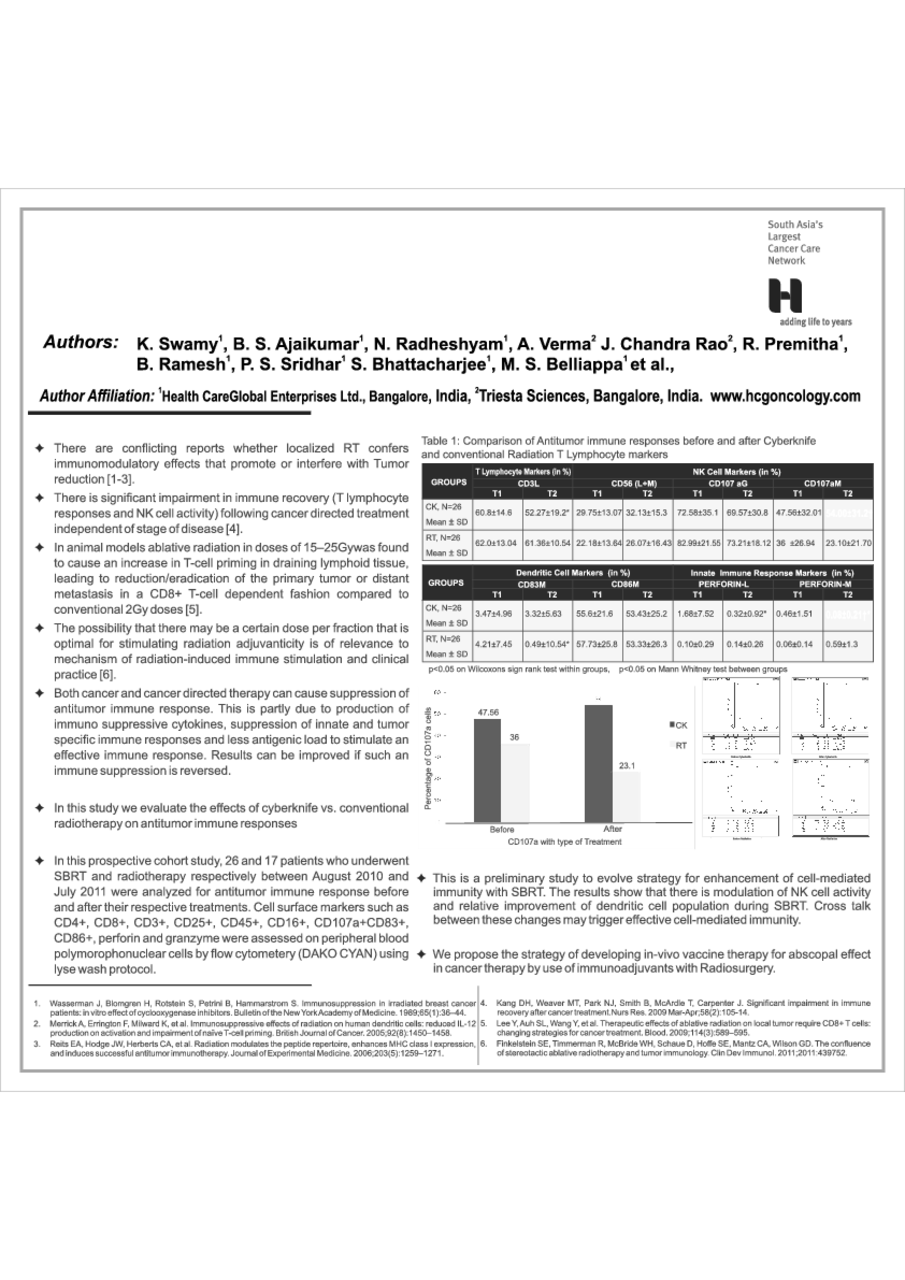
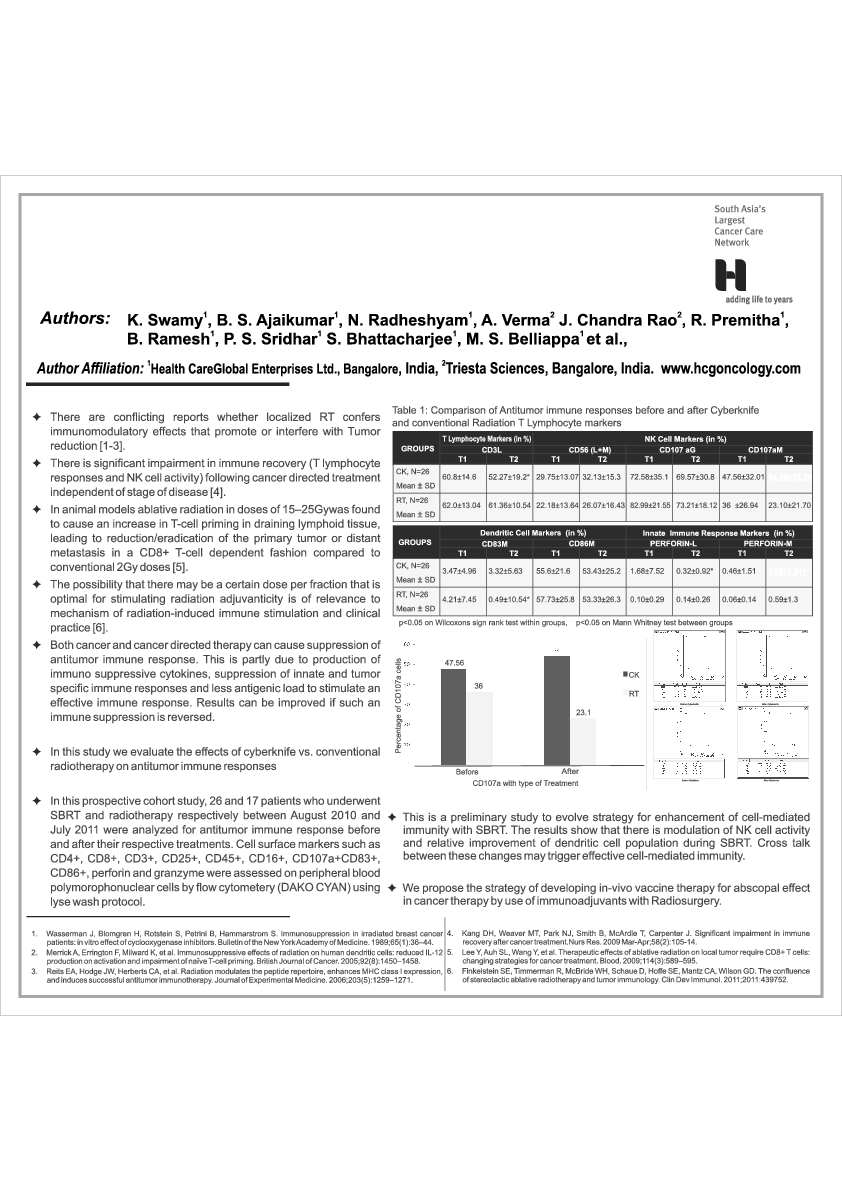
This study we evaluate the effects of cyberknife vs. conventional radiotherapy on antitumor immune responses.
Methods:
In this prospective cohort study, 26 and 17 patients who underwent SBRT and radiotherapy respectively were analyzed for antitumor immune response before and after their respective treatments. Cell surface markers such as CD4+, CD8+, CD3+,CD25+, CD45+,CD16+, CD107a+CD83+, CD86+, perforin and g r a n z yme were assessed on peripheral blood polymoropho-nuclear cells by flow cytometery (DAKO CYAN) using lyse wash protocol
Conclusion:
This is a preliminary study to evolve strategy for enhancement of cell-mediated immunity with SBRT. The results show that there is modulation of NK cell activity and relative improvement of dendritic cell population during SBRT.Cross talk between these changes may trigger effective cell-mediated immunity.
Future Directions:
We propose the strategy of developing in-vivo vaccine therapy for abscopal effect in cancer therapy by use of immunoadjuvants with Radiosurgery.
Related articles