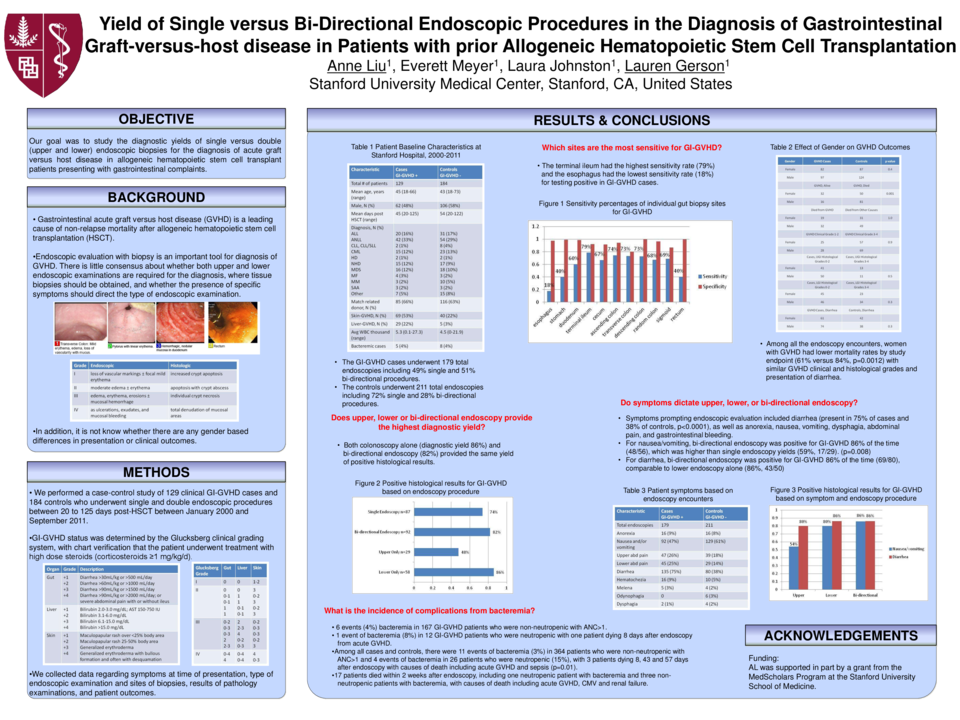
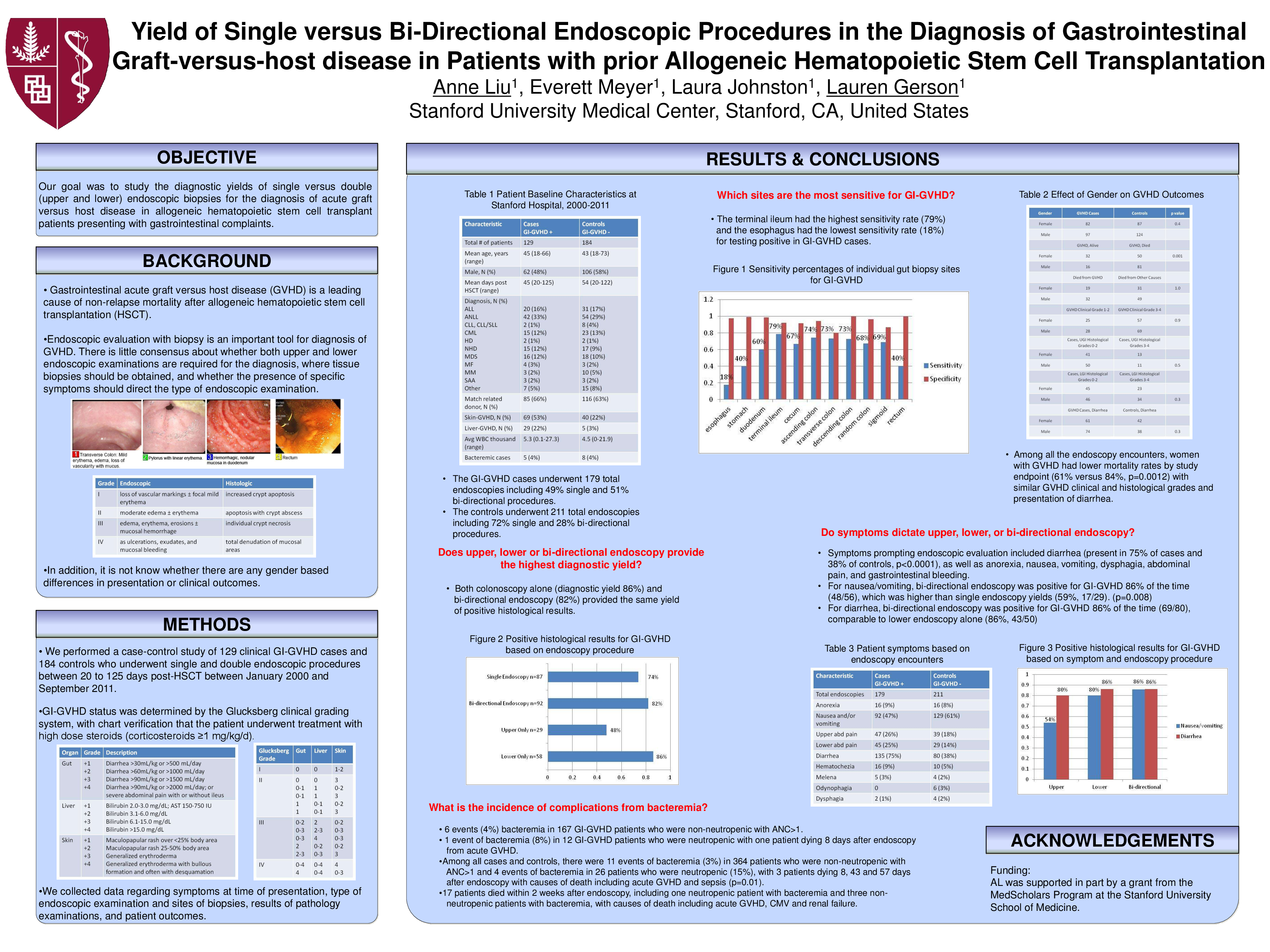
Yield of Single versus Bi-Directional Endoscopic Procedures in the Diagnosis of Gastrointestinal Graft-versus-host disease in Patients with prior Allogeneic Hematopoietic Stem Cell Transplantation
Abstract
Purpose: Gastrointestinal acute graft versus host disease (GVHD) is a leading cause of non-relapse mortality after allogeneic hematopoietic stem cell transplantation (HSCT). Endoscopic evaluation with biopsy is an important tool for diagnosis of GVHD. There is little consensus about whether both upper and lower endoscopic examinations are required for the diagnosis, where tissue biopsies should be obtained, and whether the presence of specific symptoms should direct the type of endoscopic examination. In addition, it is not know whether there are any gender based differences in presentation or clinical outcomes.
Methods: We performed a case-control study of 129 clinical GI-GVHD cases and 184 controls who underwent single and double endoscopic procedures between 20 to 125 days post-HSCT between January 2000 and September 2011. GI-GVHD status was determined by the Glucksberg clinical grading system, with chart verification that the patient underwent treatment with high dose steroids (corticosteroids ≥1 mg/kg/d). We collected data regarding symptoms at time of presentation, type of endoscopic examination and sites of biopsies, results of pathology examinations, and patient outcomes. We examined patient outcomes according to gender.
Results: The GI-GVHD cases underwent 179 total endoscopies including 49% single and 51% double procedures. The controls underwent 211 total endoscopies (72% single and 28% double procedures). Symptoms prompting endoscopic evaluation included diarrhea (present in 75% of cases and 38% of controls, p<0.0001), as well as anorexia, nausea, vomiting, dysphagia, abdominal pain, and gastrointestinal bleeding (with similar rates between cases and controls). Diagnostic yield of a double procedure was 85% versus 50% for patients with an upper endoscopy alone (p<0.0001) and 79% for colonoscopy alone (p=0.79). Diagnostic yields were 96% for the right colon (including ileum, cecum and ascending colon) 89% in the left colon (including descending colon, sigmoid and rectum) and 87% for terminal ileum alone. (p=0.0001). Among all the endoscopy encounters, women with GVHD had lower mortality rates by study endpoint (61% versus 84%, p=0.0012) with similar GVHD clinical and histological grades and presentation of diarrhea. (Table)
Conclusion: Diarrhea was the most common symptom in patients found to have GI-GVHD. The diagnostic yield was highest when biopsies were obtained from the right colon and terminal ileum. Gender differences were seen with women having better survival outcomes.
Related articles