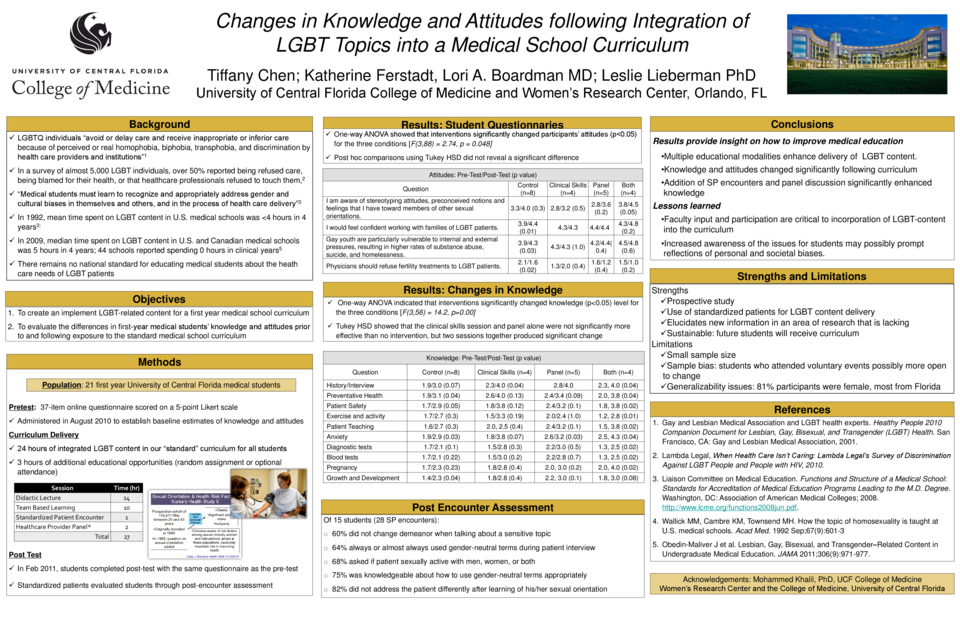
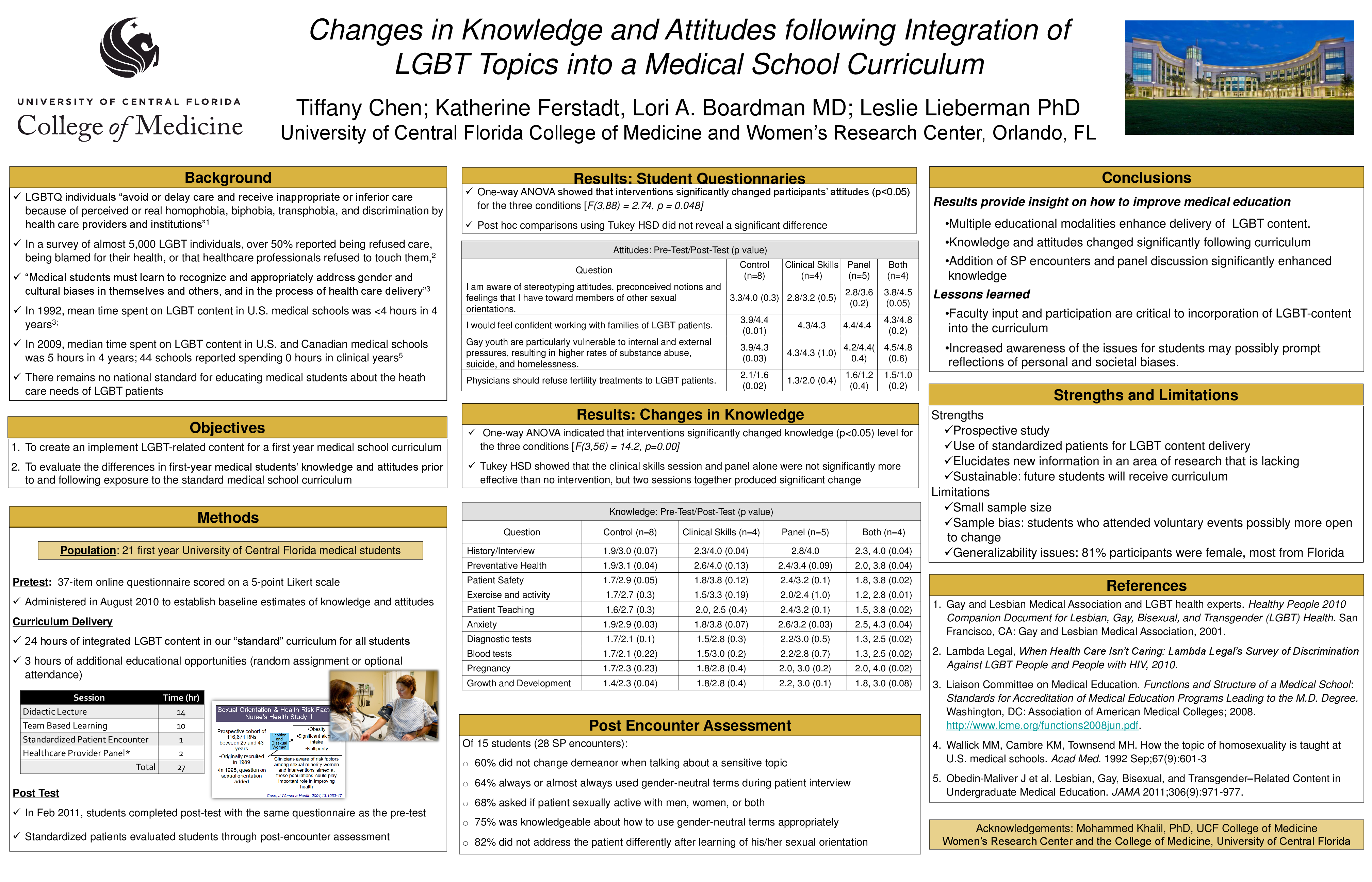
Changes in Knowledge and Attitudes following Integration of �LGBT Topics into a Medical School Curriculum
Abstract
Background: LGBT individuals often avoid care and receive inferior care because of perceived or real discrimination by healthcare professionals. Medical students must undergo cultural competency training about sexual orientation, gender identity, and gender expression to improve LGBT healthcare. As of 2010, North American medical schools only provided 5 hours of instruction on LGBT-related topics over four years. We aimed to 1) create and implement LGBT-related content for first-year medical students and 2) evaluate changes in students’ knowledge and attitudes following exposure the curriculum.
Methods: Using a 37-item online questionnaire, investigators invited medical students at the outset of their first year to participate in the study. Students received up to 27 hours of LGBT-related content. Twenty-four hours were delivered through didactic lectures and Team Based Learning as part of the “standard curriculum” for all students. Two additional educational opportunities for LGBT topics were available: a clinical skills session with a LGBT standardized patient (random assignment) and a panel discussion with four healthcare providers self-identified as LGBT (optional attendance). One-way ANOVA testing and post-hoc comparisons using Tukey HSD were used to analyze pre-exposure and post-exposure questionnaire items measuring knowledge and attitudes.
Results: In August 2010, 32 (53%) first year medical students anonymously completed the questionnaire. Of the 32, 21 (66%) completed the same questionnaire in February 2011. The standard curriculum significantly changed students’ knowledge and attitudes. Compared to those receiving the standard curriculum alone, students exposed to both additional opportunities were more likely to demonstrate positive changes in knowledge regarding LGBT healthcare issues.
Conclusions: In this pilot study, first year medical students were exposed to up to 27 hours of LGBT-related instruction. Students’ knowledge and attitudes changed significantly following the curricular interventions. Positive changes in students’ knowledge following exposure to the supplemental LGBT Standardized Patient clinical encounter and LGBT Healthcare Provider Panel suggest the potential efficacy of these curricular delivery modalities in medical education.
Related articles