Evaluation of Takotsubo Cardiomyopathy Cases at Florida Hospital
Abstract
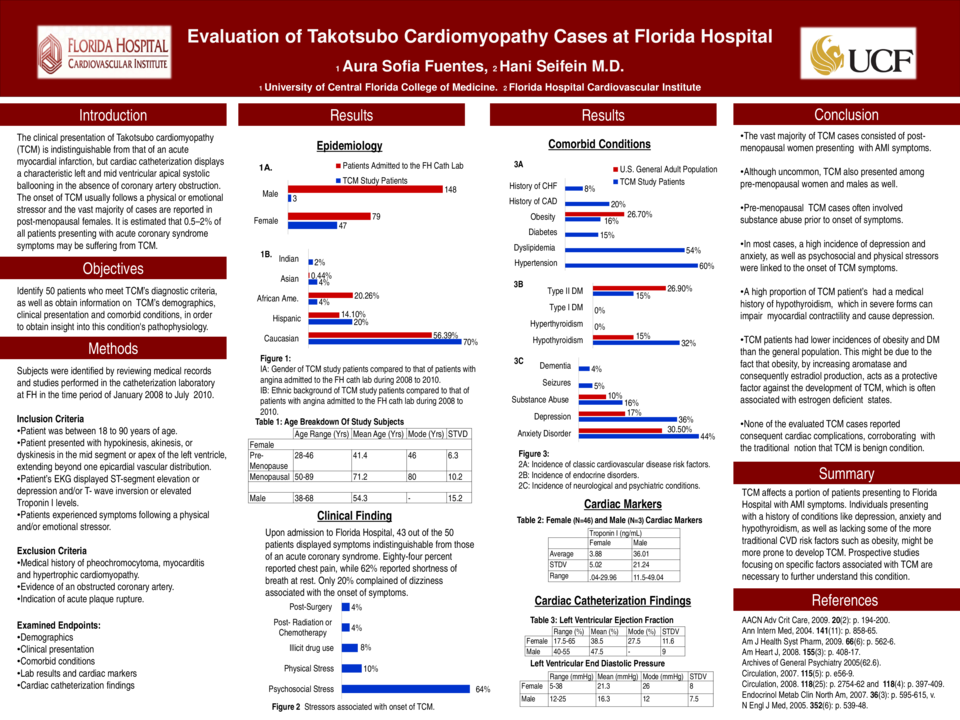
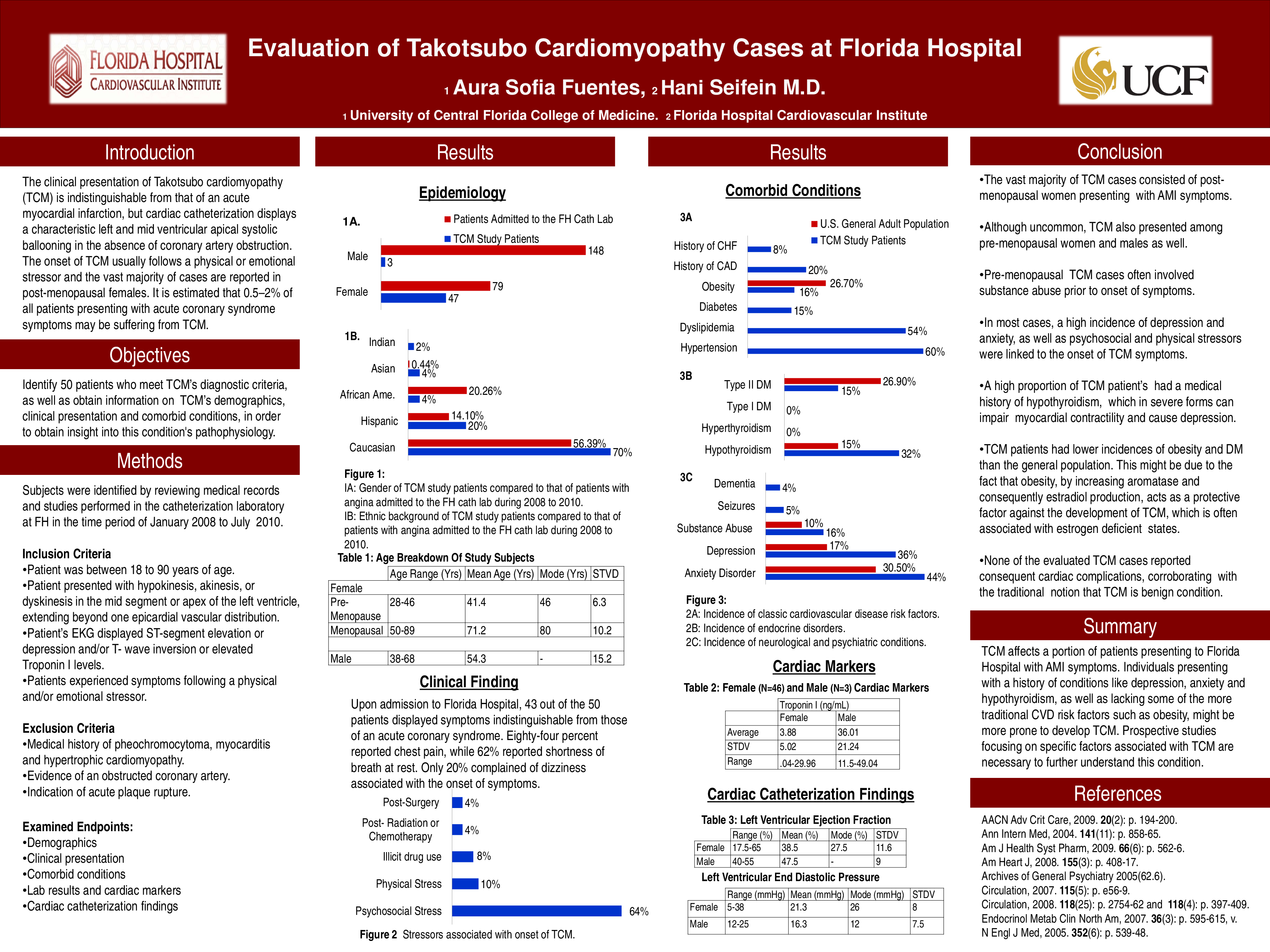
During the 1990s, Japanese doctors started noting the incidence of a condition resembling an acute myocardial infarction accompanied with dyskinesis, hypokinesis, or akinesis in the apical and/or mid portion of the ventricle, resulting in an apical ballooning of the left ventricle or mid cavity wall motion abnormality. What initially puzzled these doctors was the absence of obstruction in the coronary arteries, which is commonly seen in myocardial infarctions and ventricular pathologies. Furthermore, doctors determined that these symptoms usually developed after the patients had experienced a stressful event. Hence, what became known as Takotsubo syndrome is also known as “Broken heart syndrome”. Given that this is a rather new condition and has not been the focus of extensive research, not many healthcare providers are familiar with it and its clinical manifestations. Therefore, by identifying and studying cases of Takotsubo cardiomyopathy (TCM) at Florida Hospital, this retrospective research study will help educate the Orlando medical community and most importantly benefit patients. TCM affects a portion of patients presenting to Florida Hospital with AMI symptoms. Individuals presenting with a history of conditions like depression, anxiety and hypothyroidism, as well as lacking some of the more traditional CVD risk factors such as obesity, might be more prone to develop TCM. Prospective studies focusing on specific factors associated with TCM are necessary to further understand this condition.
Related articles