Tumor Length as a Prognostic Factor in Esophageal Cancer Management
Abstract
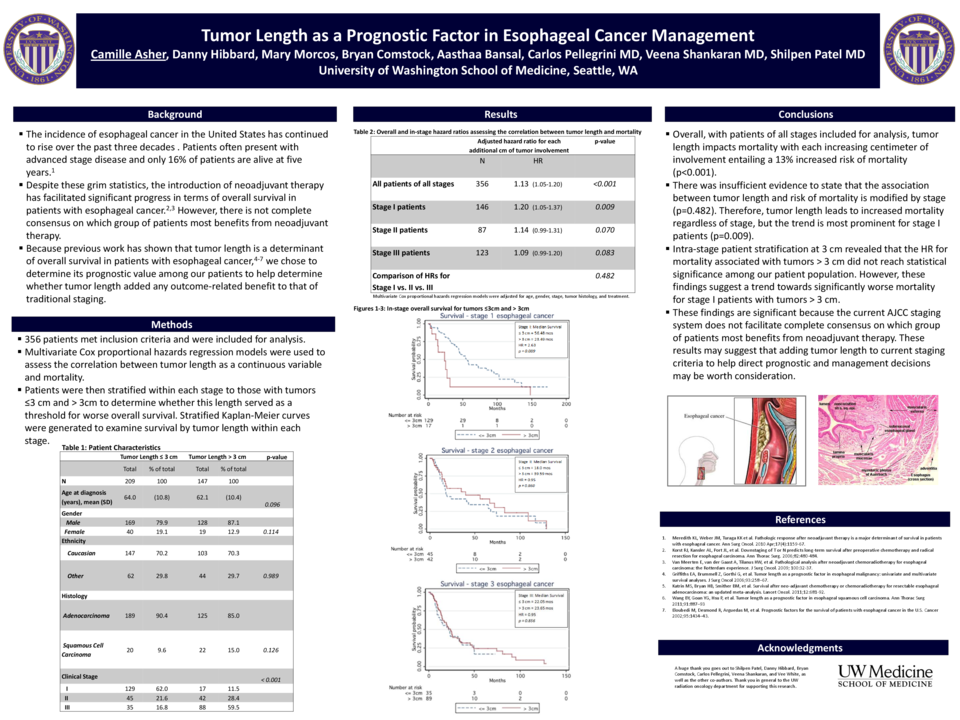
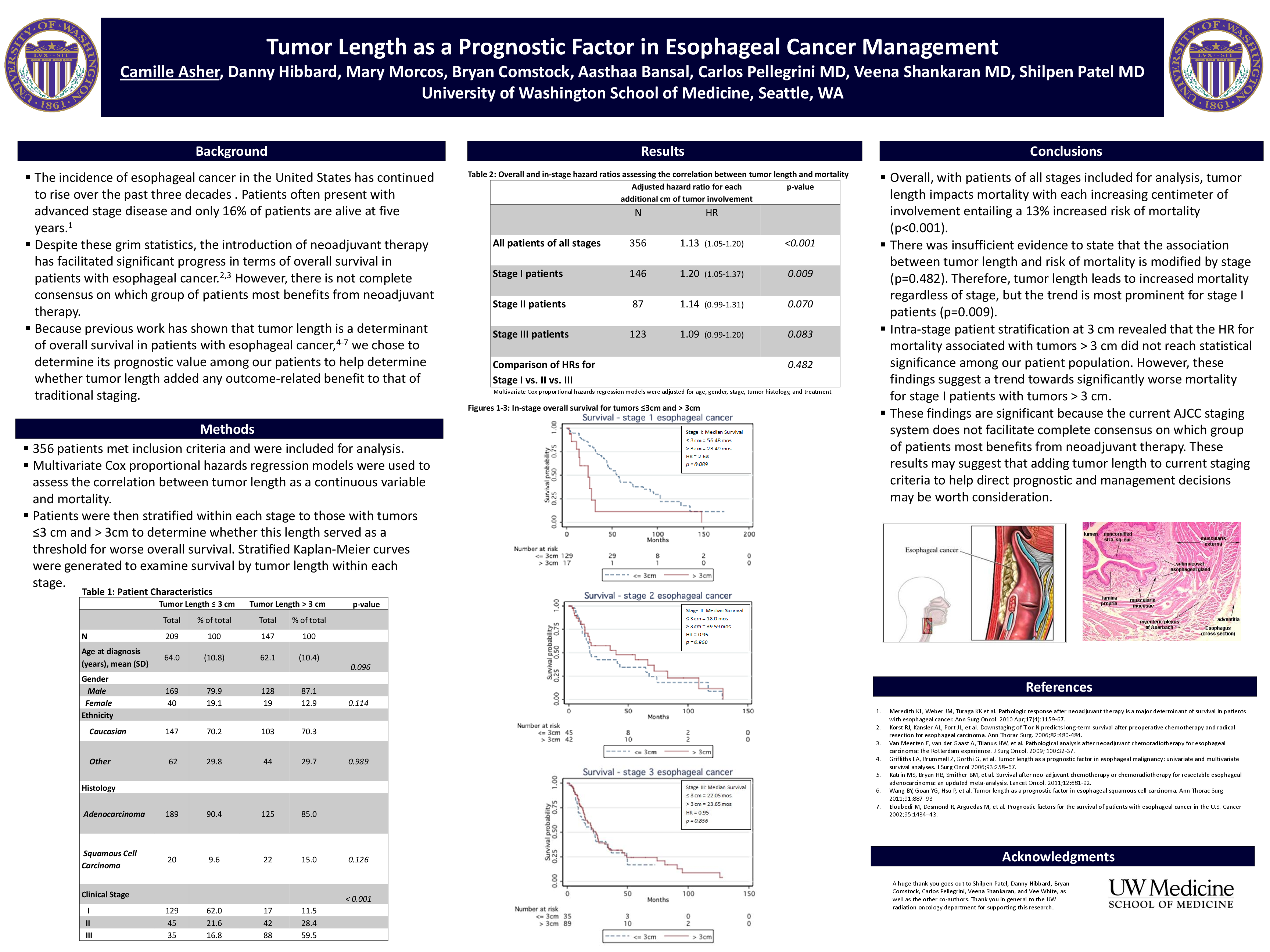
BACKGROUND: The role of pre-treatment endoscopic measurements in contributing to esophageal cancer prognosis has not been fully evaluated. We chose to determine the prognostic value of endoscopically measured tumor lengths to help determine whether tumor length adds any outcome-related benefit to that of traditional staging.
PATIENTS AND METHODS: 356 patients with stage I-III esophageal cancer treated with curative intent within the University of Washington Health System between 1995 and 2010 and who had EGD prior to treatment were included for analysis. We developed Cox proportional hazards models and Kaplan-Meier curves to evaluate the impact of tumor length on mortality, and to determine whether tumors beyond 3 cm in length were associated with a significantly worse outcome within each stage.
RESULTS: With patients of all stages included for analysis, we found that tumor length impacts mortality with each increasing centimeter of involvement entailing a 13% increased risk of mortality (HR=1.13, p<0.001), with a trend towards significance for stage I patients. A tumor length threshold of 3 cm also trended towards signficance in stage I patients (HR, tumor length > 3cm = 2.63, p=0.089).
Related articles