Abstract
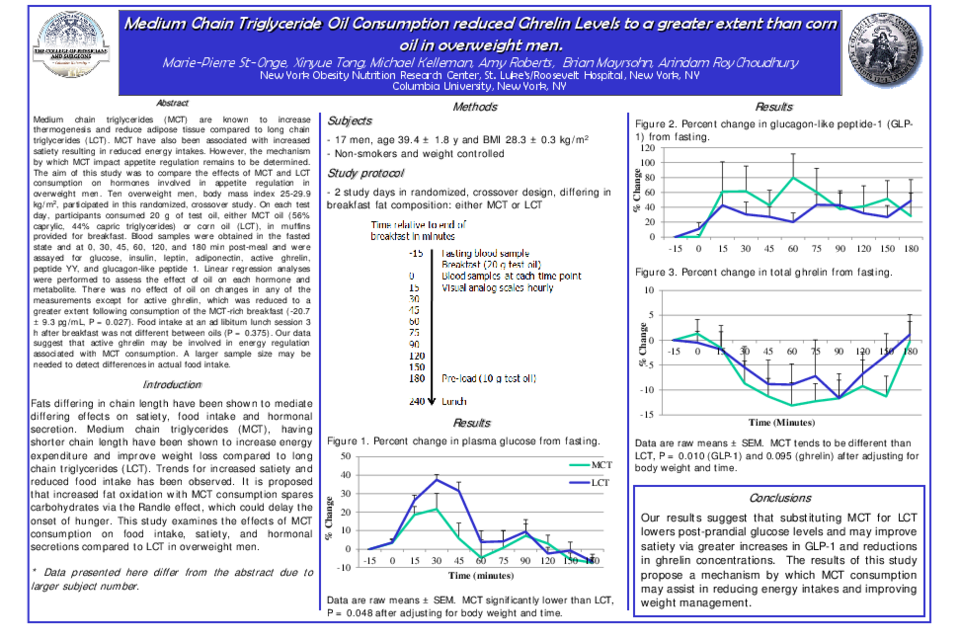
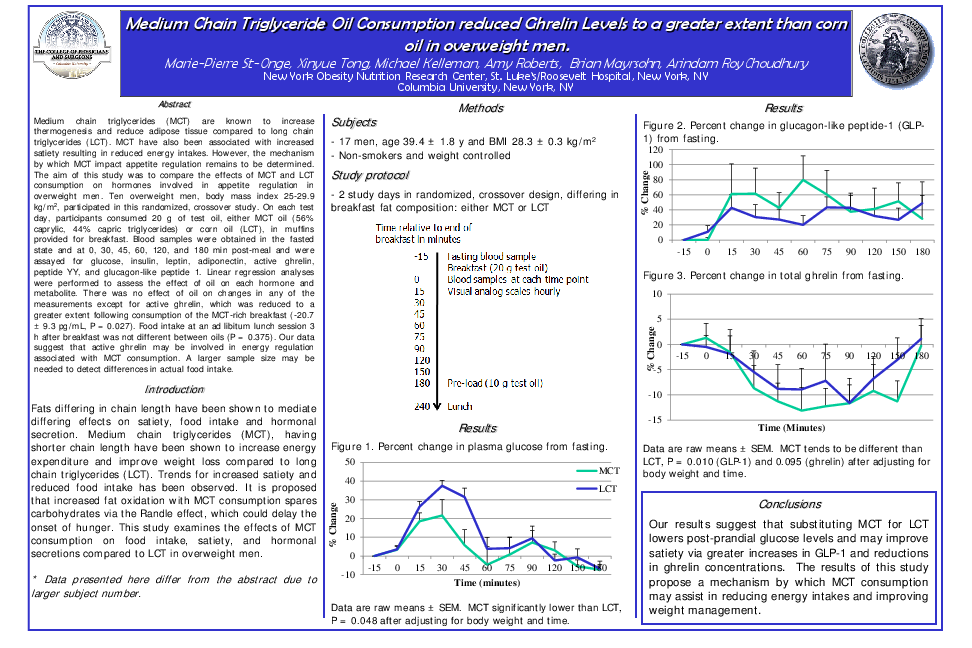
Medium chain triglycerides (MCT) are known to increase thermogenesis and reduce adipose tissue compared to long chain triglycerides (LCT). MCT have also been associated with increased satiety resulting in reduced energy intakes. However, the mechanism by which MCT impact appetite regulation remains to be determined. The aim of this study was to compare the effects of MCT and LCT consumption on hormones involved in appetite regulation in overweight men. Ten overweight men, body mass index 25-29.9 kg/m2, participated in this randomized, crossover study. On each test day, participants consumed 20 g of test oil, either MCT oil (56% caprylic, 44% capric triglycerides) or corn oil (LCT), in muffins provided for breakfast. Blood samples were obtained in the fasted state and at 0, 30, 45, 60, 120, and 180 min post-meal and were assayed for glucose, insulin, leptin, adiponectin, active ghrelin, peptide YY, and glucagon-like peptide 1. Linear regression analyses were performed to assess the effect of oil on each hormone and metabolite. There was no effect of oil on changes in any of the measurements except for active ghrelin, which was reduced to a greater extent following consumption of the MCT-rich breakfast (-20.7 ± 9.3 pg/mL, P = 0.027). Food intake at an ad libitum lunch session 3 h after breakfast was not different between oils (P = 0.375). Our data suggest that active ghrelin may be involved in energy regulation associated with MCT consumption. A larger sample size may be needed to detect differences in actual food intake.