Role of Hsp90 Post Translational Modifications in Motor Neuron Survival and Death
Abstract
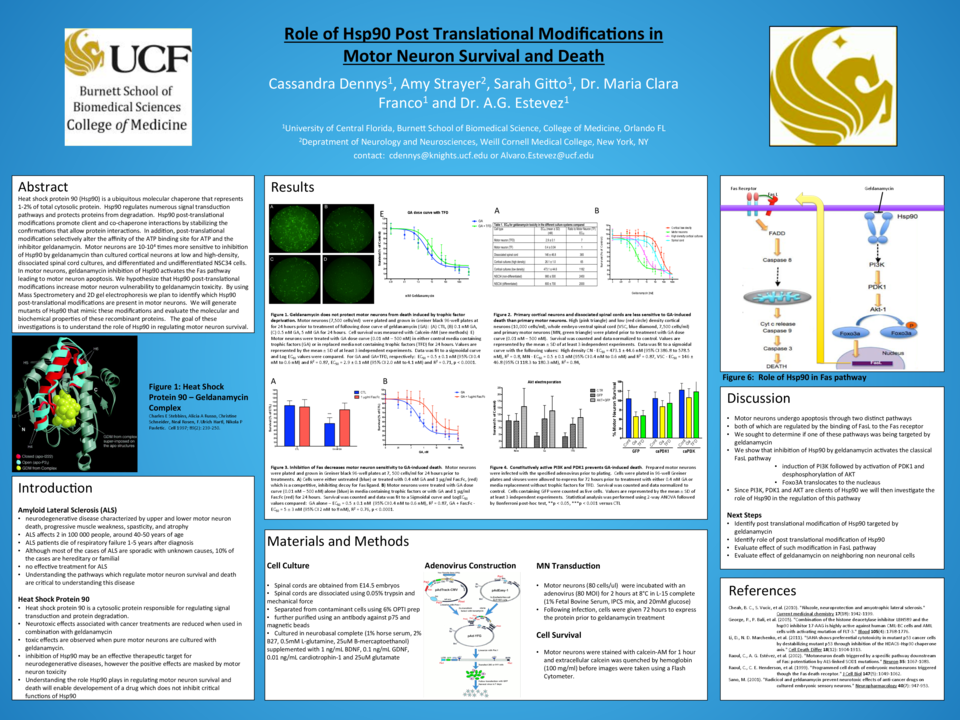
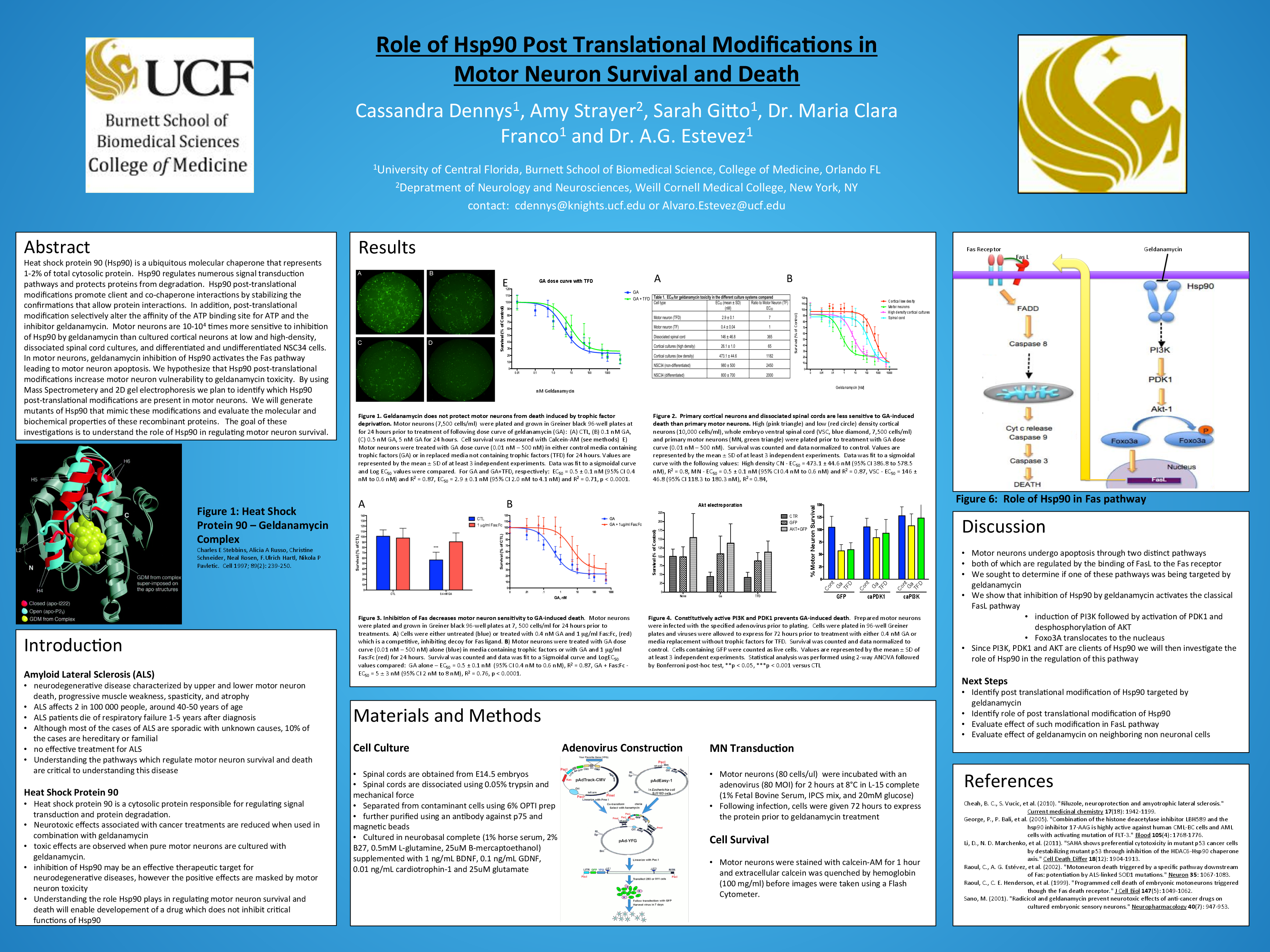
Heat shock protein 90 (Hsp90) is a ubiquitous molecular chaperone that represents 1-2% of total cytosolic protein. Hsp90 regulates numerous signal transduction pathways and protects proteins from degradation. These diverse activities are regulated by post-translational modifications of Hsp90 including phosphorylation, acetylation, s-nitrosation, sumolyation and nitration. Hsp90 post-translational modifications promote client and co-chaperone interactions by stabilizing the confirmations that allow protein interactions. In addition, post-translational modification selectively alter the affinity of the ATP binding site for ATP and the inhibitor geldanamycin. Motor neurons are 10-104 times more sensitive to inhibition of Hsp90 by geldanamycin than cultured cortical neurons at low and high-density, dissociated spinal cord cultures, and differentiated and undifferentiated NSC34 cells. In motor neurons, geldanamycin inhibition of Hsp90 activates the Fas pathway leading to motor neuron apoptosis. We hypothesize that Hsp90 post-translational modifications increase motor neuron vulnerability to geldanamycin toxicity. By using Mass Spectrometery and 2D gel electrophoresis we plan to identify which Hsp90 post-translational modifications are present in motor neurons. We will generate mutants of Hsp90 that mimic these modifications and evaluate the molecular and biochemical properties of these recombinant proteins. The goal of these investigations is to understand the role of Hsp90 in regulating motor neuron survival.
Related articles