Abstract
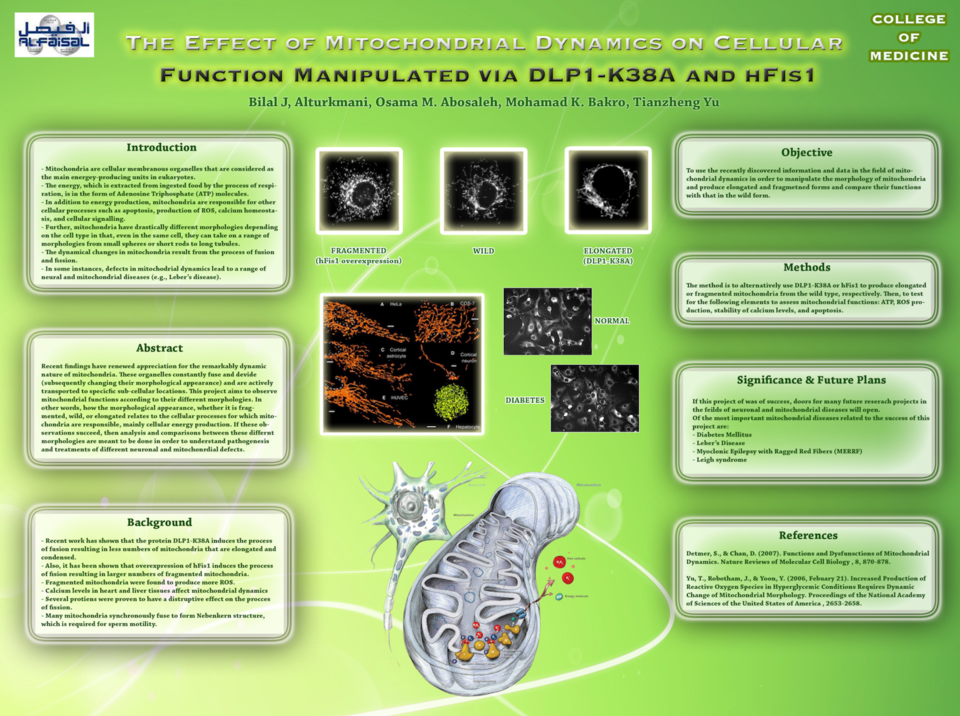
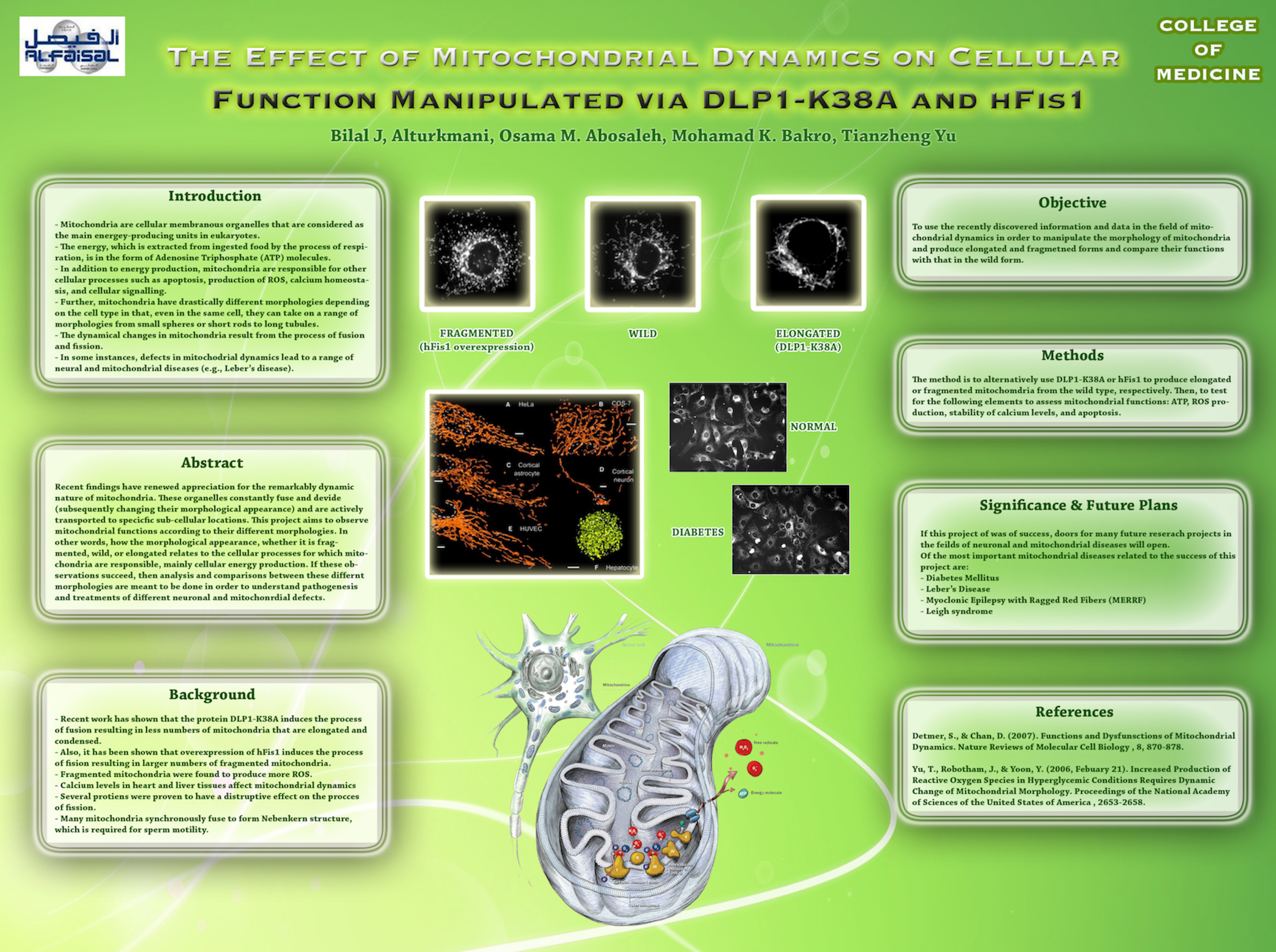
Recent findings have renewed appreciation for the remarkable dynamic nature of mitochondria. These organelles constantly fuse and divide (subsequently changing their morphological appearance) and are actively transported to specific sub-cellular locations. This project aims to observe mitochondrial functions according to their different morphologies. In other words, how the morphological appearance, whether it is fragmented, wild, or elongated, relates to the cellular processes for which mitochondria are responsible, mainly cellular energy production. If these observations succeed, then analysis and comparisons between these different morphologies are meant to be done in order to understand pathogenesis and treatments of different neuronal and mitochondrial defects.