Age, Primary Cause Of End Stage Renal Disease And Waiting Time, Not Ethnicity Or Education Level, Impacts Willingness To Accept Expanded Criteria Donor Kidneys
Abstract
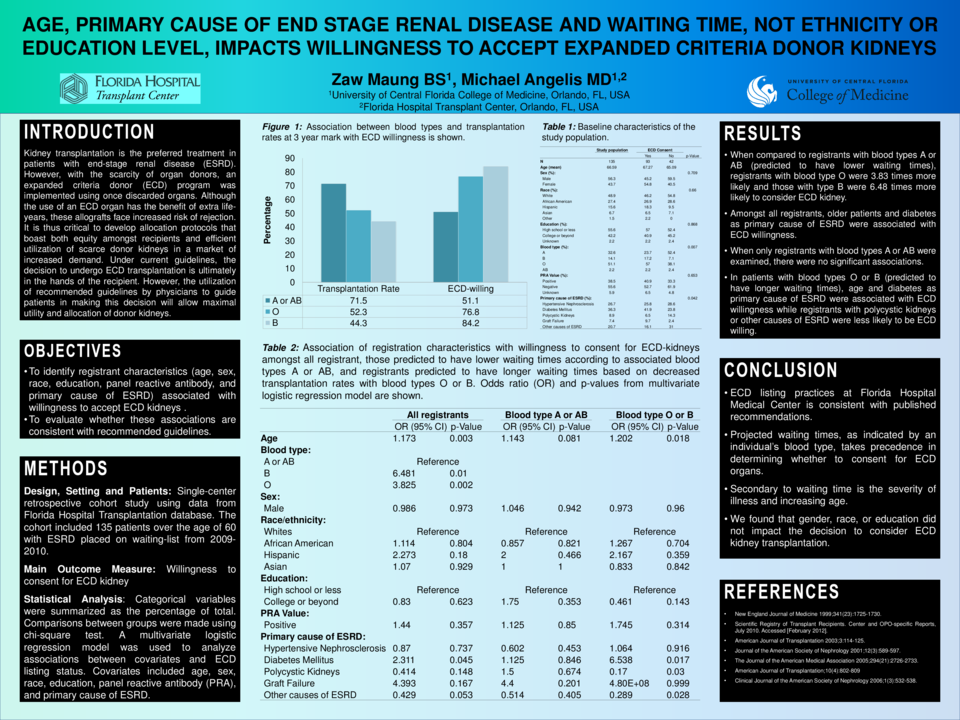
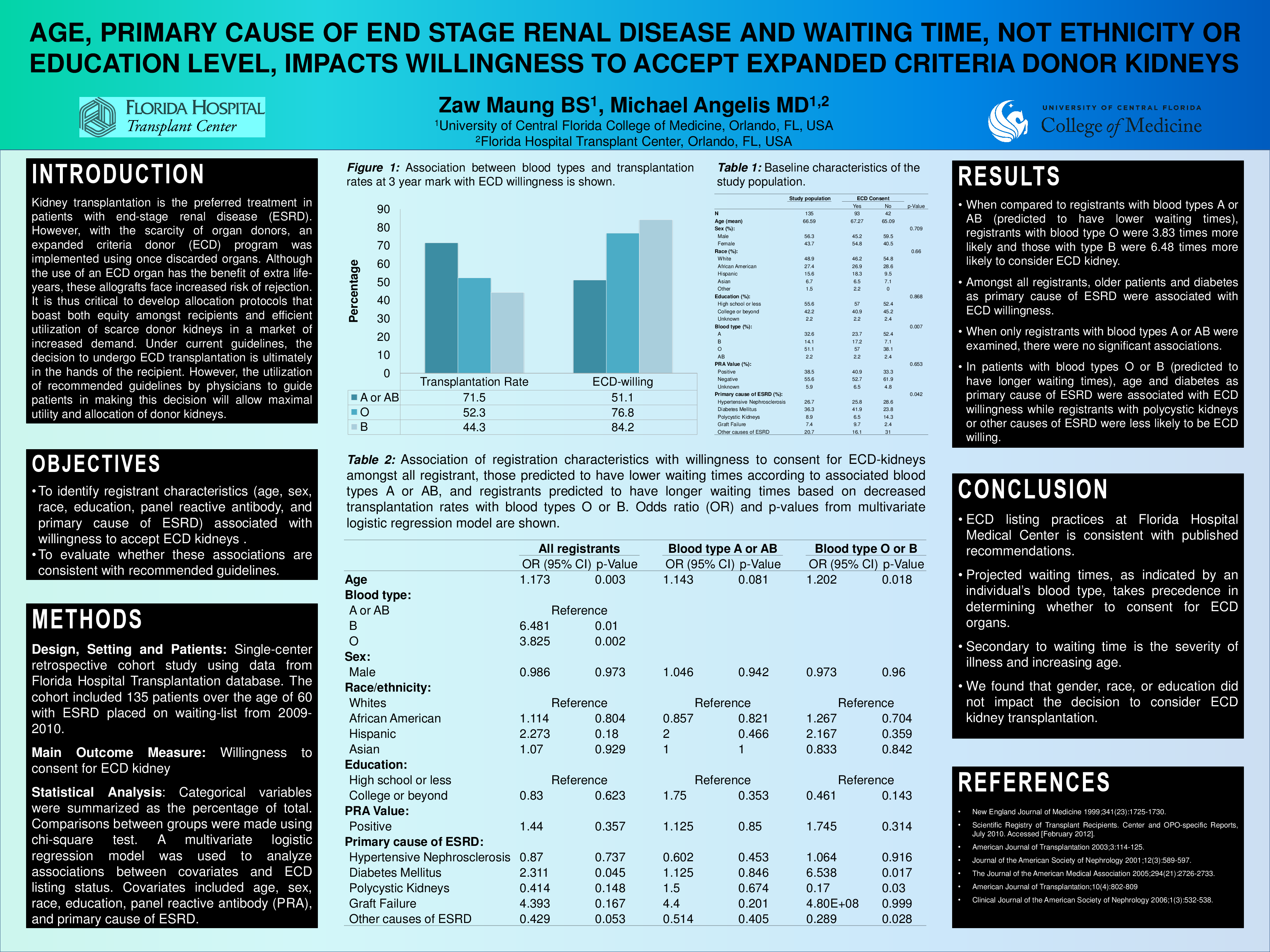
Context: It is critical to develop allocation protocols that boast both equity amongst recipients and efficient utilization of scarce donor kidneys in a market of increased demand. Under current guidelines, the decision to undergo expanded criteria donor (ECD) transplantation is ultimately in the hands of the recipient. However, the utilization of recommended guidelines by physicians to guide patients in making this decision will have profound impacts.
Objective: To identify registrant characteristics associated with willingness to accept ECD kidneys and evaluate whether these associations are consistent with recommended guidelines.
Design, Setting and Patients: Single-center retrospective cohort study using data from Florida Hospital Transplantation database. The cohort included 135 patients over the age of 60 with ESRD placed on waiting-list from 2009-2010.
Main Outcome Measure: Willingness to consent for ECD kidney
Results: When compared to registrants with blood types A or AB (predicted to have lower waiting times), registrants with blood type O were 3.83 times more likely and those with type B were 6.48 times more likely to consider ECD kidney. Amongst all registrants, older patients and diabetes as primary cause of ESRD were associated with ECD willingness. When only registrants with blood types A or AB were examined, there were no significant associations. However, in patients with blood types O or B (predicted to have longer waiting times), age and diabetes as primary cause of ESRD were associated with ECD willingness while registrants with polycystic kidneys or other causes of ESRD were less likely to be ECD willing.
Conclusions: ECD listing practices at Florida Hospital Medical Center is consistent with published recommendations. Projected waiting times, as indicated by an individual’s blood type, takes precedence in the determining whether to consent for ECD organs. Secondary to waiting time is the severity of illness and increasing age. We found that gender, race, or education did not impact the decision to consider ECD kidney transplantation.
Related articles