Abstract
Objectives
Unintended pregnancy and sexually transmitted infections may be prevented by using barrier
contraceptives such as condoms. However, condoms are not consistently used by sexually
active individuals. This study was conducted to assess patient characteristics and behaviors
associated with consistent condom use in college-aged women.
Methods
Female college students ≤26 years old were recruited at University of Central Florida Health
Services to complete a 19-item questionnaire containing items regarding demographic
information, medical history, and sexual history. Subjects reporting use of male or female
condoms "100% of the time" and "50-99% of the time" were considered consistent users, while
those reporting "0% of the time" were categorized as non-users.
Results
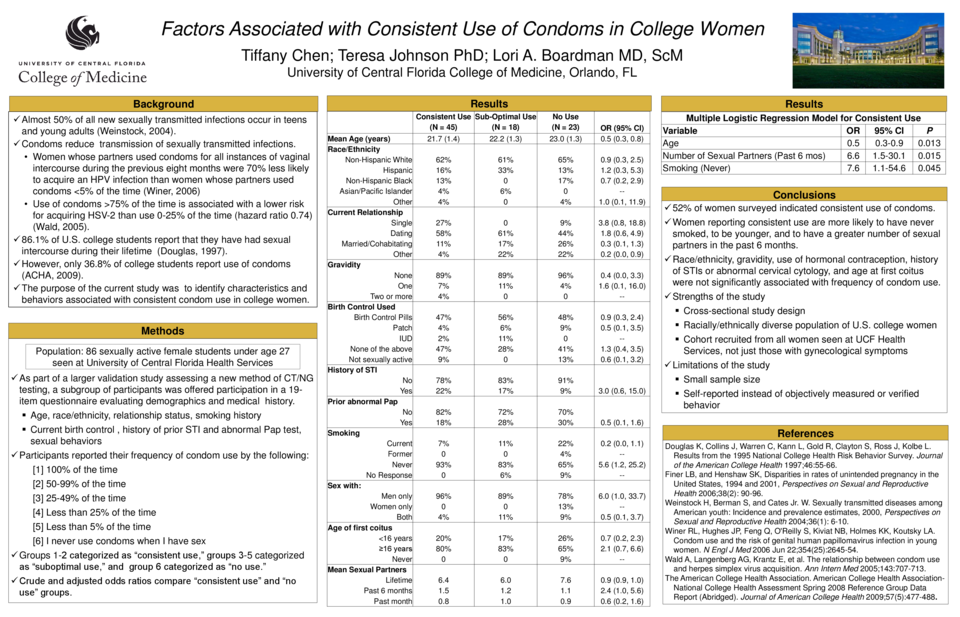
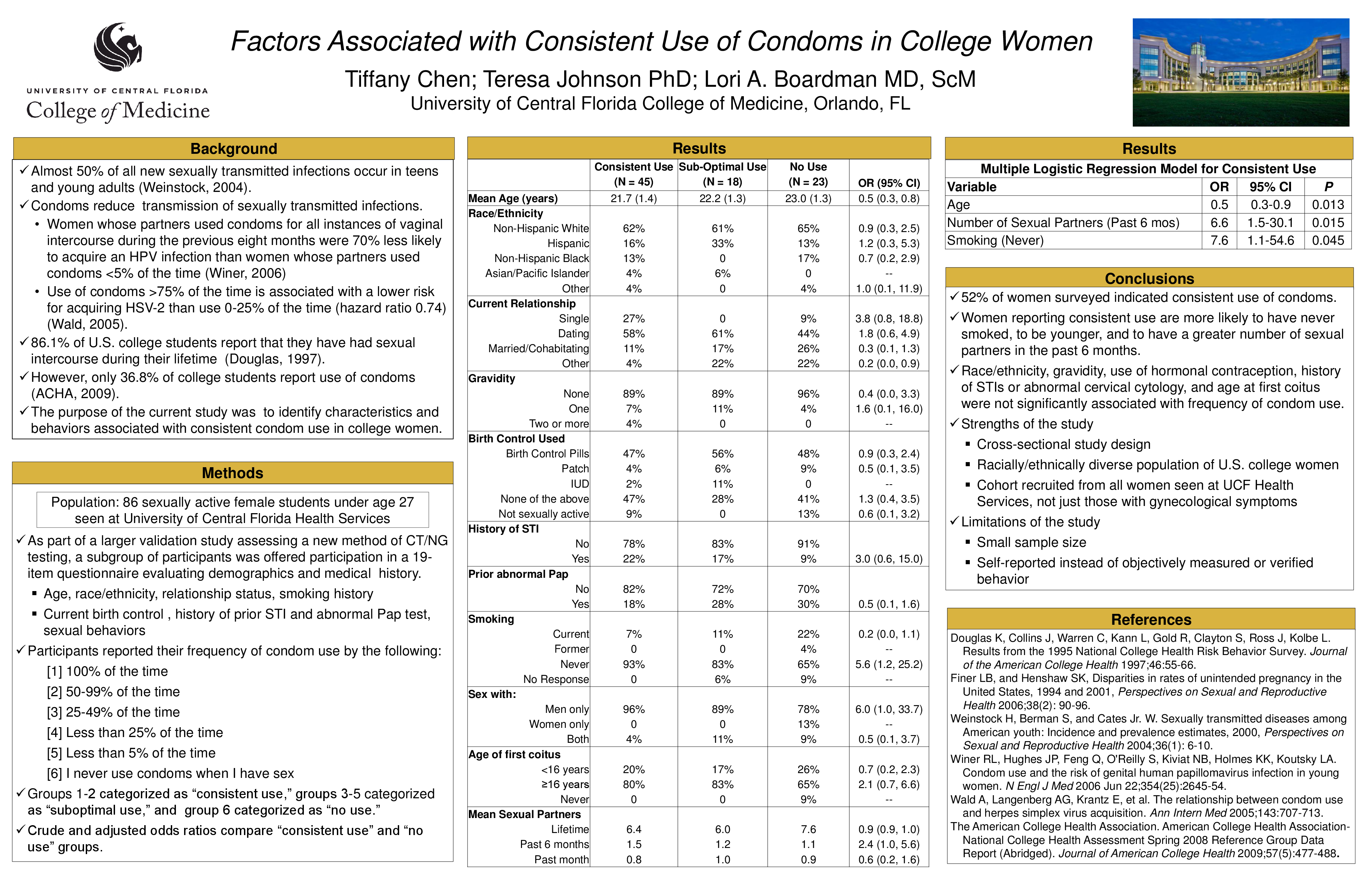
Of 86 participants, 52.3% reported consistent use of male or female condoms (median age 21)
while 26.7% reported no use (median age 23). In a logistic multiple regression model, factors
associated with consistent use included younger age (OR 0.54, 95% CI [0.33-0.88]), increased
number of partners in the last 6 months (OR 6.61, 95% CI [1.89-6.61]), and never smoking (OR
7.55, 95% CI [1.05-54.55]). Race/ethnicity, gravidity, parity, use of hormonal contraception,
history of sexually transmitted infections or abnormal cervical cytology, and age at first coitus
were not significantly associated with condom use.
Conclusion
Women who consistently use condoms are more likely to have never smoked, to be younger,
and to have had a greater number of sexual partners in the past 6 months, compared to women
who never use barrier contraceptives.