The Prevalence of Insomnia in Medical Students: Impact on Academic Performance
Abstract
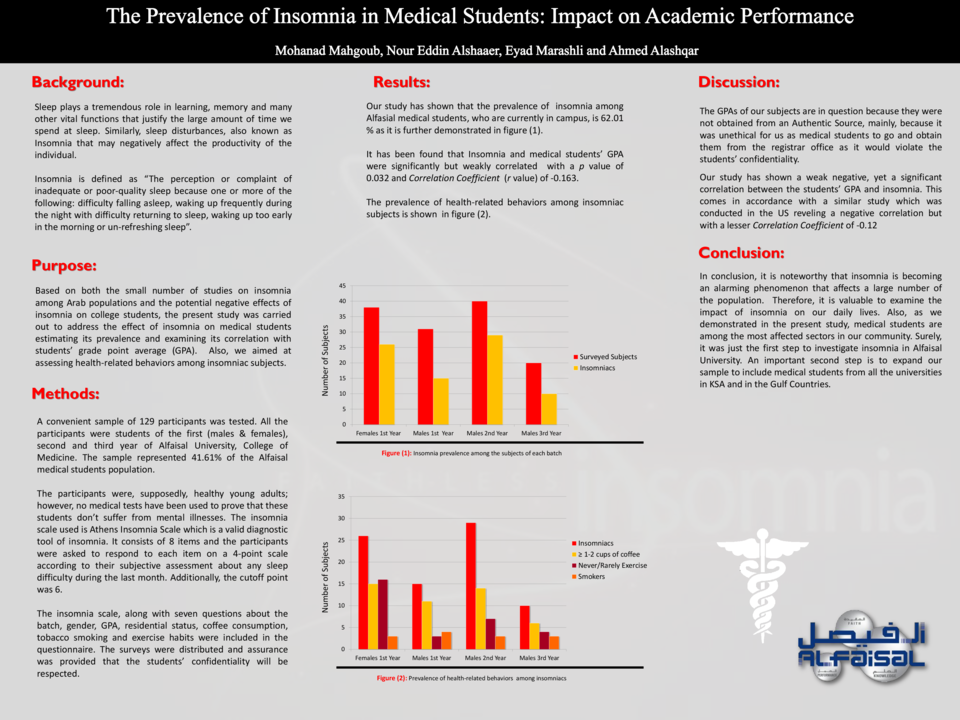
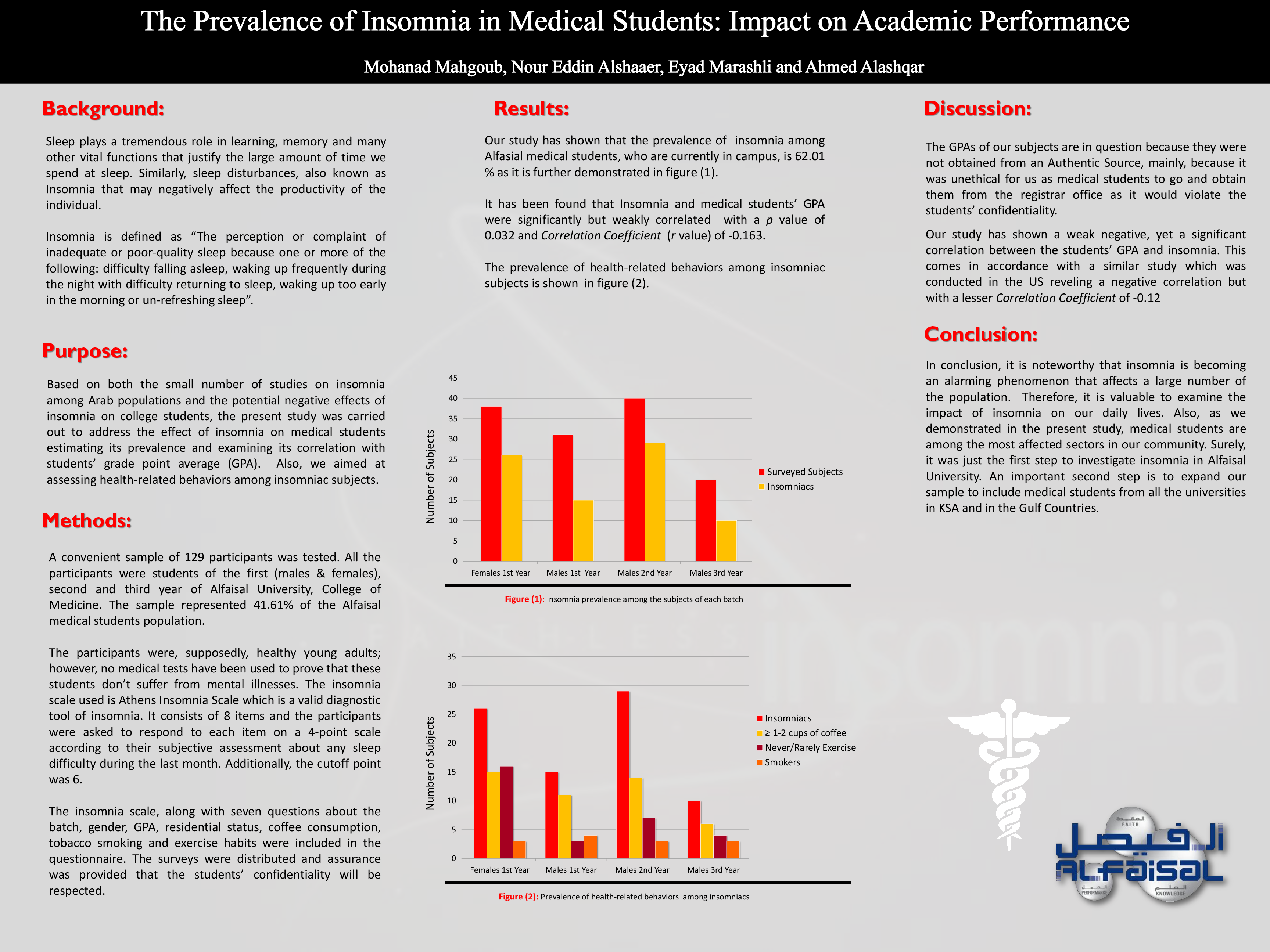
Sleep plays a tremendous role in learning, memory and many other vital functions that justify the large amount of time we spend at sleep. Similarly, sleep disturbances, also known as Insomnia that may negatively affect the productivity of the individual. Insomnia is defined as “The perception or complaint of inadequate or poor-quality sleep because one or more of the following: difficulty falling asleep, waking up frequently during the night with difficulty returning to sleep, waking up too early in the morning or un-refreshing sleep”. Based on both the small number of studies on insomnia among Arab populations and the potential negative effects of insomnia on college students, the present study was carried out to address the effect of insomnia on medical students estimating its prevalence and examining its correlation with students’ grade point average (GPA). Also, we aimed at assessing health-related behaviors among insomniac subjects. Using Athens Insomnia Scale we have examined a convenient sample of 129 participants representing 41.61% of our college of medicine. It was found that Insomnia and medical students’ GPA were significantly but weakly correlated with a p value of 0.032 and Correlation Coefficient (r value) of -0.163. Although the correlation was weak, Our study has shown a stronger correlation to that of other studies done in the west examining similar population.
Related articles