Upregulation of Heat Shock Protein 72 (Hsp72) Expression in Rhabdomyosacarcoma Cells
Abstract
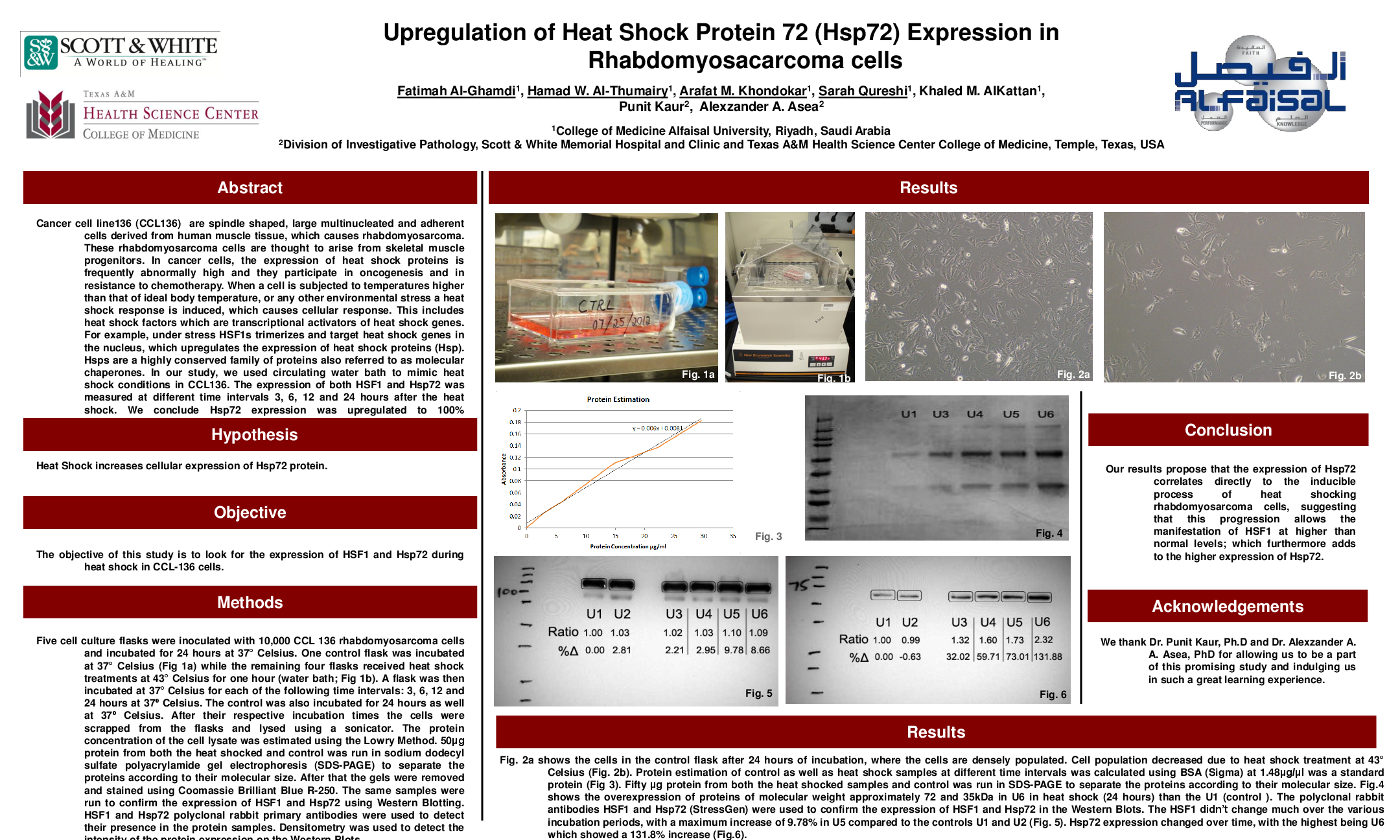
Cancer cell line136 (CCL136) are spindle shaped, large multinucleated and adherent cells derived from human muscle tissue, which causes rhabdomyosarcoma. These rhabdomyosarcoma cells are thought to arise from skeletal muscle progenitors. In cancer cells, the expression of heat shock proteins is frequently abnormally high and they participate in oncogenesis and in resistance to chemotherapy. When a cell is subjected to temperatures higher than that of ideal body temperature, or any other environmental stress a heat shock response is induced, which causes cellular response. This includes heat shock factors which are transcriptional activators of heat shock genes. For example, under stress HSF1s trimerizes and target heat shock genes in the nucleus, which upregulates the expression of heat shock proteins (Hsp). Hsps are a highly conserved family of proteins also referred to as molecular chaperones. In our study, we used circulating water bath to mimic heat shock conditions in CCL136. The expression of both HSF1 and Hsp72 was measured at different time intervals 3, 6, 12 and 24 hours after the heat shock. We conclude Hsp72 expression was upregulated to 100% approximately after 12 hours.
Related articles