Abstract
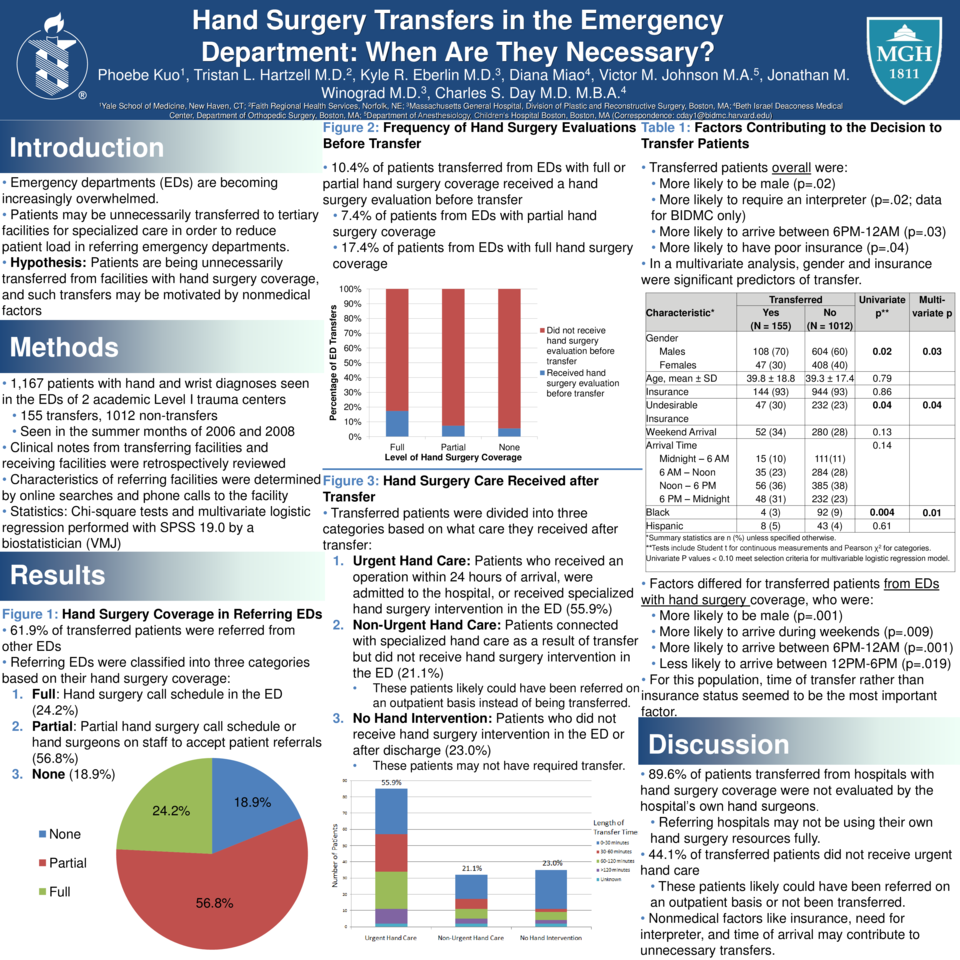
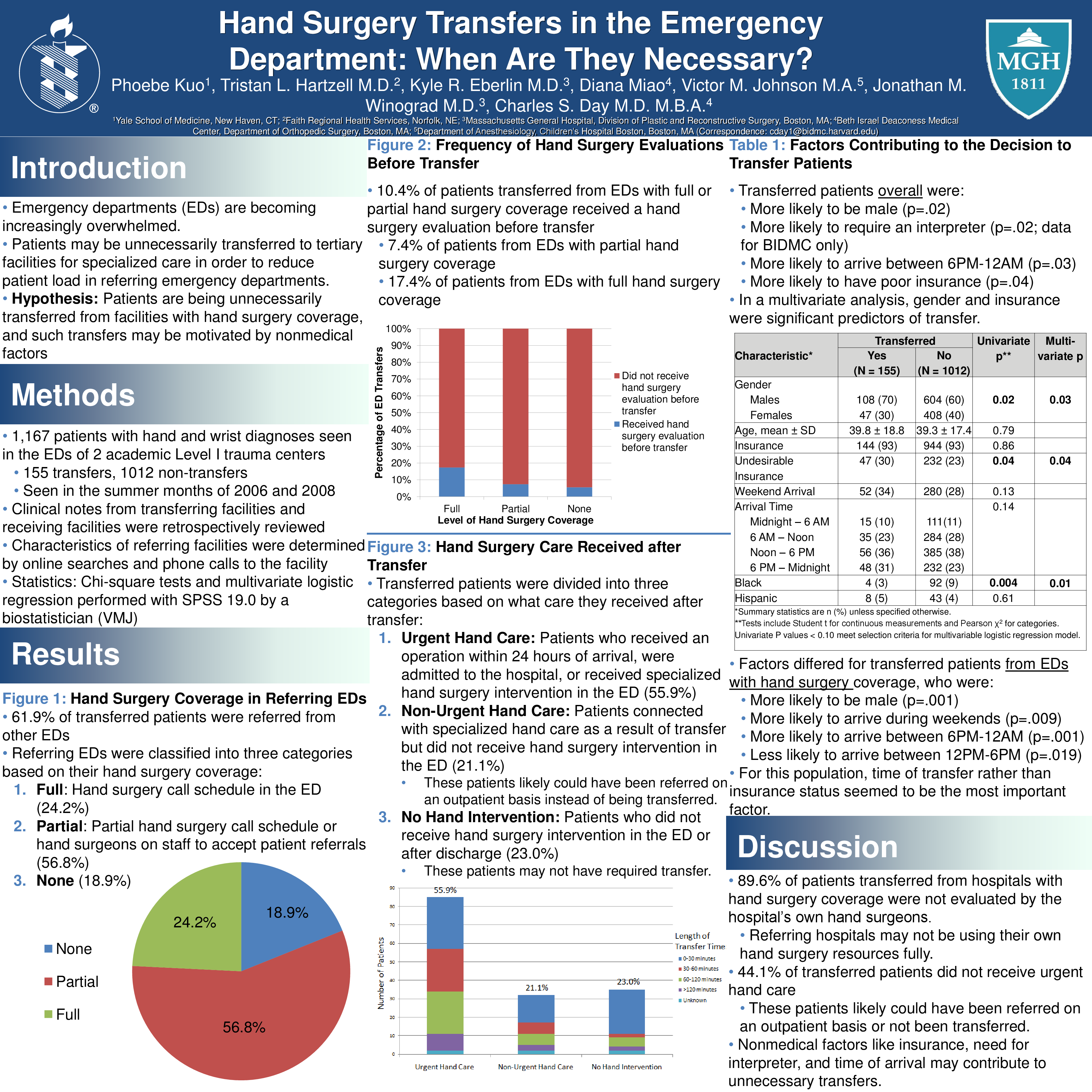
BACKGROUND: As emergency departments (EDs) become increasingly overwhelmed and specialist coverage in EDs decreases, patients may be unnecessarily transferred to tertiary facilities for specialized care in order to decrease patient load at transferring facilities. Our objective was to determine whether patients who are transferred for specialized hand surgery could have received care instead at the transferring facility, as well as to determine if any nonmedical factors contribute to the decision to transfer patients instead.
METHODS: A retrospective review was conducted for 1,167 visits of hand and wrist patients (155 transferred patients, 1012 non-transferred patients) seen in the EDs of two urban, Level I trauma centers. The hand surgery capacity of referring facilities was determined by a phone call to its ED. Univariate and multivariate analysis was also conducted to identify any nonmedical factors (gender, race, ethnicity, insurance status, need for an interpreter, off-hour time of arrival, weekend day of arrival) that affect the likelihood of transfer. Chi-square tests and logistic regressions were performed by a biostatistician with SPSS 19.0.
RESULTS: 155 of 1,167 patients (13.3%) were transferred from other facilities for specialized hand care. The transferred patients were significantly more likely to be male, have undesirable insurance, require an interpreter, and arrive between 6:00PM-midnight. In a multivariate analysis, gender, ethnicity, and insurance status were significant predictors of transfer.
Of 95 patients transferred from other EDs, 77 (81.1%) were transferred from an ED with partial or full hand surgery coverage. However, only 8 (10.4%) received a hand surgery evaluation prior to transfer. These 77 patients were significantly more likely to be male and arrive during weekends or 6PM-midnight.
Finally, transferred patients were categorized based on care received after transfer: (1) Urgent Hand Care (55.9%): patients who received an operation within 24 hours of arrival, were admitted to the hospital, or received specialized hand surgery intervention in the ED; (2) Non-Urgent Hand Care (21.1%): patients connected with specialized hand care as a result of transfer but did not receive hand surgery intervention in the ED; and (3) No Hand Intervention (23.0%): patients who did not receive hand surgery intervention in the ED or after discharge.
DISCUSSION: The low percentage of patients receiving hand surgery evaluations prior to transfer suggests that referring hospitals are not using their own hand surgery resources fully. Additionally, 44.1% of transferred patients did not receive urgent hand care, and could have been referred on an outpatient basis instead of being transferred. Nonmedical factors like insurance and time of arrival may instead influence the decision to transfer patients. Transfers motivated by nonmedical factors are concerning because they delay appropriate patient care, add to overall healthcare costs, and impose additional burden on tertiary care facilities.