Silencing the HSP27 Gene Suppresses Growth and Migration Capabilities of PANC-1 Cells
Abstract
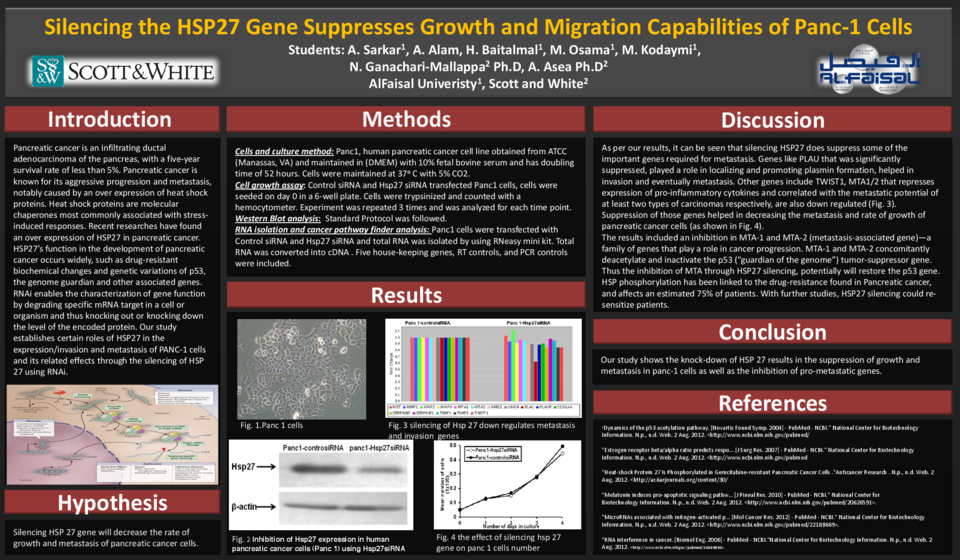
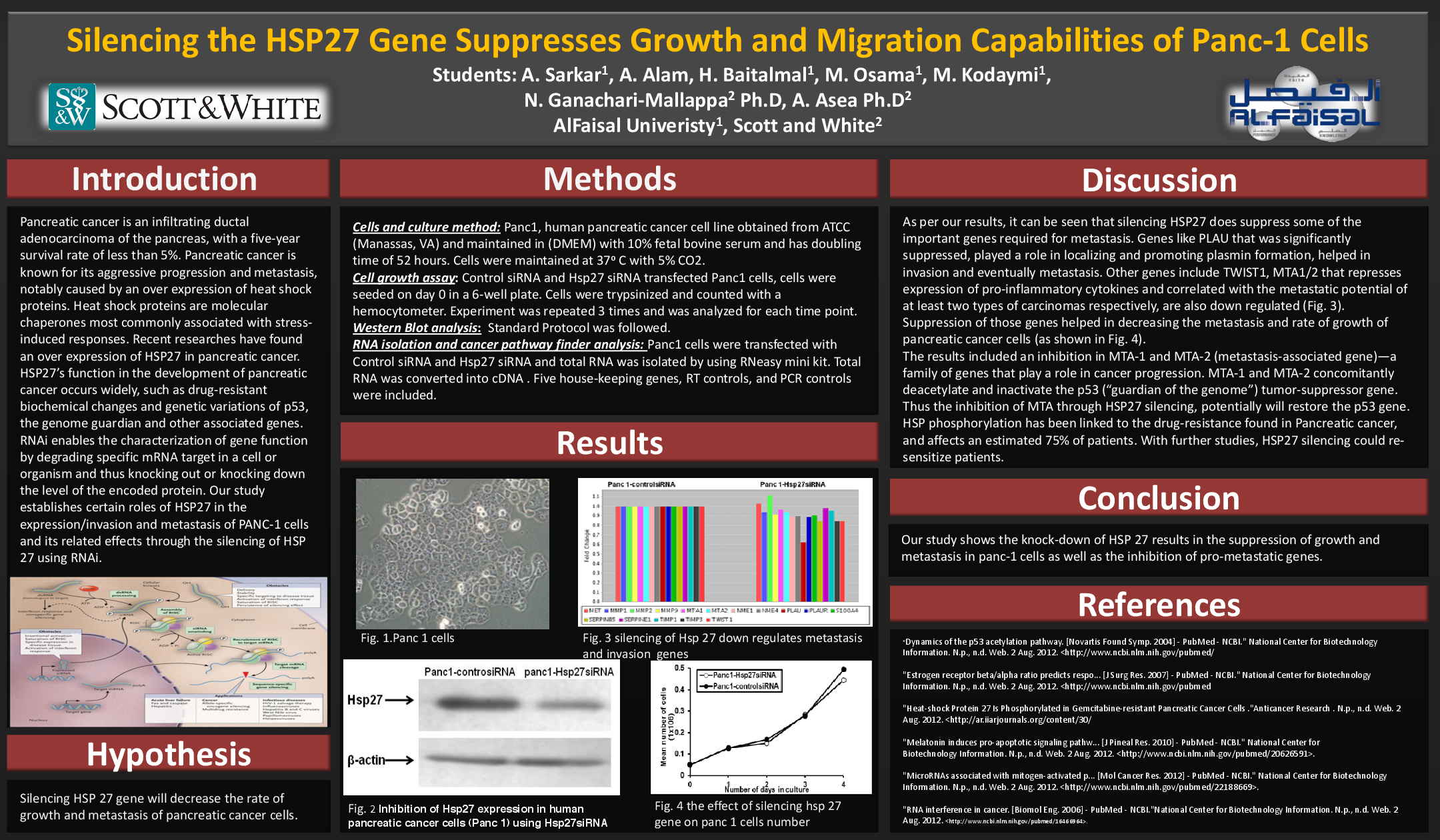
Pancreatic cancer is an infiltrating ductal adenocarcinoma of the pancreas, with a five-year survival rate of less than 5%. Pancreatic cancer is known for its aggressive progression and metastasis, notably caused by an over expression of heat shock proteins. Heat shock proteins are molecular chaperones most commonly associated with stress- induced responses. Recent researches have found an over expression of HSP27 in pancreatic cancer. HSP27’s function in the development of pancreatic cancer occurs widely, such as drug-resistant biochemical changes and genetic variations of p53, the genome guardian and other associated genes. RNAi enables the characterization of gene function by degrading specific mRNA target in a cell or organism and thus knocking out or knocking down the level of the encoded protein. Our study establishes certain roles of HSP27 in the expression/invasion and metastasis of PANC-1 cells and its related effects through the silencing of HSP 27 using RNAi.
Related articles