Role of Estrogen Receptors (Alpha and Beta) in Acute Kidney Injury-Induced Heme Oxygenase-1
Abstract
Introduction
Earlier reports from the Middle East have indicated that the incidence of acute kidney injury (AKI) is several times higher in the region than elsewhere.
Premenopausal women have decreased incidence of cardiovascular diseases and a decreased rate of progression of renal diseases. However, with the onset of menopause, decreased synthesis of 17β- estradiol is accompanied by an increased incidence of cardiovascular disorders and accelerated progression of renal diseases.
Heme Oxygenase-1 (HO-1) is one of the cytoprotective mechanisms upregulated during renal ischemia/reperfusion (I/R) injury conferring renal protection. Thus, the protection observed in females, as opposed to males, during renal I/R may be associated with higher levels of HO-1 which may be estrogen dependent.
Hypothesis
Upregulation of renal Heme Oxygenase 1 (HO-1) during Acute Kidney Injury (AKI) is mediated by activation of estrogen receptor(ER) either alpha or beta.
Discussion/ conclusions
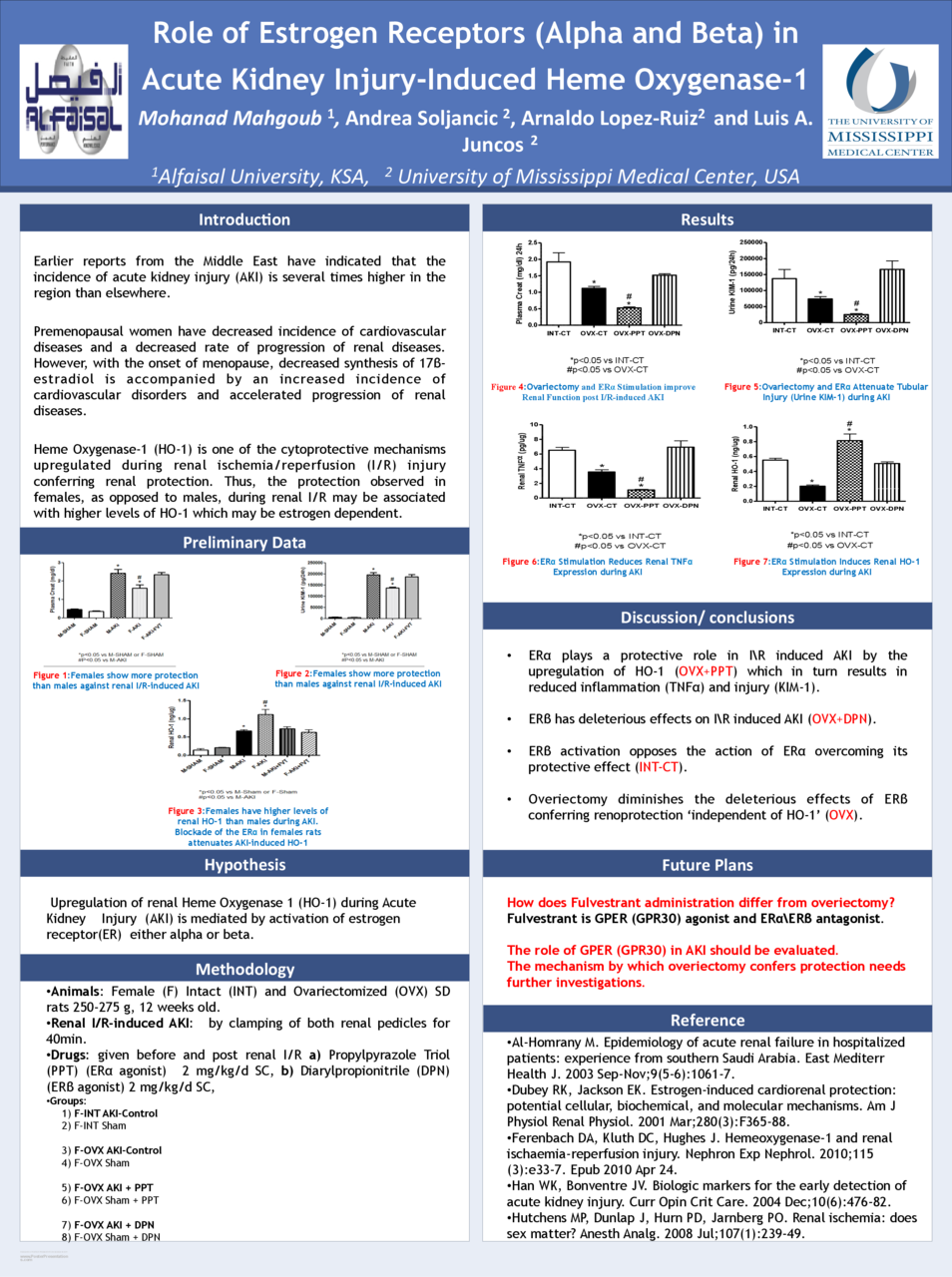
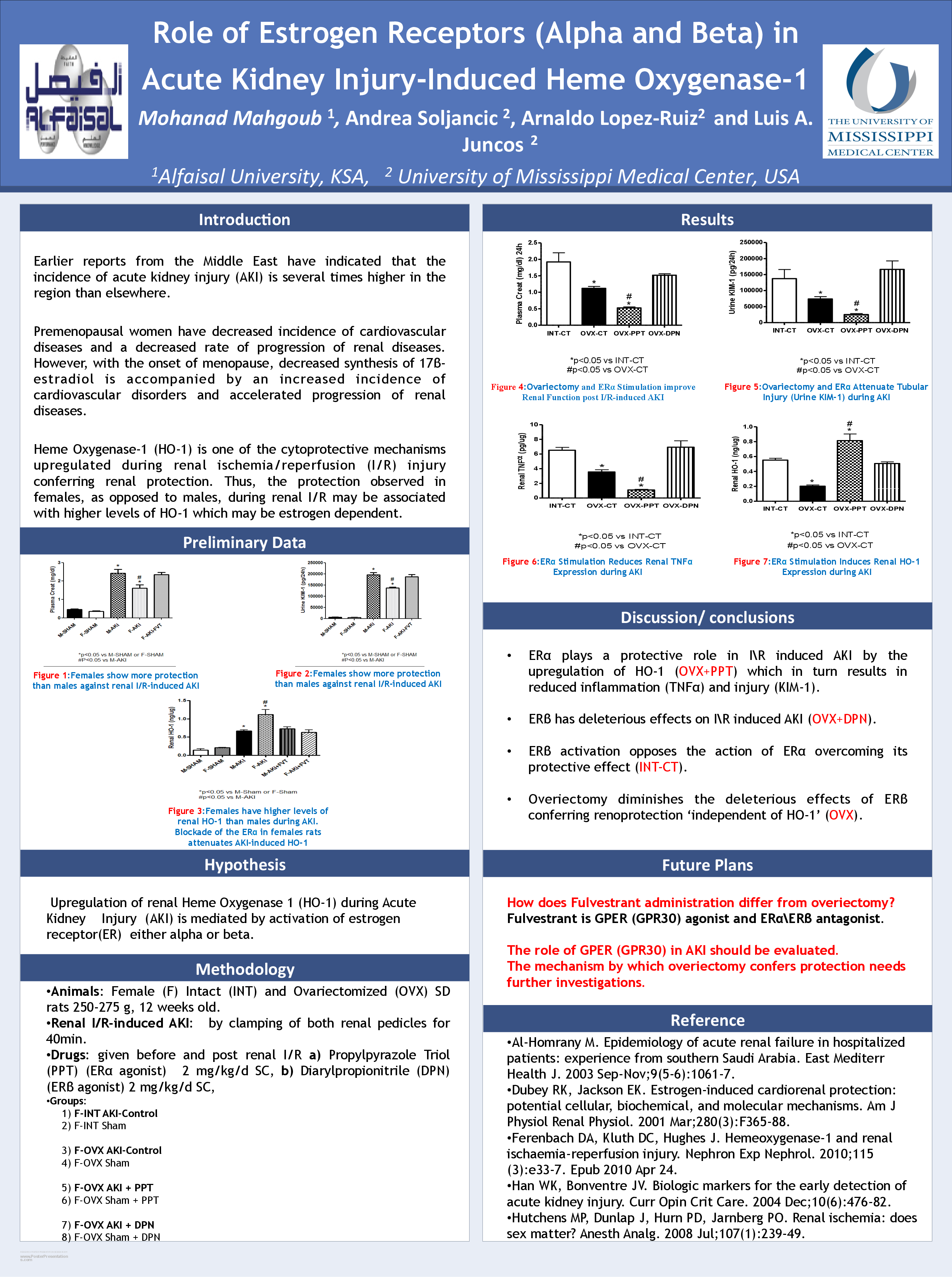
• ERα plays a protective role in I\R induced AKI by the upregulation of HO-1 (OVX+PPT) which in turn results in reduced inflammation (TNFα) and injury (KIM-1).
• ERβ has deleterious effects on I\R induced AKI (OVX+DPN). • ERβ activation opposes the action of ERα overcoming its
protective effect (INT-CT).
• Overiectomy diminishes the deleterious effects of ERβ
conferring renoprotection ‘independent of HO-1’ (OVX).
Related articles