Abstract
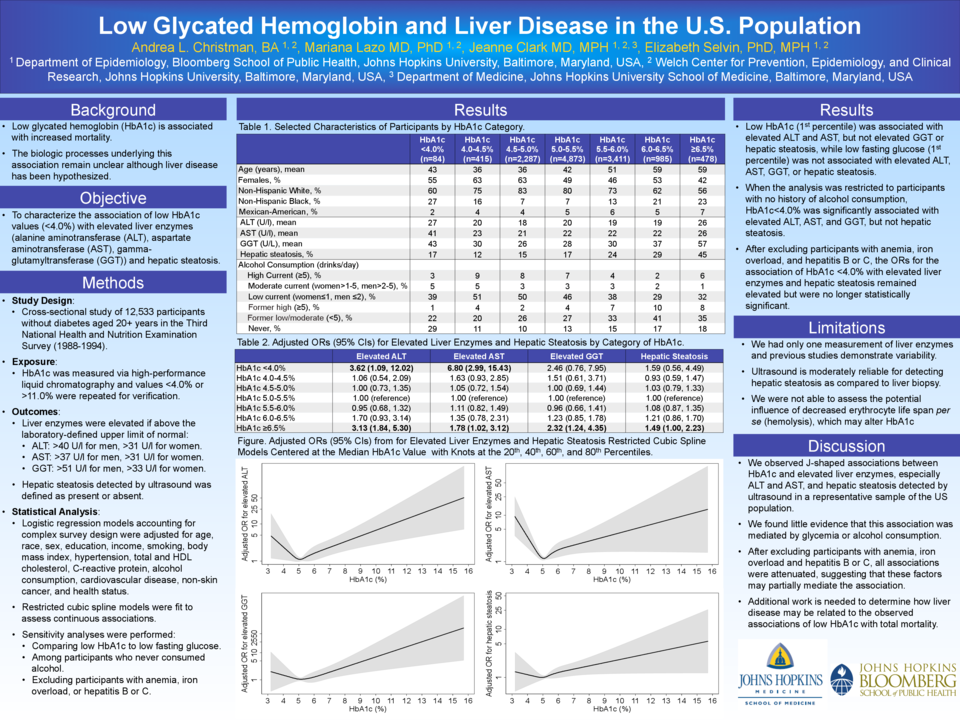
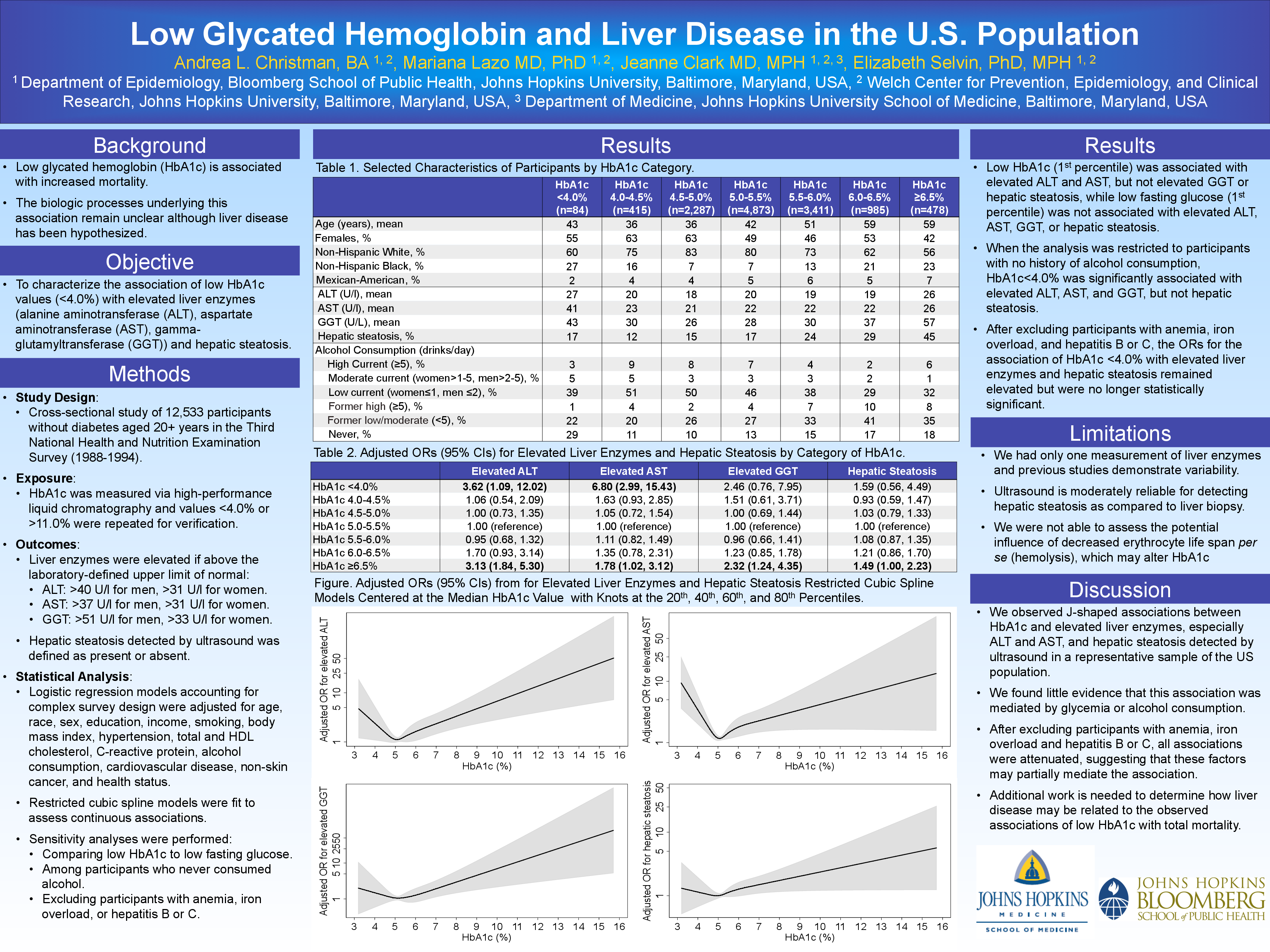
Elevated glycated hemoglobin (HbA1c) has been associated with nonalcoholic fatty liver disease and mortality even in the absence of diabetes. Recently, very low HbA1c has been associated with increased mortality. The mechanisms underlying this association remain unclear although liver disease has been hypothesized to play a role. We performed a cross-sectional study of 13,630 participants in the Third National Health and Nutrition Examination Survey. We examined the association between HbA1c, elevated liver enzymes (alanine aminotransferase (ALT), aspartate aminotransferase (AST), gamma-glutamyltransferase (GGT)), and hepatic steatosis by ultrasound. Logistic regression models were adjusted for demographic factors (age, race, sex, education, income), lifestyle factors (smoking, alcohol consumption, body mass index, physical activity), and health status factors (blood pressure, cholesterol, C-reactive protein, history of cancer, history of cardiovascular disease, physician rated health status). The mean age was 45 years, 52% were female, and 15% were black or Hispanic. HbA1c values ranged from 2.8% to 16.1% and there were 84 participants with HbA1c <4.0%. The prevalence of elevated ALT (men >40 U/L, women >31 U/L) was 6.0%, elevated AST (men >37 U/L, women >31 U/L) was 5.4%, elevated GGT (men >51 U/L, women >33 U/L) was 14.8% and hepatic steatosis was 20.1%. We observed J-shaped associations between HbA1c, liver enzymes and hepatic steatosis (Figure). In adjusted models, HbA1c <4.0% was significantly associated with ALT elevation (OR 3.25, 95% CI: 1.00, 1.52) and AST elevation (OR 6.29, 95% CI: 2.77, 14.28), but not with elevated GGT or hepatic steatois. High HbA1c values (>6.0%) were also associated with liver enzymes and hepatic steatosis. In conclusion, both low and high HbA1c values were associated with liver disease in a representative sample of the US population. Additional work is needed to understand how liver disease may contribute to observed associations between HbA1c and long-term outcomes.