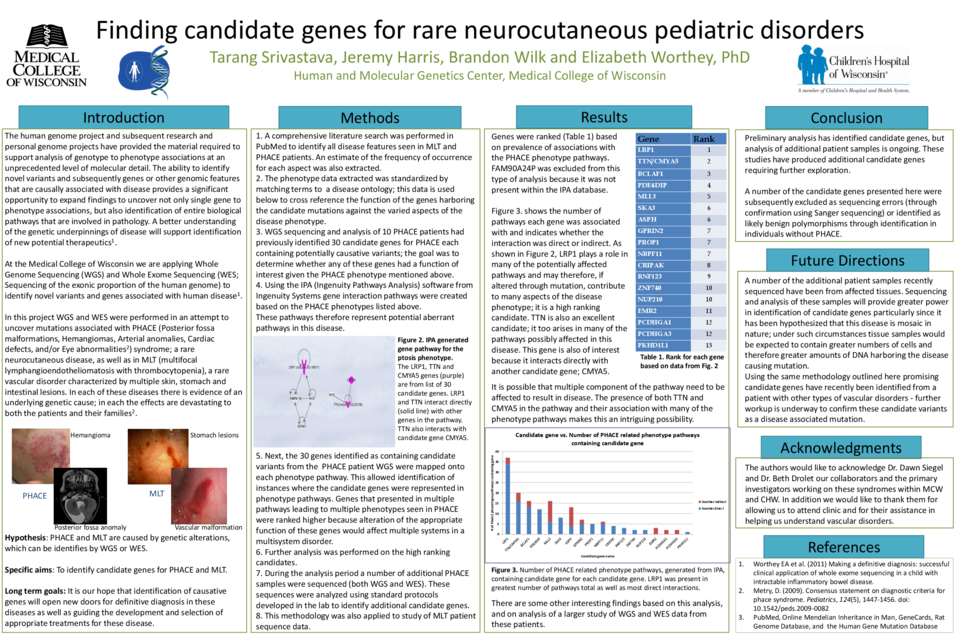
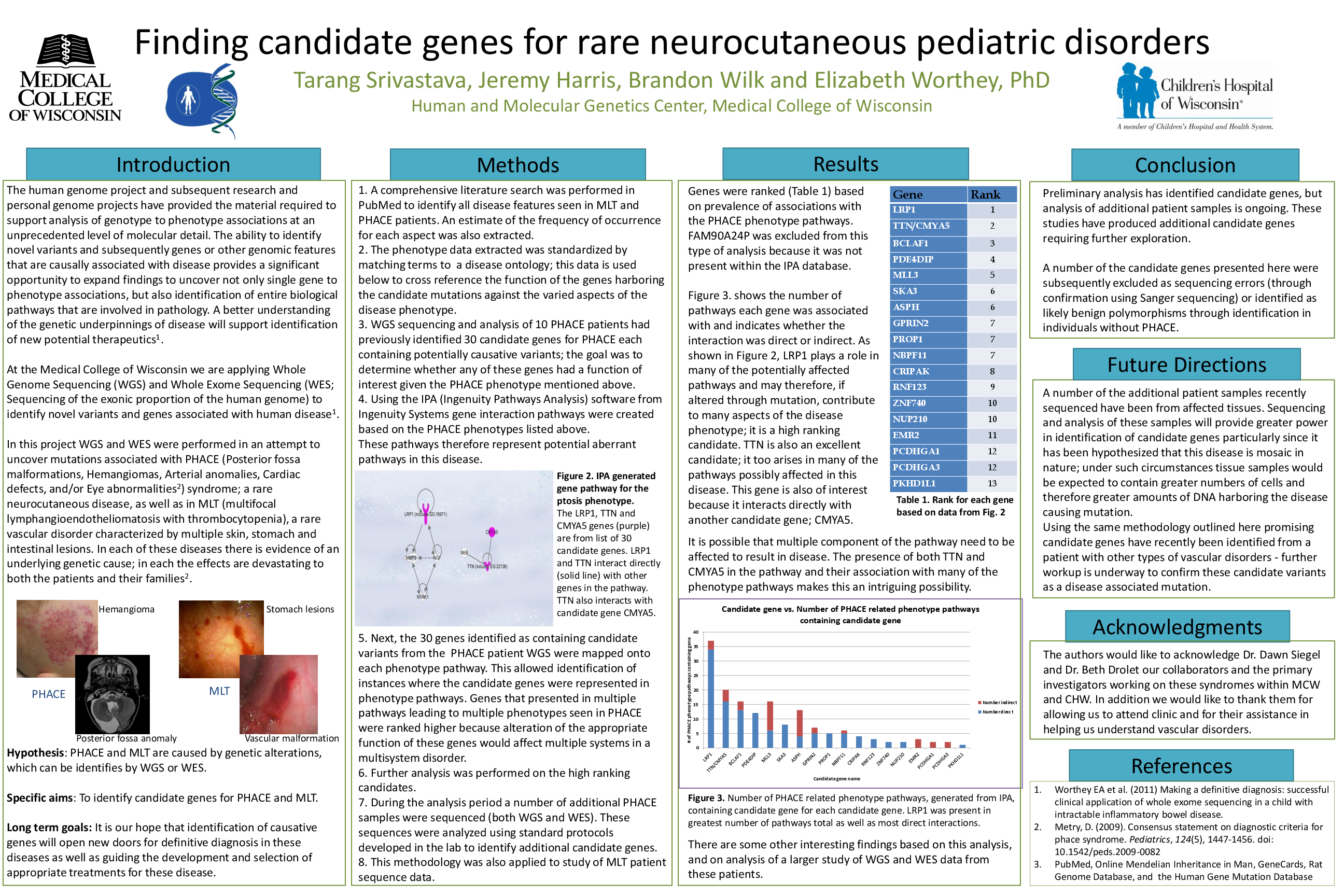
Finding Candidate Genes For Rare Neurocutaneous Pediatric Disorders
Abstract
PURPOSE
To find candidate genes for rare pediatric disorders.
INTRODUCTION
The ability to use recent advances in DNA sequencing technology to identify novel mutations causally associated with disease provides an unparalleled opportunity to expand knowledge of single gene-phenotype associations, but also to support identification of entire pathways involved in pathology. Applying these techniques in a clinical setting to alter the clinical approach is a new but rapidly advancing frontier in genetics. Here we report on a study in PHACE (Posterior fossa malformations, Hemangiomas, Arterial anomalies, Cardiac defects, and Eye abnormalities) syndrome; a rare neurocutaneous pediatric disorder.
METHODS
In order to fully understand the clinical spectrum in PHACE we systematically catalogued symptoms through literature review of known cases. In collaboration with clinical colleagues we undertook whole genome or exome sequencing of PHACE patients and their parents and through use of a sophisticated bioinformatics platform for variant annotation and prioritization are performing computational analysis to identify candidate mutations.
RESULTS
We have identified a number of candidate mutations; some in genes with functions that can be associated with PHACE. Additional functional characterization including additional pathway analysis is ongoing. We have obtained additional patient samples, including samples from affected tissues; these are under analysis.
CONCLUSION
Preliminary analysis has identified candidate genes, but inclusion of analysis in these additional affected individuals is required to support causation. Analysis of these additional genomic samples from patients is ongoing, and has produced additional candidate genes requiring further exploration. In the future, we will apply this methodology to additional disorders including MLT (multifocal lymphangioendotheliomatosis with thrombocytopenia)
Related articles