Abstract
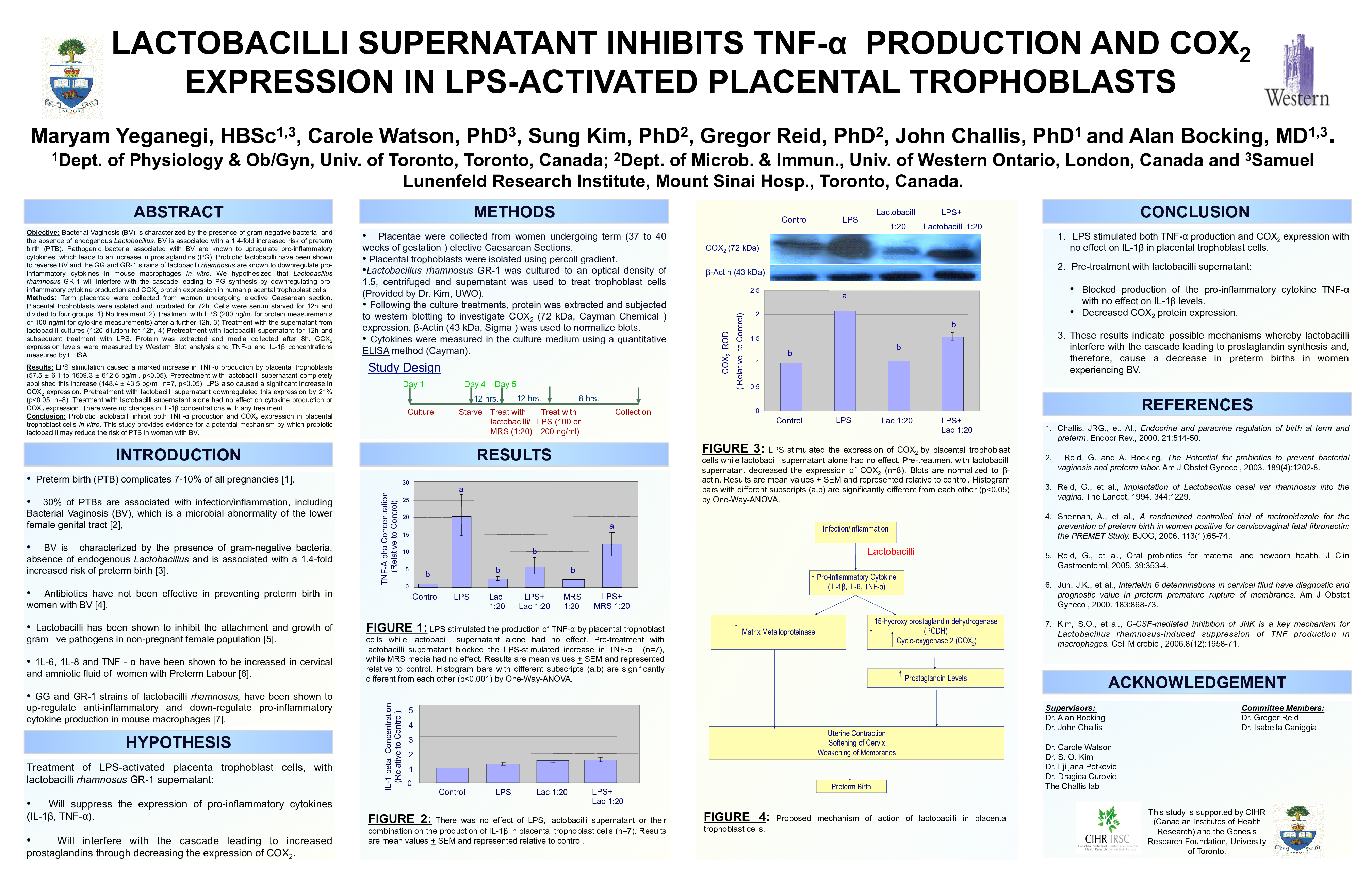
Objective: Bacterial Vaginosis (BV) is characterized by the presence of gram-negative bacteria, and the absence of endogenous Lactobacillus. BV is associated with a 1.4-fold increased risk of preterm birth (PTB). Pathogenic bacteria associated with BV are known to upregulate pro-inflammatory cytokines, which leads to an increase in prostaglandins (PG). Probiotic lactobacilli have been shown to reverse BV and the GG and GR-1 strains of lactobacilli rhamnosus are known to down-regulate pro-inflammatory cytokines in mouse macrophages in vitro. We hypothesized that Lactobacillus rhamnosus GR-1 will interfere with the cascade leading to PG synthesis by down-regulating pro-inflammatory cytokine production and COX2 protein expression in human placental trophoblast cells. Methods: Term placentae were collected from women undergoing elective Caesarean section. Placental trophoblasts were isolated and incubated for 72h. Cells were serum starved for 12h and divided to four groups: 1) No treatment, 2) Treatment with LPS (200 ng/ml for protein measurements or 100 ng/ml for cytokine measurements) after a further 12h, 3) Treatment with the supernatant from lactobacilli cultures (1:20 dilution) for 12h, 4) Pretreatment with lactobacilli supernatant for 12h and subsequent treatment with LPS. Protein was extracted and media collected after 8h. COX2 expression levels were measured by Western Blot analysis and TNF-α and IL-1β concentrations measured by ELISA. Results: LPS stimulation caused a marked increase in TNF-α production by placental trophoblasts (57.5 ± 6.1 to 1609.3 ± 612.6 pg/ml, p<0.05). Pretreatment with lactobacilli supernatant completely abolished this increase (148.4 ± 43.5 pg/ml, n=7, p<0.05). LPS also caused a significant increase in COX2 expression. Pretreatment with lactobacilli supernatant downregulated this expression by 21% (p<0.05, n=8). Treatment with lactobacilli supernatant alone had no effect on cytokine production or COX2 expression. There were no changes in IL-1β concentrations with any treatment. Conclusion: Probiotic lactobacilli inhibit both TNF-α production and COX2 expression in placental trophoblast cells in vitro. This study provides evidence for a potential mechanism by which probiotic lactobacilli may reduce the risk of preterm birth in women with bacterial vaginosis.