The Development of Face Processing: How Do Infants Perceive Race?
Abstract
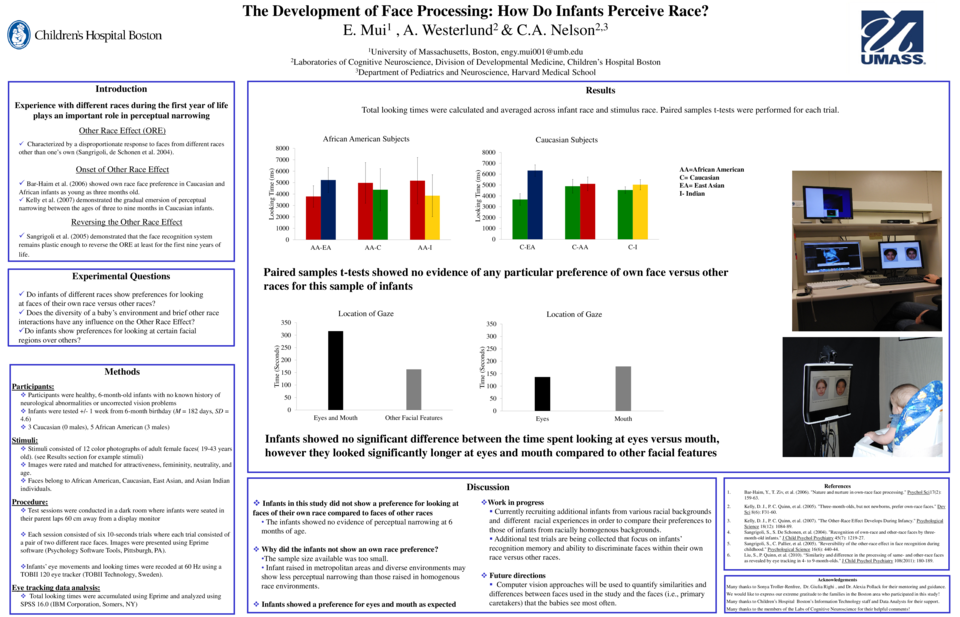
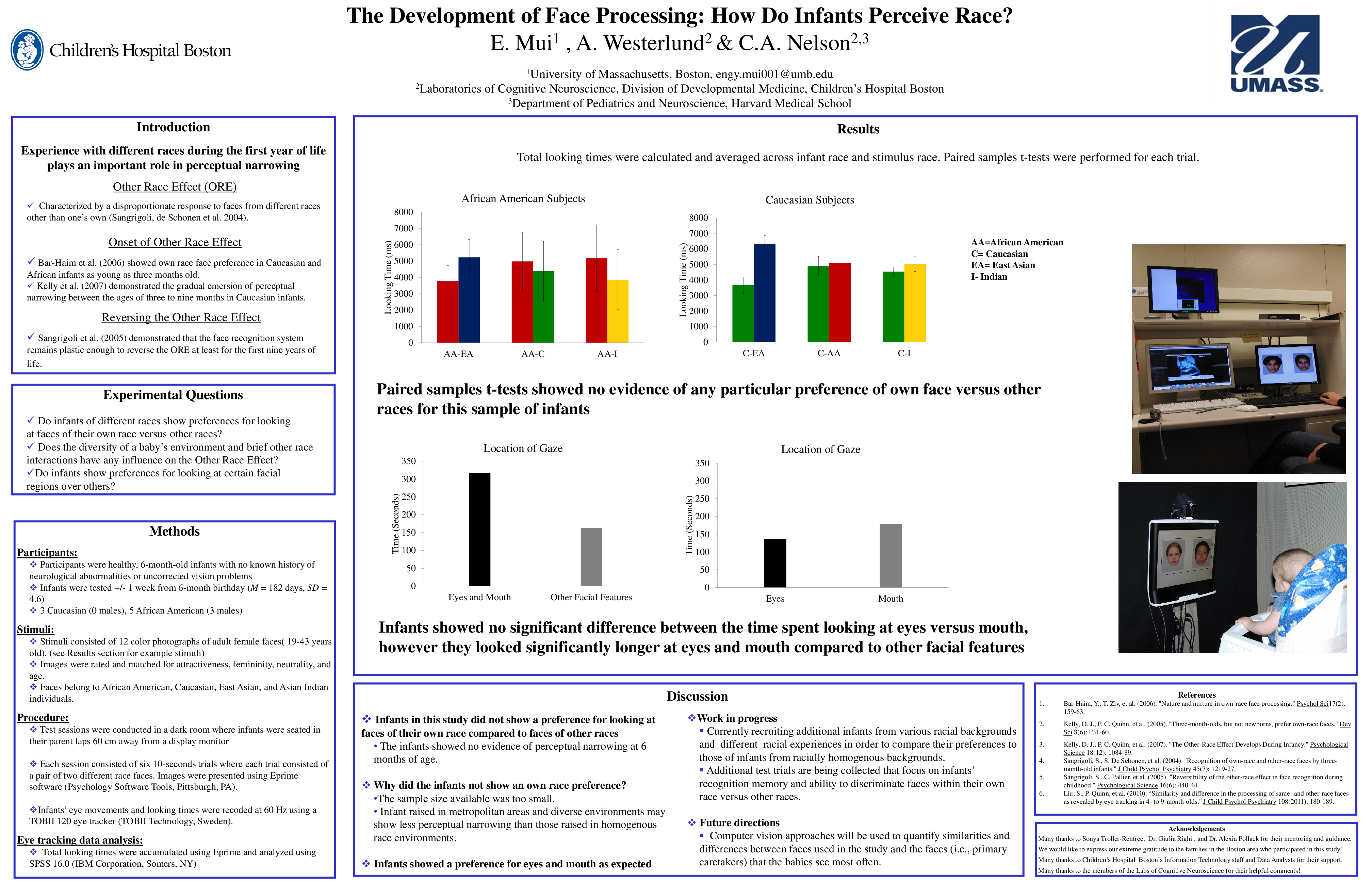
Having difficulty distinguishing between faces other than those belonging to one’s own race is known as the other-race effect. Studies have showed that exposure to different race faces during the first year of life is crucial to infants’ face processing abilities and their cognitive development. In the current race perception study we aim to better understand the role of experience in the development of looking behavior and face processing in infants throughout the first year of their lives. As we are currently in the early stage of data collection, we assessed the looking times and behaviors of a small group of 6-month-old Caucasian and African American infants. Infants viewed faces of four race groups (African American, Caucasian, East Asian and Asian Indian). Statistical analyses showed that 6-month-old infants did not show a preference for looking at faces of their own race versus other race faces. All of the infants showed longer looking times for eye and mouth regions compared to other facial features. Our findings hold low statistical power due to the small sample size. Data collection for this study is still ongoing and further analyses looking at perceptual narrowing and face discrimination will follow.
Related articles