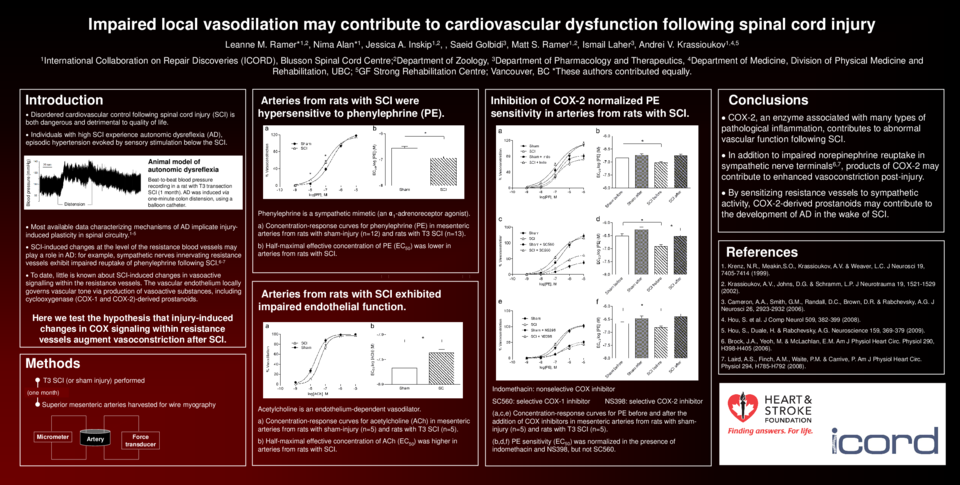
COX-2 Contributes To Vascular Hypersensitivity Following SCI
Abstract
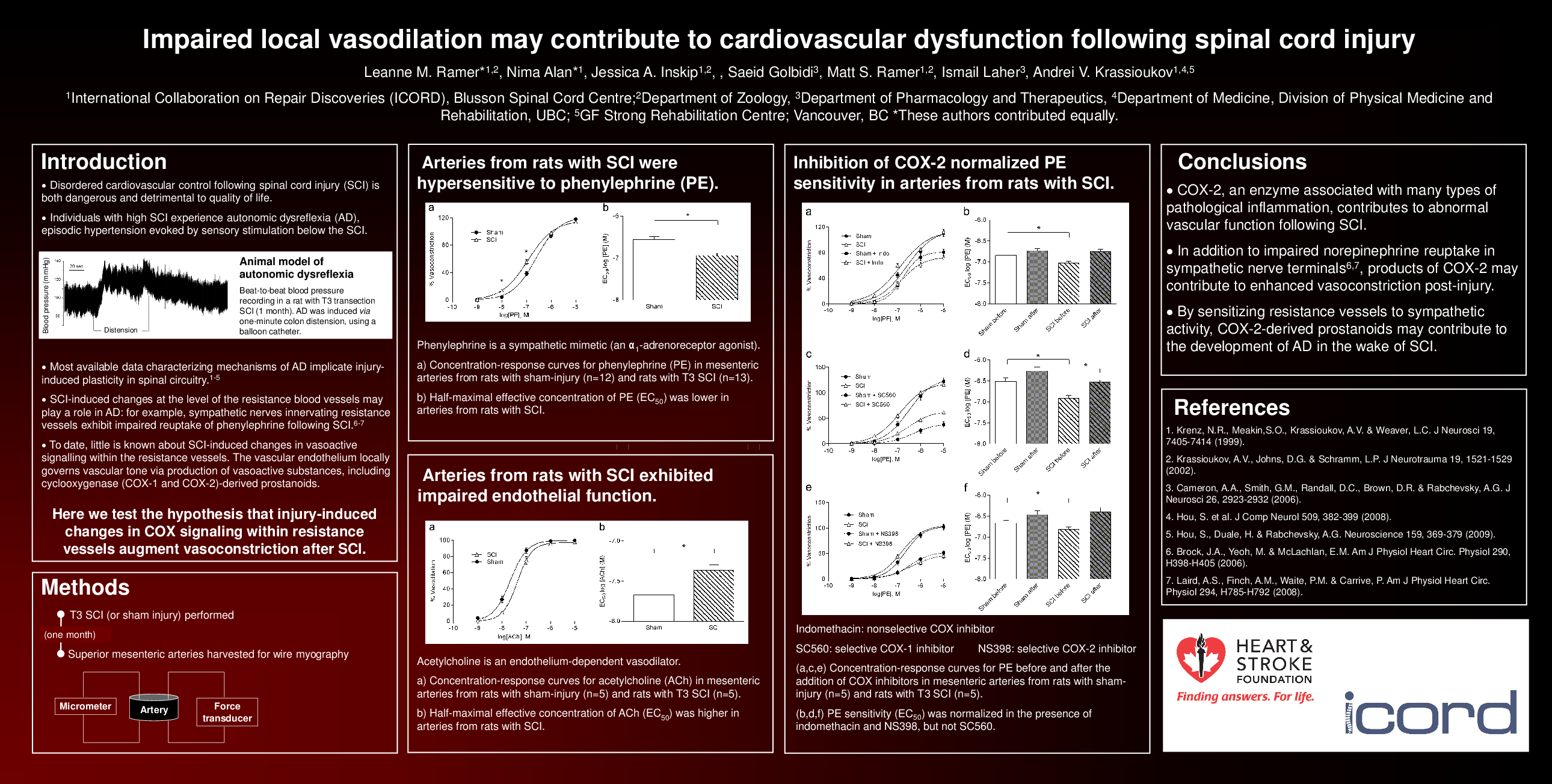
Objective: Disruption of autonomic pathways following spinal cord injury (SCI) leads to impaired cardiovascular control. In particular, in high SCI autonomic dysreflexia (AD) may develop, the mechanisms of which remain controversial. Available data suggest that injury-induced plasticity in the nervous system and in target organs, including the resistance vessels, is involved. In human subjects and experimental animal models, α1-adrenoceptor hypersensitivity in vasculature caudal to SCI has been reported. This study investigates the contribution of cyclooxygenase enzymes to vascular hypersensitivity secondary to SCI.
Design: Experimental animal study.
Participants/methods: Complete spinal cord (T3) transection was performed in male Wistar rats; sham-injury involved laminectomy and durotomy. Animals survived for 30 days. On the last day of the experiment, segments of mesenteric artery were harvested and mounted in a four-chamber myograph for to characterize their responses to vasoactive substances.
Results: Mesenteric arteries below SCI were hypersensitive to phenylephrine (PE), an α1-adrenergic agonist, which mimics noradrenaline, the primary neurotransmitter mediating vasoconstriction. To examine mechanisms underlying SCI-induced PE hypersensitivity, we investigated the cyclooxygenase (COX)-mediated component of vasoconstriction. PE-hypersensitivity was attenuated in the presence of indomethacin, a non-specific COX inhibitor, and NS-398, a specific COX-2 inhibitor. Specific inhibition of COX-1 had equivocal effects on arteries from sham- and spinal cord-injured animals. We are currently investigating COX-2 expression in the mesenteric artery following SCI, the specific products of COX-2 activity that mediate hypersensitivity to PE, and whether treatment with celecoxibs can attenuate AD in animals with SCI.
Conclusion: These findings suggest that COX-2, an enzyme associated with many types of pathological inflammation, may also contribute to abnormal vascular function and hence, development of autonomic dysreflexia in the wake of SCI.
Related articles