Abstract
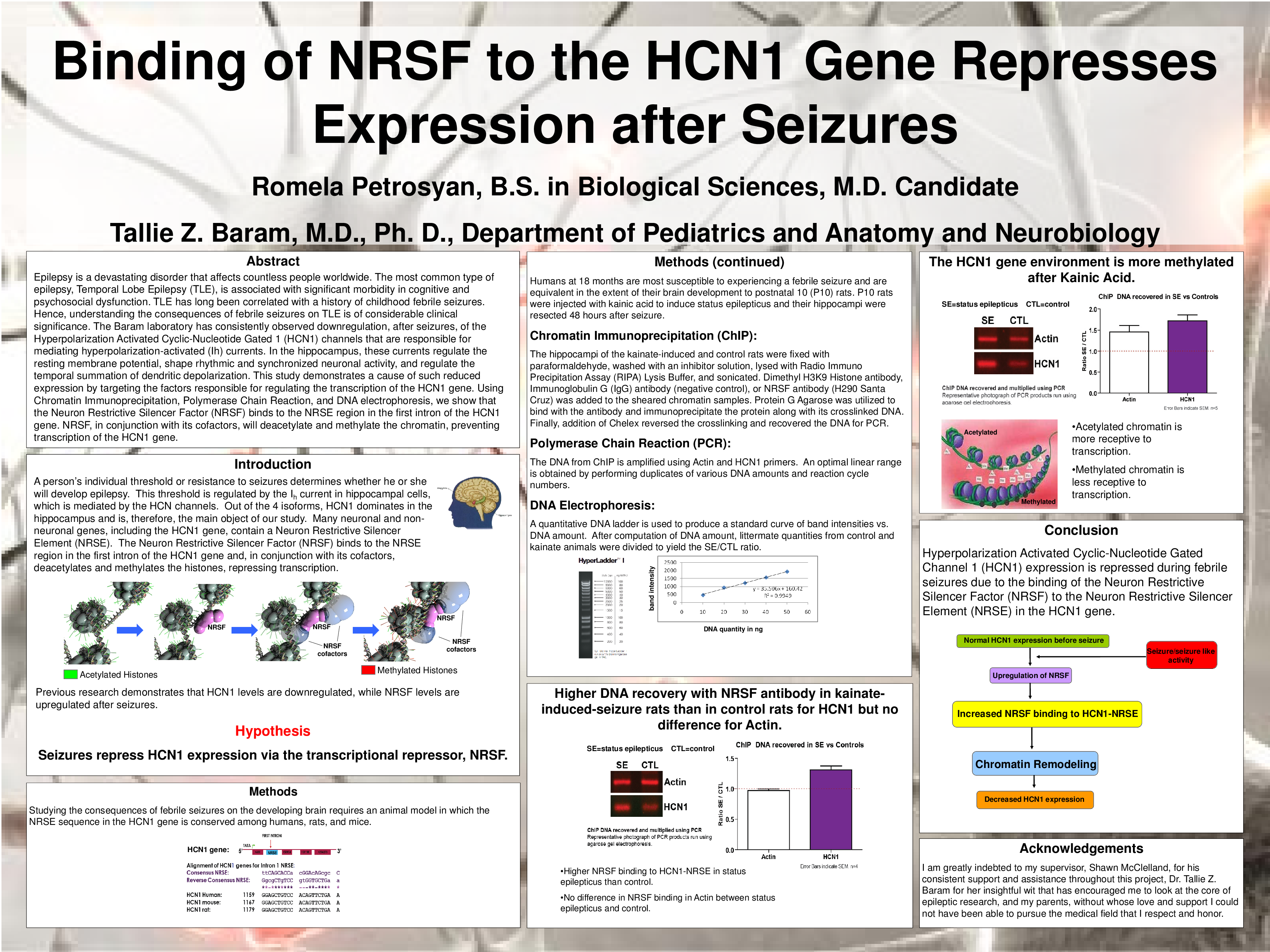
Epilepsy is a devastating disorder that affects countless people worldwide. The most common type of epilepsy, Temporal Lobe Epilepsy (TLE), is associated with significant morbidity in cognitive and psychosocial dysfunction. TLE has long been correlated with a history of childhood febrile seizures. Hence, understanding the consequences of febrile seizures on TLE is of considerable clinical significance. The Baram laboratory has consistently observed downregulation, after seizures, of the Hyperpolarization Activated Cyclic-Nucleotide Gated 1 (HCN1) channels that are responsible for mediating hyperpolarization-activated (Ih) currents. In the hippocampus, these currents regulate the resting membrane potential, shape rhythmic and synchronized neuronal activity, and regulate the temporal summation of dendritic depolarization. This study demonstrates a cause of such reduced expression by targeting the factors responsible for regulating the transcription of the HCN1 gene. Using Chromatin Immunoprecipitation, Polymerase Chain Reaction, and DNA electrophoresis, we show that the Neuron Restrictive Silencer Factor (NRSF) binds to the NRSE region in the first intron of the HCN1 gene. NRSF, in conjunction with its cofactors, will deacetylate and methylate the chromatin, preventing transcription of the HCN1 gene.