Complications and Risk for Readmission Among Patients Hospitalized with Chronic Kidney Disease
Abstract
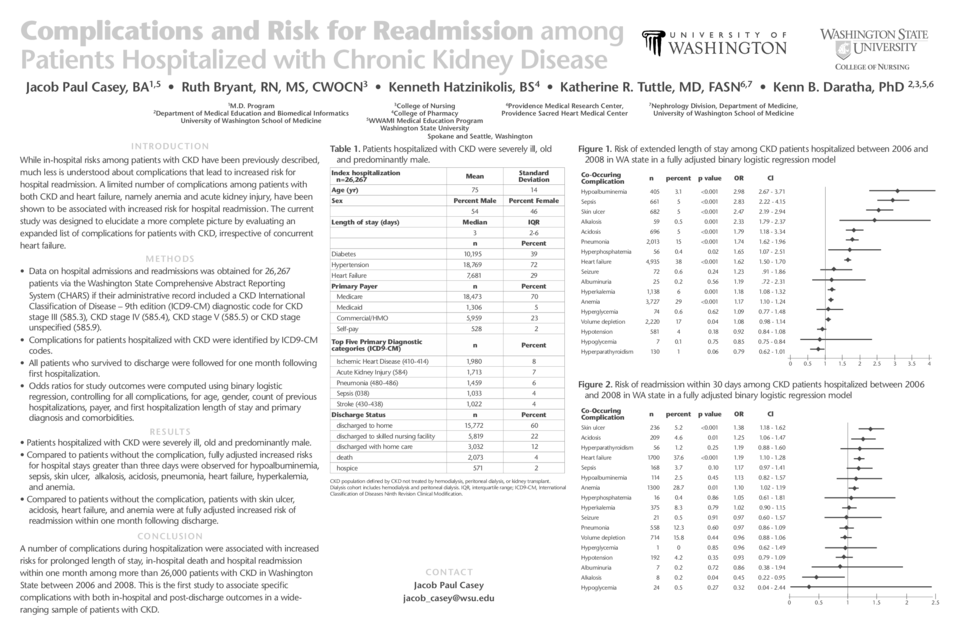
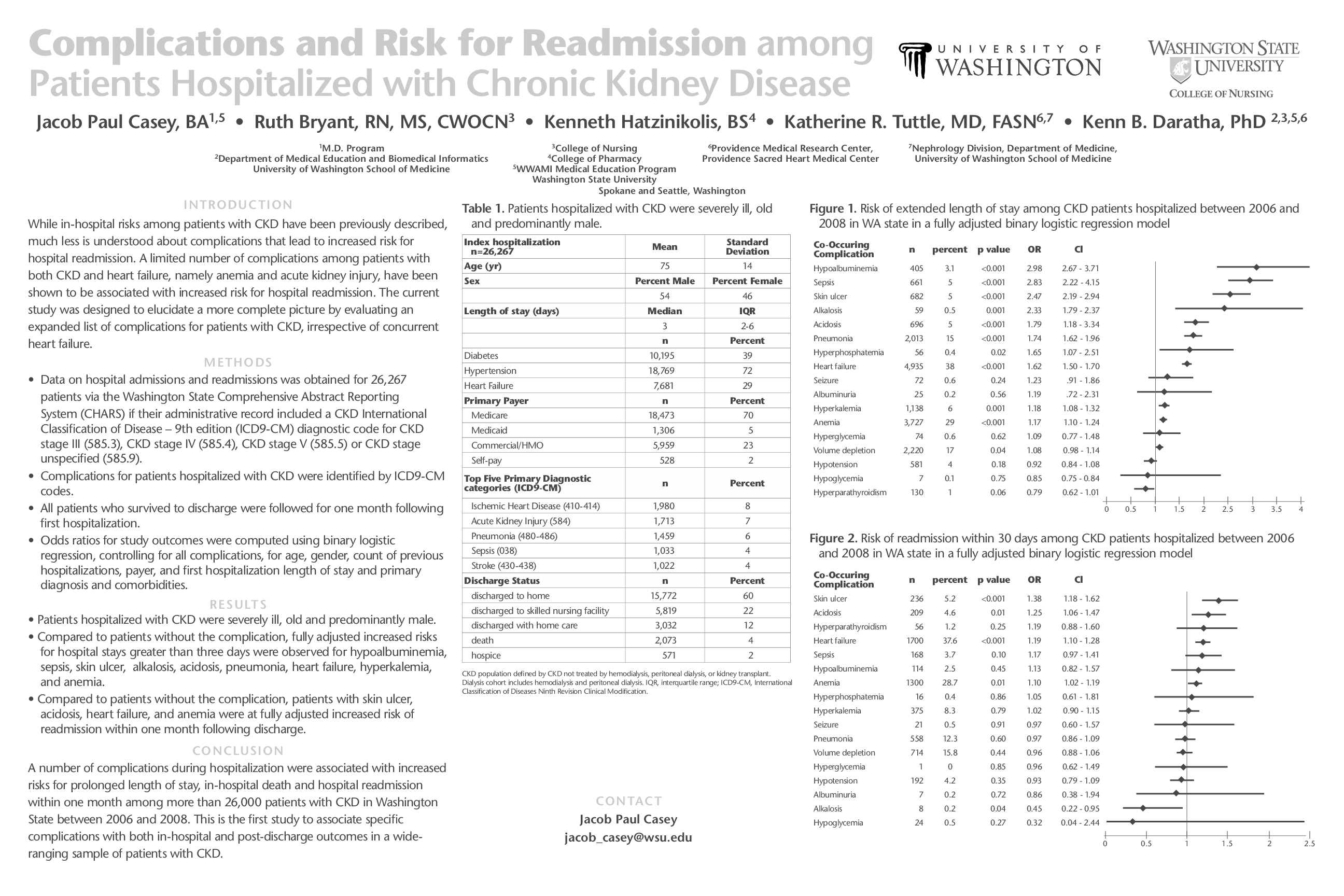
Purpose of Study: Among patients hospitalized with Chronic Kidney Disease (CKD) the relationship between various complications and in-hospital death is known. However, the relationship with short-term outcomes such as one-month hospital readmission is less certain. The primary objective was to describe complications and risk for adverse outcomes among patients hospitalized with CKD.
Methods Used: Complications of patients with CKD hospitalized in Washington State between April of 2006 and December of 2008 (n=26,267) were described. Odds ratios for study outcomes were computed using binary logistic regression models controlling for age, sex, payer, comorbidities, previous hospitalization, length of stay and reason for hospitalization.
Summary of Results: Compared to patients without the complication, sepsis (OR=4.14; 95%CI=3.24-5.80; p<0.001), heart failure (OR=1.30; 95%CI=1.13-1.49; p<0.001), acidosis (OR=3.64; 95%CI=2.93-4.93; p<0.001) and hyperkalemia (OR=1.64; 95%CI=1.34-2.00; p<0.001) were associated with increased fully adjusted risk for death during first hospitalization. A number of complications were associated with increased risk for lengths of hospital stays greater than 3 days. Compared to patients without the complication, patients with skin ulcers (OR=1.38; 95%CI=1.18-1.62; p<0.001), acidosis (OR=1.25; 95%CI=1.06-1.47; p=0.01), heart failure (OR=1.19; 95%CI=1.10-1.28; p<0.001) and anemia (OR=1.10; 95%CI=1.02-1.19; p=0.01) were at fully adjusted increased risk of readmission within one month following discharge.
Conclusions: A number of complications during hospitalization were associated with increased risks for prolonged length of stay, in-hospital death and hospital readmission within one month among more than 26,000 patients with CKD in Washington State between 2006 and 2008. This is the first study to associate specific complications with both in-hospital and post-discharge outcomes in a wide-ranging sample of patients with CKD.
Related articles