Abstract
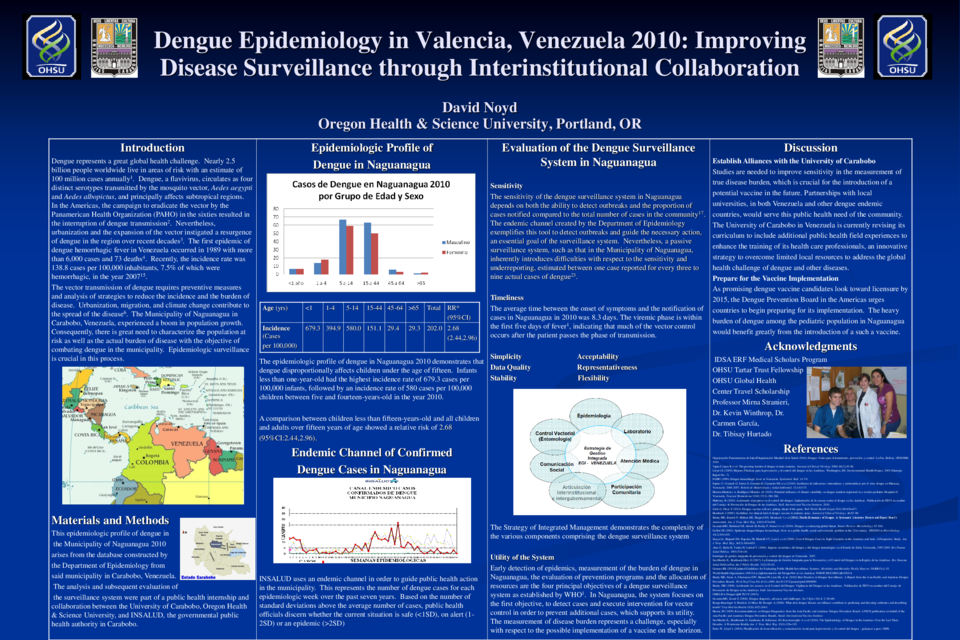
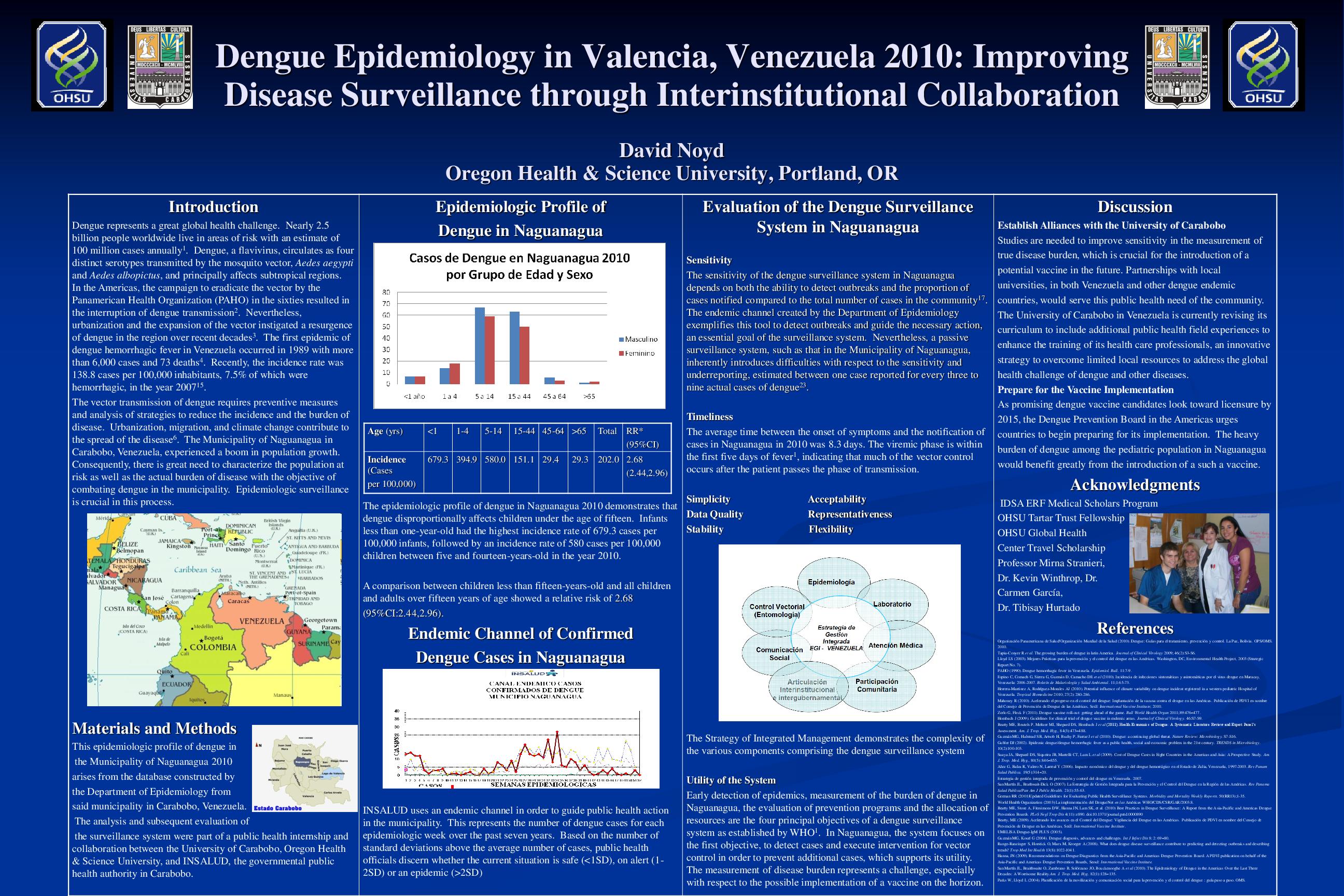
The recent resurgence of dengue represents an important global health challenge to characterize the epidemiology of this disease. In 2010, epidemiologic data from Naguanagua County in Carabobo, Venezuela, showed a distribution of dengue cases primarily affecting children with 58.4% of all cases in children younger than fifteen. The incidence rates of 679.3, 396.9, 580.0 cases per 100,000 inhabitants among age groups of less than one year, one to four-years-old, and five to fourteen-years-old, respectively, to the overall incidence rate of 202 per 100,000 inhabitants demonstrates the disproportionate impact of dengue on the pediatric populations. An evaluation of the epidemiologic surveillance system of dengue in Naguanagua County in Carabobo, Venezuela revealed a passive reporting system to guide local public health action. Conclusions from the evaluation included the need for studies to improve sensitivity in the measurement of true disease burden, which is crucial for the introduction of a potential vaccine in the future. Limited resources represents a barrier in the assessment of dengue incidence. Partnerships with local universities, in both Venezuela and other dengue endemic countries, would serve this public health need of the community and provide novel, first-hand experiences in the training of health care professionals. The University of Carabobo in Venezuela is currently revising its curriculum to include additional public health field experiences to enhance the training of its health care professionals and represents an innovative strategy to overcome limited local resources to address global health challenges, such as the global dengue epidemic.