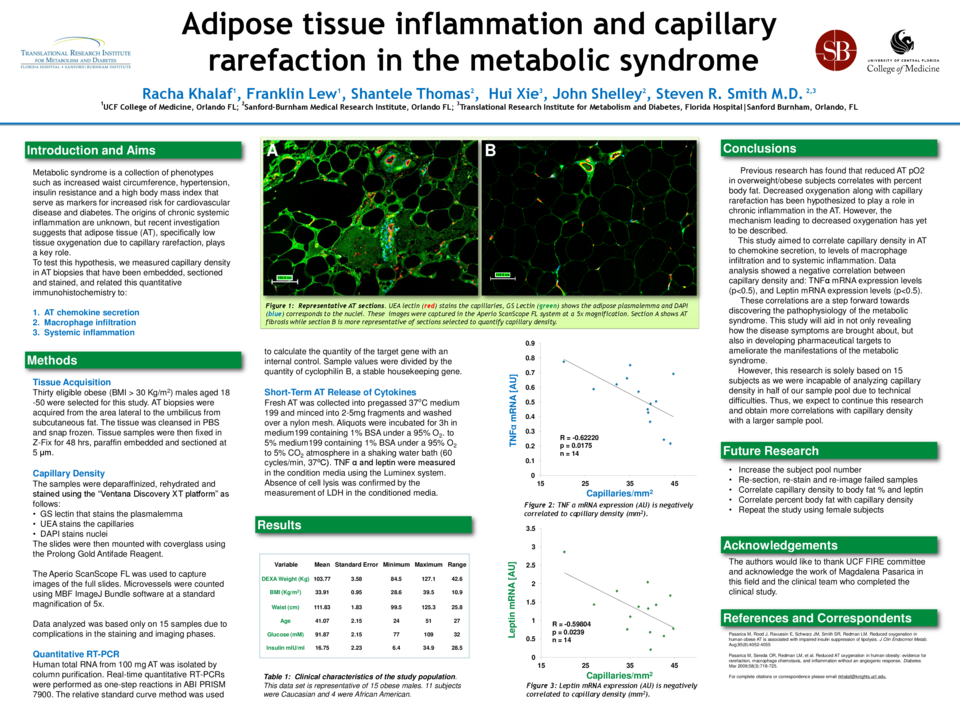
Adipose Tissue Inflammation And Capillary Rarefaction In The Metabolic Syndrome
Abstract
Metabolic syndrome is a collection of phenotypes such as increased waist circumference, hypertension, insulin resistance and a high body mass index (BMI) that serve as markers for increased risk for cardiovascular disease (CVD) and diabetes.1, 2 In addition to these risk factors, chronic systemic inflammation, as measured by the blood levels of C-reactive protein is an independent risk factor for CVD and diabetes.1, 3 The origins of chronic systemic inflammation are unknown, but recent investigation suggests that adipose tissue, specifically low tissue oxygenation due to capillary rarefaction, plays a key role.4, 5
To test this hypothesis, we measured capillary density in adipose tissue biopsies that have been embedded, sectioned and stained, and related this quantitative immunohistochemistry to:
a) Adipose tissue chemokine secretion,
b) Macrophage infiltration and
c) Systemic inflammation
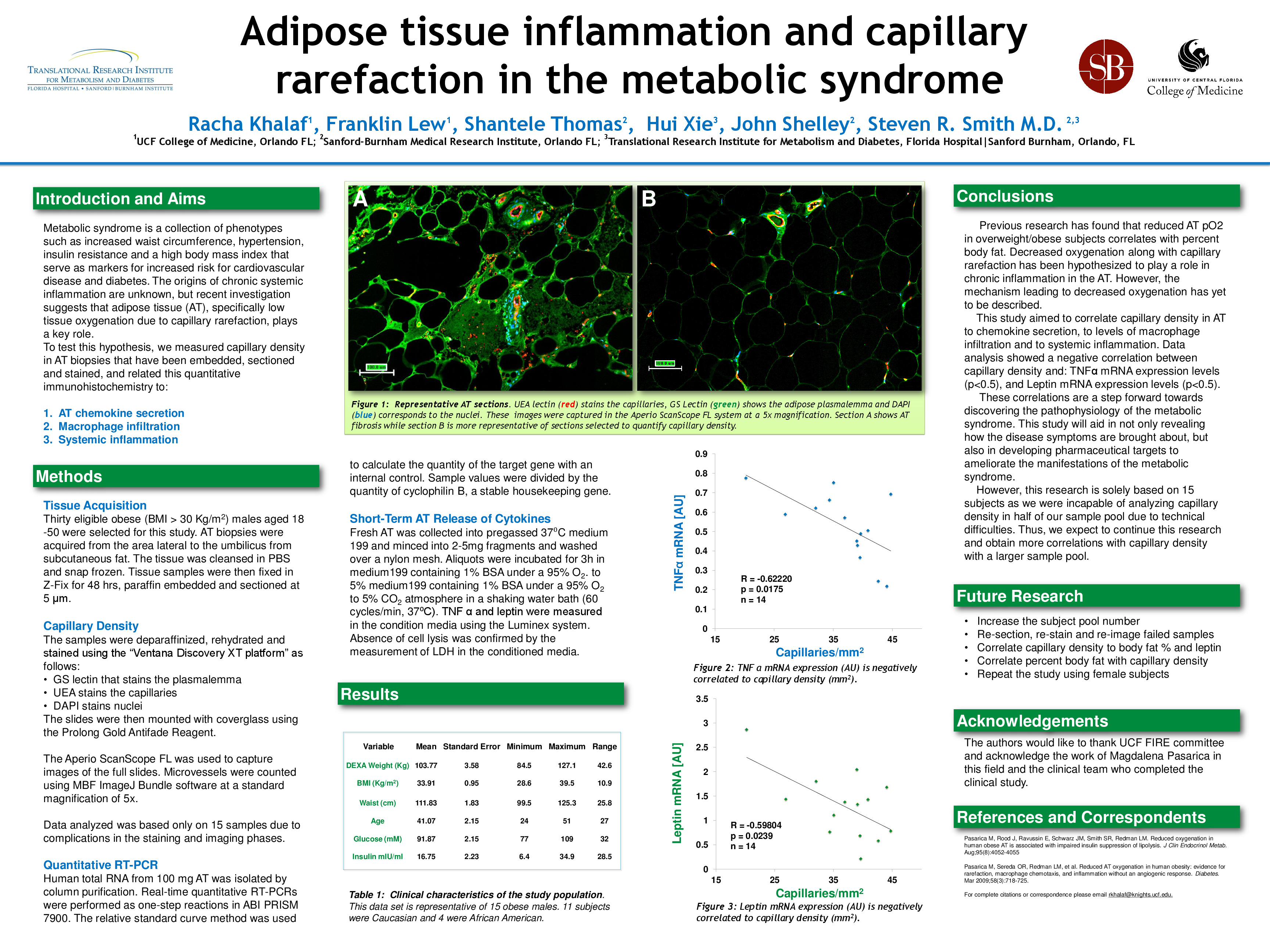
Thirty obese subjects, 18-50 year old males (BMI>30 Kg/m2) that have been pre-diagnosed with metabolic syndrome were enrolled in a clinical research study conducted in Baton Rouge, LA by Dr. Smith. A sample of subcutaneous adipose tissue was obtained from these subjects by needle biopsy and stored in liquid nitrogen. These tissues were sectioned and stained using lectin UEA (stains capillaries), lectin GS (stains plasmalemma) and DAPI (stains nuclei), in order to determine capillary density in the adipose tissue. The data showed an inverse correlation between capillary density and leptin, as well as an inverse correlation between capillary density and TNF α (p < 0.01).
Adipose tissue hypoxia has been previously correlated with inflammation and an increase in the expression of cytokines and the infiltration of macrophages.4-8 Our work shows that subjects with decreased capillary density and as a result hypoxia have a higher degree of inflammation.
Related articles