Mixed Metal Implants for Upper Extremity FracturesDoes Mixing Metals Cause an Increased Rate of Non-Union?
Abstract
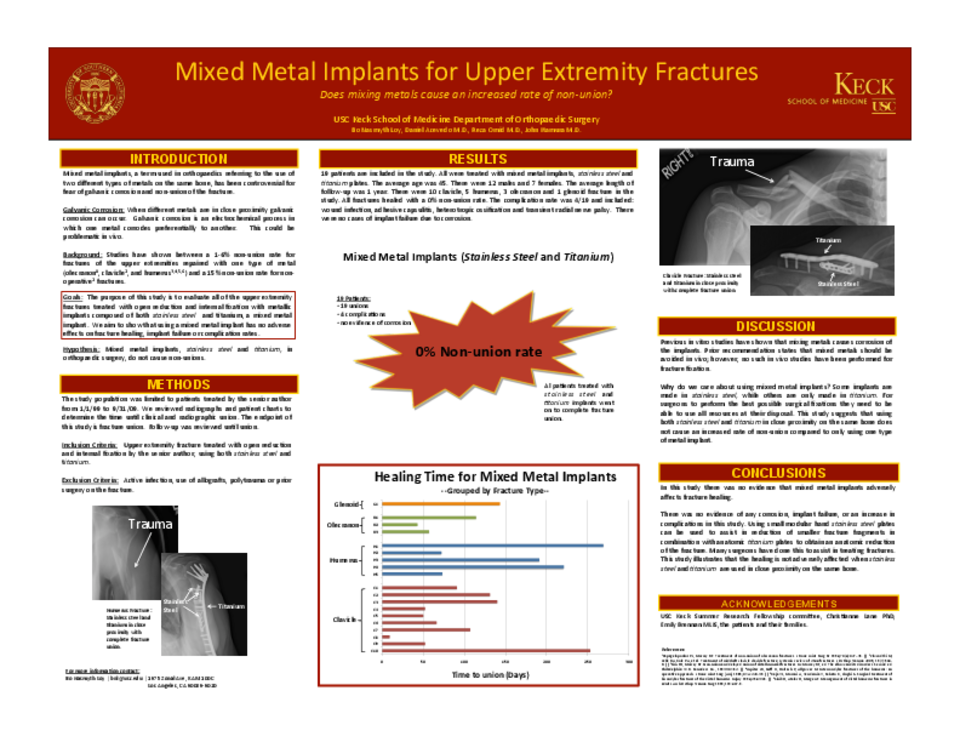
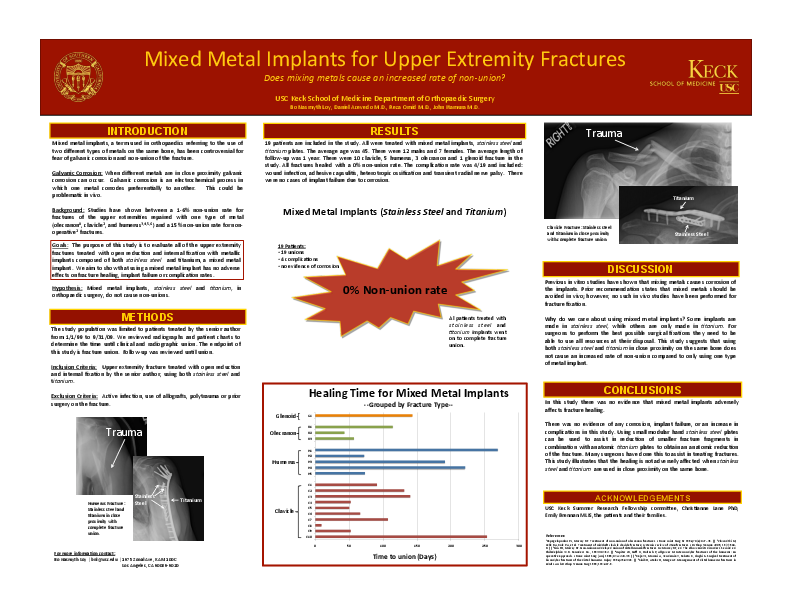
Introduction: Mixing implants with differing metallic compositions has been avoided for fear of galvanic corrosion and subsequent failure of the implants or healing of the bone. The purpose of this study is to evaluate upper extremity fractures treated with open reduction and internal fixation with metallic implants that differed in metallic composition and placed on the same bone. We studied the effects of using both stainless steel and titanium implants on fracture healing; implant failure, and any other complications associated with this method of fixation. Our hypothesis was that combining metals on the same bone, particularly stainless steel and titanium, does not cause clinically significant non-unions or undo clinical effects from galvanic corrosion.
Discussion and Conclusion: The study implies that mixing implants with differing metallic compositions on the same bone for the treatment of fractures does not adversely affect the healing of the bone.
Related articles