Abstract
TITLE
Urinary Incontinence and Oxidative Stress Markers in Women with Type 2 Diabetes
AUTHORS
Mary P. Ashby , Stephen K. Van Den Eeden , Jennifer M. Creasman , Assiamira Ferrara , David H. Thom , Alka M. Kanaya , Ashmi Doshi , Jeanette S. Brown
OBJECTIVE
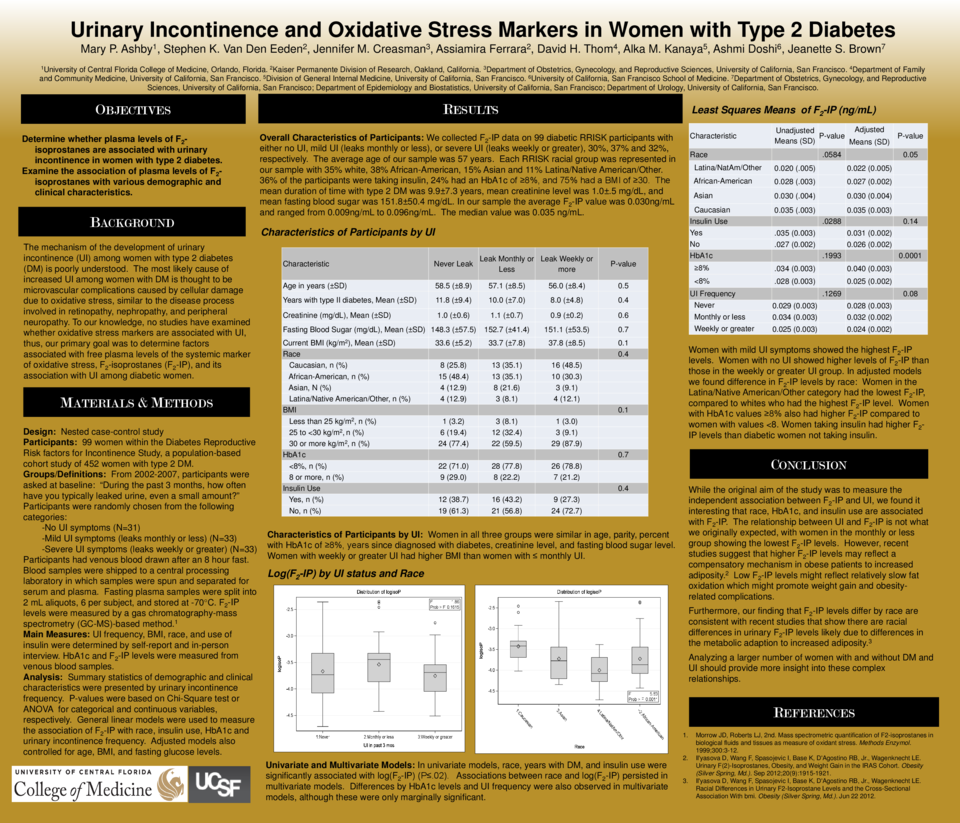
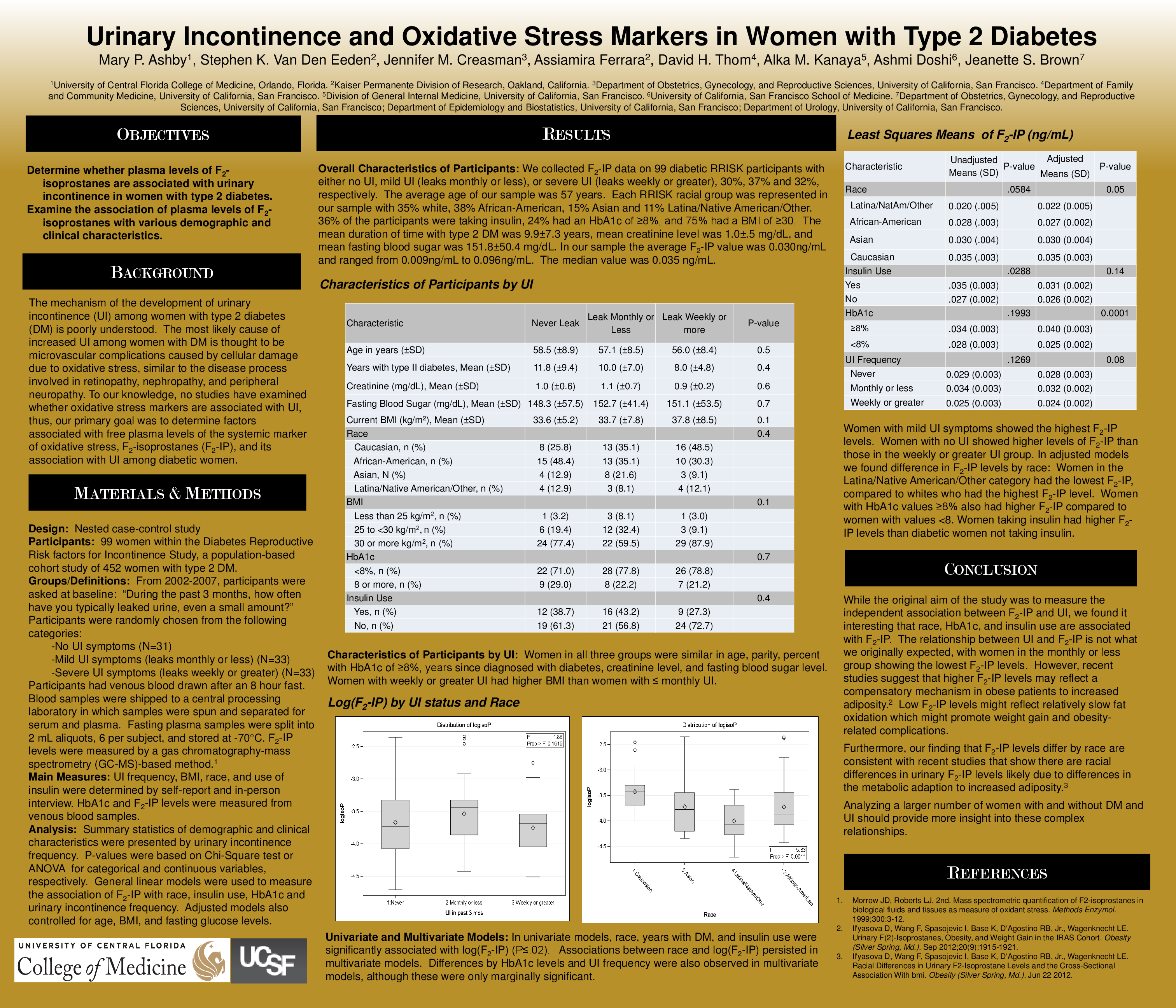
Urinary incontinence (UI) is a common but poorly understood complication of type 2 diabetes (DM). The most likely cause of increased UI among women with DM is microvascular complications. It is well-accepted that glucose-mediated oxidative stress is a unifying mechanism underlying the microvascular complications of diabetes. To our knowledge, no studies have examined whether oxidative stress is associated with UI, thus, our primary goal was to determine factors associated with elevated levels of the systemic marker of oxidative stress, F2-isoprostanes (F2-IP), and its association with UI among diabetic women.
METHODS
We conducted a nested case-control study of 99 women within the Diabetes Reproductive Risk factors for Incontinence Study, a population-based cohort study of 452 women with type 2 DM. UI frequency, BMI, and use of insulin were determined by self-report and in-person interview. HbA1c and F2-IP levels were measured from venous blood samples. Plasma free F2-IP levels were measured by a GC-MS-based method. F2-IP values were divided into tertiles. Standard t-tests and Chi-square tests were used to compare continuous and categorical variables, respectively. Separate logistic regression models were used to compare the highest and middle categories to the lowest F2-IP category.
RESULTS
Mean (± SD) age was 57±8 years, 36% of women used insulin, and 35% were white, 38% African-American, 11% Latina, and 15% Asian. Overall, 67% of women reported less than weekly UI and 32% ≥ weekly UI. Compared to women with less than weekly UI, women with ≥ weekly UI had a higher BMI (P=0.02).
The mean F2-IP concentration among participants was 0.98 (± 0.8) ng/mL. F2-IP tertile groups were similar with respect to age, BMI. Compared to non-insulin users, women using insulin were more likely to be in the highest F2-IP tertile (P = 0.02). A higher proportion of white women were in the highest F2-IP tertile compared to non-whites, 51% versus 20%, respectively (P<0.001). We did not find an association between F2-IP tertiles and UI outcomes (P>0.28).
CONCLUSIONS
F2-IP, a marker of oxidative stress, was strongly associated with insulin use and race. Although we did not find an association with F2-IP and UI, analyzing a larger number of white women with DM that use insulin should provide insight into these complex relationships. We will also evaluate nitrotyrosine, a marker of protein oxidative stress. Nitrotyrosine is not well correlated with F2-IP and will provide distinct information on a separate pathway of oxidative stress and UI.