A New Technique for the Delivery of Pediatric Resuscitation Medications
Abstract
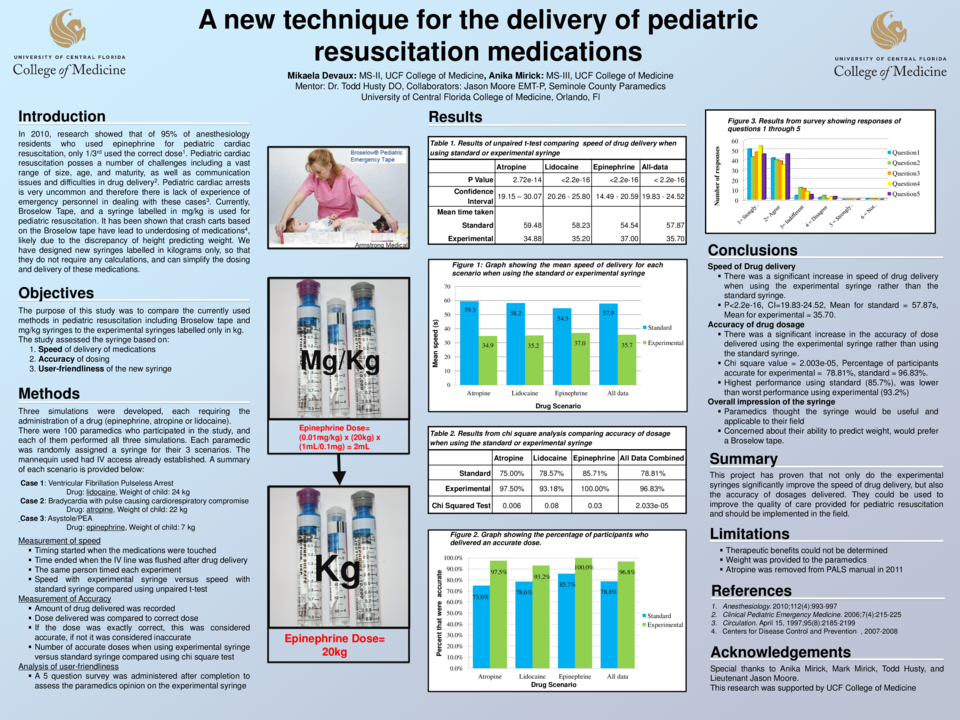
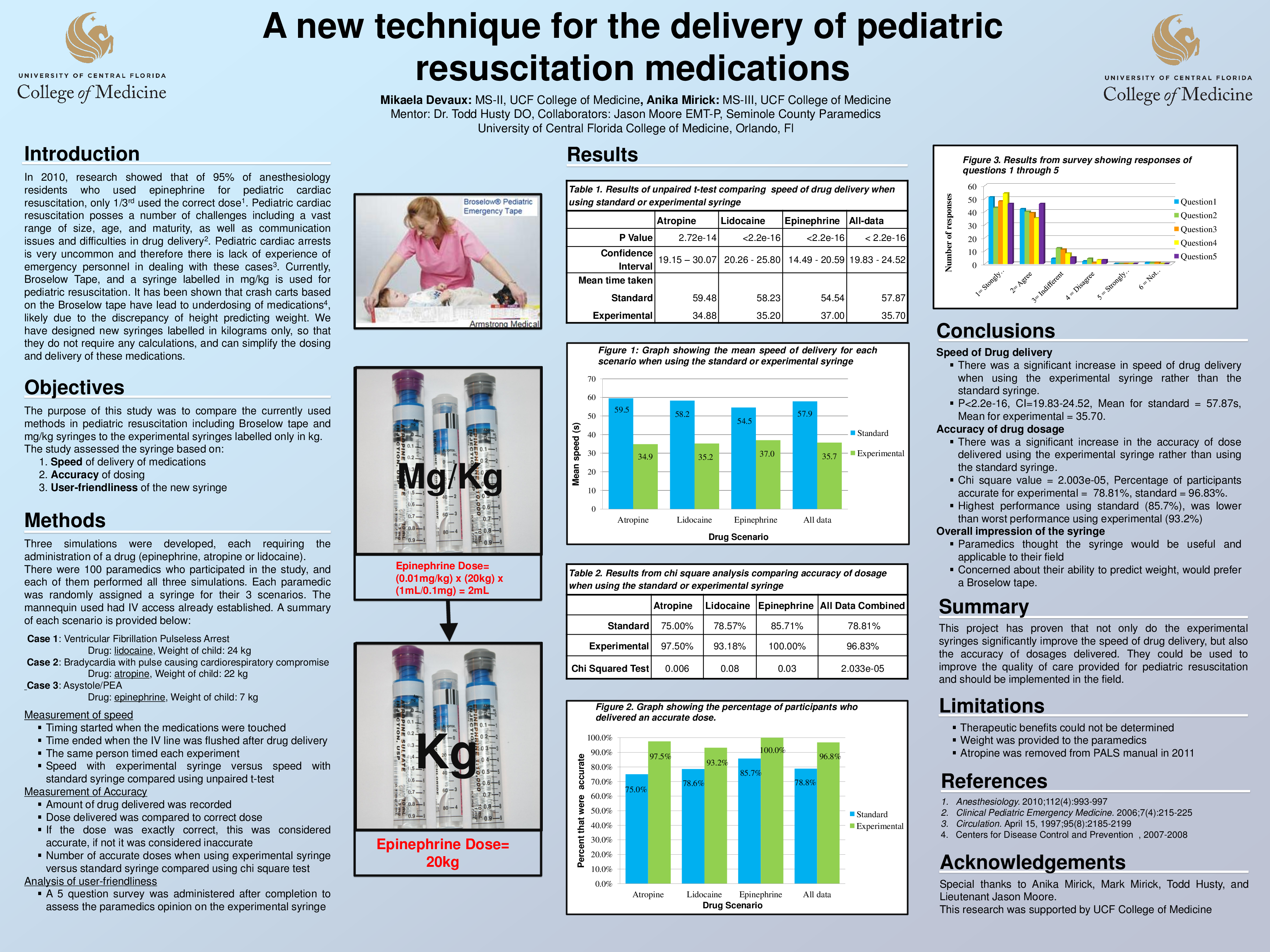
The dosage of pediatric resuscitation drugs is currently calculated using a Broselow tape to estimate weight, and then calculating the amount delivered in (mg/kg)1. The fault with this is the assumption that weight correlates with height. However, with the increasing incidence of obesity in children in the US, the system is becoming inaccurate2. It has been shown that the Broselow tape does not always effectively predict the correct dosage for children and that the complicated calculation has introduced error to the dosage1,3. The drugs used to treat children in cardiac arrest have fairly strict guidelines for delivery and many of them are lethal if given in high doses4. In addition to issues with estimation of weight, the multiple steps with using the Broselow tape and syringes is enough to delay the timely delivery of the drugs. Therefore, an experimental syringe has been designed that is labelled in weight (kg) rather than (mg/kg), in order to bypass calculation steps and to allow more acute dosage delivery. The preliminary testing of these new syringes has shown that there is a significantly shortened time for delivery of drugs when using the experimental design versus the standard syringes currently in use (p< 2.2e-16, Mean = 35.70, CI = 19.83 - 24.52). It was also found that there was a significant increase in the accuracy of amount of drug delivered using the experimental syringe compared to that using the standard syringe (p<0.05). The experimental syringes have the potential to improve both the speed and accuracy at which pediatric resuscitation drugs are delivered to patients in cardiac arrest. The next step is to determine whether these syringes are actually feasible in practice.
Related articles