Abstract
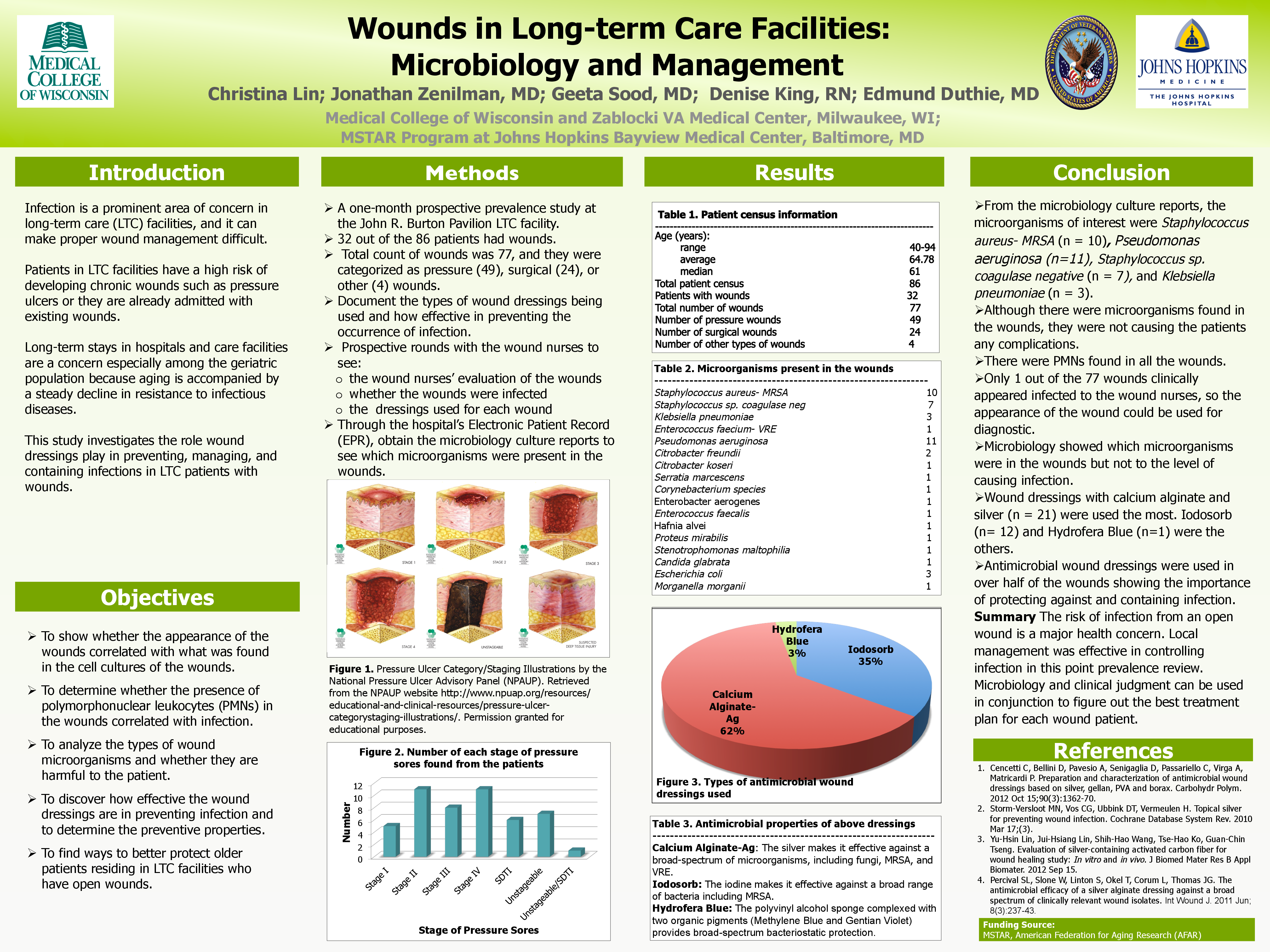
Infection is a prominent area of concern in long-term care (LTC) facilities, and it can make proper wound management difficult. Patients in LTC facilities have a high risk of developing chronic wounds such as pressure ulcers or they are already admitted with existing wounds. When managing open wounds, wound dressings play a large role in prevention and management of infectious complications. I conducted a one-month prospective prevalence study at a LTC hospital on patients with pressure or surgical wounds to observe the types of wounds dressings that were being used and how effective they were in preventing the occurrence of infection in the patients there. This study will show whether the appearance of the wounds correlates with what is found in the cell culturing of the wounds. During the one month, I went on rounds with the wound nurses while they did dressing changes to personally look at the wounds, to get the wound nurses’ evaluation of the wounds and whether they looked infected, and to see what dressings they were using on each patient. I compared those data to the microbiology cell culture reports from the hospital’s pathology lab to see what microorganisms were present in those wounds. A total of 32 patients, ages 40 to 94, were included in this study, and from the 77 wounds seen, 49 pressure ulcers, 24 were surgical wounds, and 4 others. The categories of pressure ulcers seen in this study were Stage I (n = 5), Stage II (n =11), Stage III (n = 8), Stage IV (n = 11), Suspected Deep Tissue Injury (SDTI) (n = 6), Unstageable (n = 7), and SDTI/Unstageable (n = 1). Microbiology showed which microorganisms were in the wounds but not to the level of causing infection. The microorganisms found of clinical significance to this study were Staphylococcus aureus- MRSA (n = 10), Staphylococcus sp. coagulase negative (n = 7), and Klebsiella pneumoniae (n = 3). These three microorganisms are most often seen in people with weakened immune response systems. Wound dressings with calcium alginate and silver (n = 29) were used the most, followed by Iodosorb (n= 12) and Hydrofera Blue (n=1). Antimicrobial wound dressings were used in over half of the wounds showing the importance of protecting against and containing infection. Only 1 out of the 77 wounds clinically appeared infected to the wound nurses, so the appearance of the wound could be used for diagnostic. This study showed that wound dressings play a pivotal role in preventing, managing, and containing infections from spreading to vital organs. Although there were harmful microorganisms found in the wounds, they were not causing the patients any complications.