Abstract
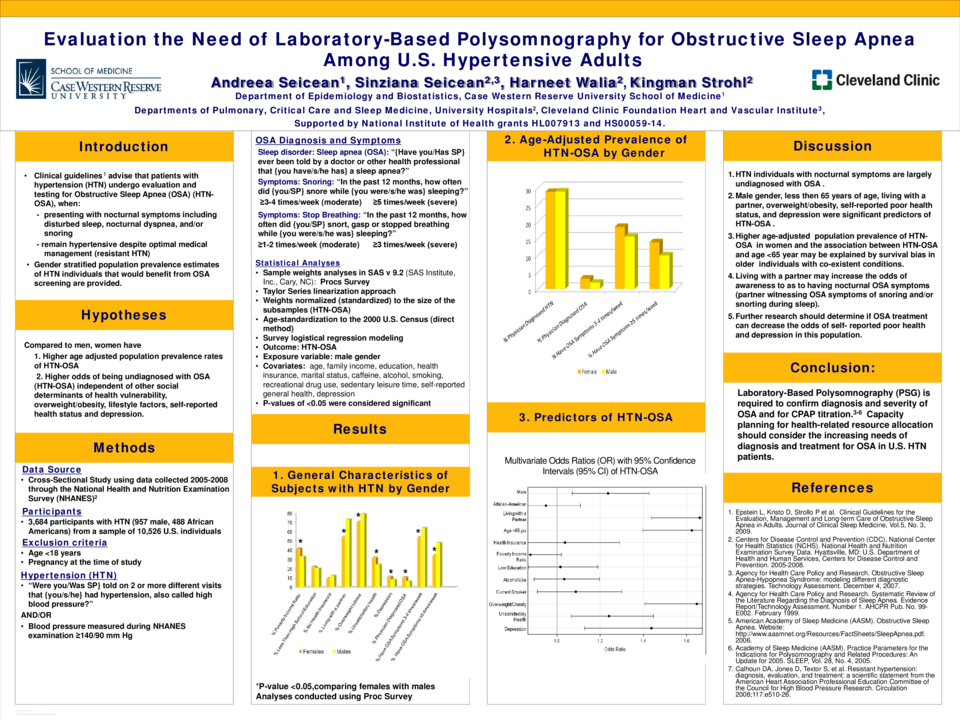
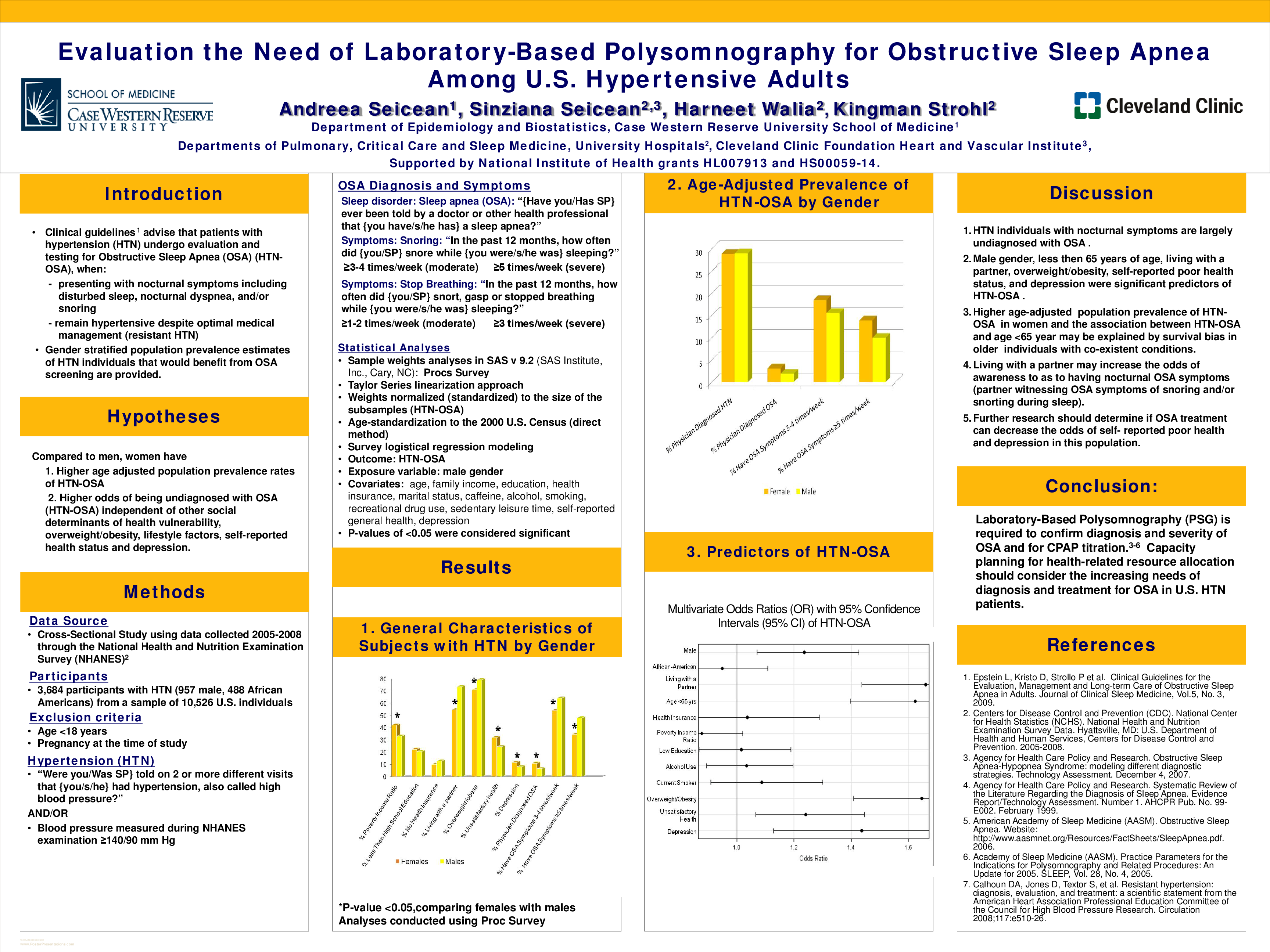
Introduction: American Academy of Sleep Medicine (AASM) expert-based guidelines recommend that patients with Hypertension (HTN) undergo evaluation and testing for Obstructive Sleep Apnea (OSA) (HTN-OSA) when presenting with nocturnal symptoms (disturbed sleep, nocturnal dyspnea, or snoring), or if they remain hypertensive despite optimal medical management (resistant HTN).
Study hypotheses are: 1. Age adjusted population prevalence rates of HTN-OSA are significantly higher in men compared to women. 2. African-Americans(AA) with HTN (HTN-OSA) have higher odds of currently undiagnosed OSA, independent of other social determinants of health vulnerability, overweight/obesity, lifestyle factors, self-reported health status, and depression.
Methods: Cross-sectional analysis of a stratified multistage probability adult sample (N=10,526) enrolled in the National Health and Nutrition Examination Survey (NHANES) between 2005 -2008 was obtained. Age-adjusted US population prevalence rates of HTN-OSA and adjusted odd ratios of undiagnosed OSA in the HTN-OSA population were calculated using weighted analysis.
Results: Age-adjusted US population prevalence rates of HTN-OSA is high in the general US population: 20.7% of U.S. men and 18.2% of U.S. women (p=0.01). Logistic regression models unadjusted and adjusted for socio-economic characteristics, health insurance, behavioral risk factors, health status and depression, found the odds of undiagnosed OSA in HTN qualifying for OSA screening as modest, but significantly higher in AA [OR=1.2, 95%CI (1.1-1.4)], individuals with depression [OR=1.4, 95%CI (1.1-1.9)], overweight/obese [OR=2.2, 95%CI (1.9-2.5)], lower education (OR=1.2, 95%CI (1.0-1.3) and self-reporting poor health status [OR=2.3, 95%CI (2.0-2.6)].
Conclusion: The high age-adjusted population prevalence of individuals with HTN qualifying for OSA screening suggest the need of further capacity planning for health-related resource allocation related to the diagnosis and treatment of OSA in the U.S. Modest, but significantly higher risk of untreated OSA may exist in HTN AA qualifying for OSA screening, independent of other risk factors for health disparities.