N-acetylcysteine Enhances Cystic Fibrosis Sputum Penetration and Airway Gene Transfer by Highly Compacted DNA Nanoparticles
Abstract
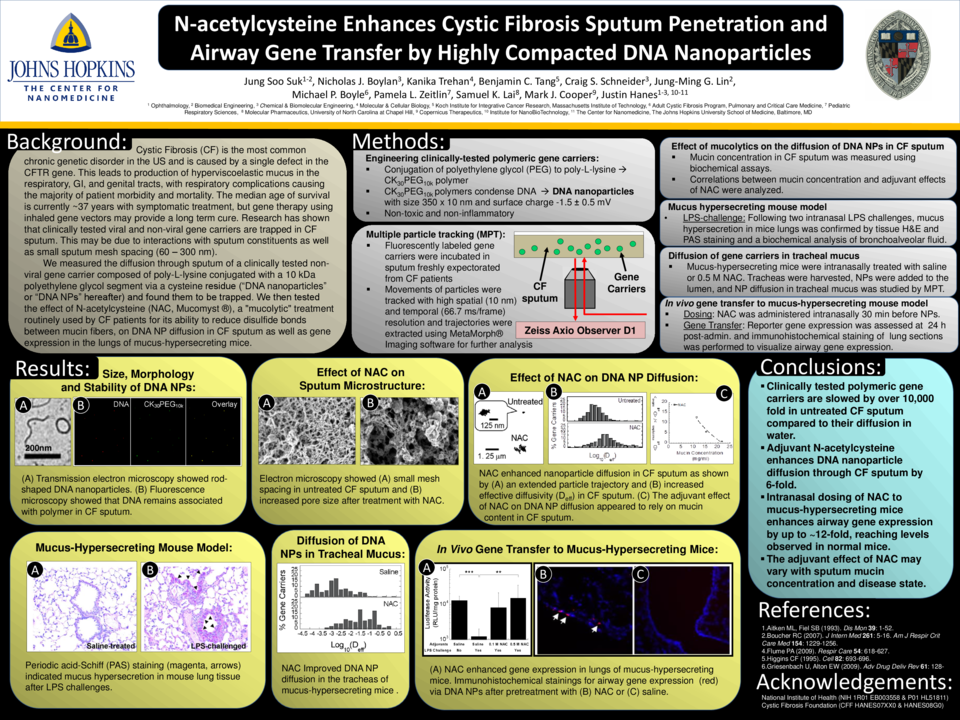
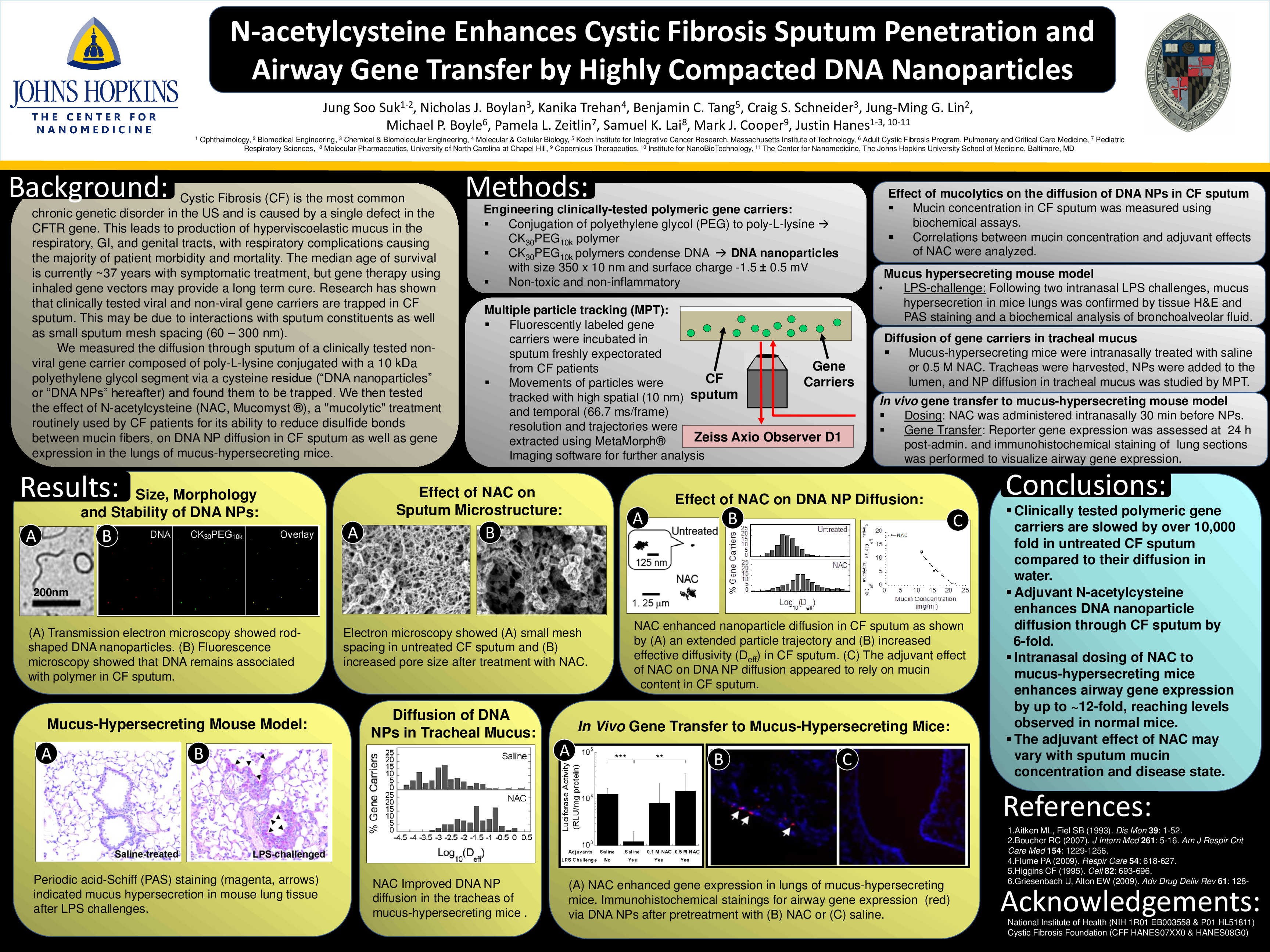
Cystic Fibrosis (CF) is the most common chronic genetic disorder in the US and is caused by a single defect in the CFTR gene. This leads to production of hyperviscoelastic mucus in the respiratory, GI, and genital tracts, with respiratory complications causing the majority of patient morbidity and mortality. The median age of survival is currently ~37 years with symptomatic treatment, but gene therapy using inhaled gene vectors may provide a long term cure. Research has shown that clinically tested viral and non-viral gene carriers are trapped in CF sputum. This may be due to interactions with sputum constituents as well as small sputum mesh spacing (60 – 300 nm).
We measured the diffusion through sputum of a clinically tested non-viral gene carrier composed of poly-L-lysine conjugated with a 10 kDa polyethylene glycol segment via a cysteine residue (“DNA nanoparticles” or “DNA NPs” hereafter) and found them to be trapped. We then tested the effect of N-acetylcysteine (NAC, Mucomyst ®), a "mucolytic" treatment routinely used by CF patients for its ability to reduce disulfide bonds between mucin fibers, on DNA NP diffusion in CF sputum as well as gene expression in the lungs of mucus-hypersecreting mice.
Related articles