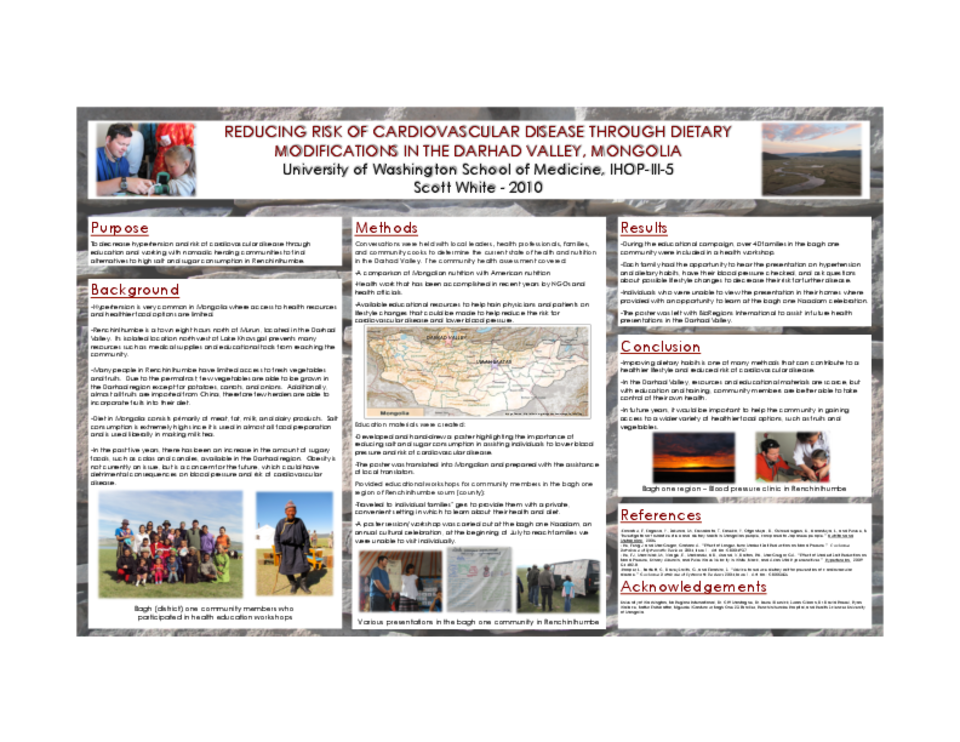
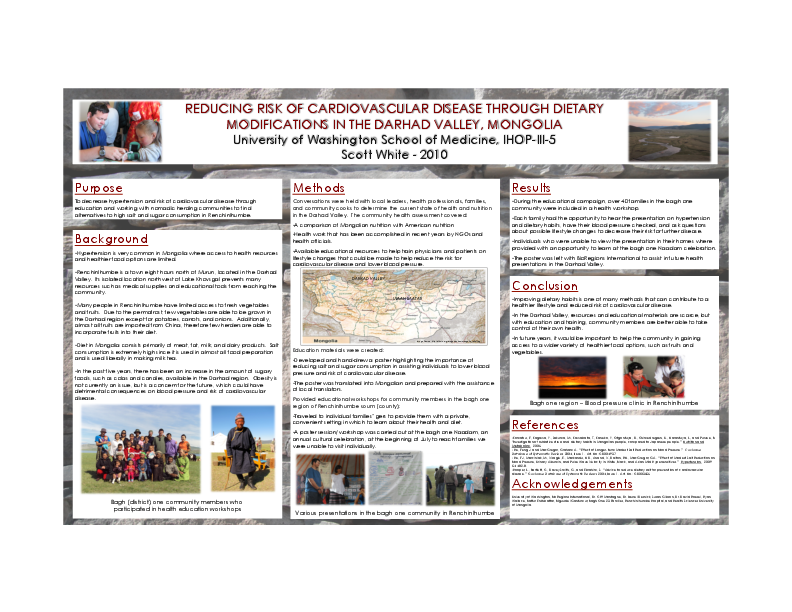
Reducing Risk Of Cardiovascular Disease Through Dietary Modifications In The Darhad Valley, Mongolia
Abstract
Purpose of Study: Hypertension is common throughout the nomadic herding communities in Mongolia. However, access to blood pressure screening and treatment in rural Mongolia is extremely limited, and community members lack information about the disease. To help address this, a blood pressure screening and educational workshop was held in Renchinlhumbe, Mongolia in hopes of increasing awareness about the relationship between dietary habits and hypertension.
Methods Used: Over four weeks, a health assessment of the nomadic herding communities of the Darhad valley was performed in cooperation with physicians from Renchilhumbe Hospital and BioRegions International. Hypertension and a diet high in salt and animal products with minimal intake of fruits and vegetables were found to be widespread problems. Based on information obtained from the medical literature, an educational poster was created describing the benefits of reducing salt and sugar consumption on cardiovascular health. The poster was utilized during several free workshops, performed inside families’ gers and at annual community cultural events in the bagh (district) one region of Renchinlhumbe.
Summary of Results: More than 100 health screenings were conducted throughout the Darhad Valley. Over half of the 80 families living in the bagh one community participated in educational workshops. Additional herders in the bagh one region attended the poster session at the local Naadam celebration.
Conclusions: Household level teaching allowed for entire families to hear about possible dietary changes and helped address the difficulties with transportation and remoteness that are endemic to this region, and offer a model for future educational campaigns. Additional work is needed to increase the accessibility of healthier food items and to break the community’s reliance on meat, salt, and fat for sustenance. Health professionals in the area also need support in helping their patients develop lifestyle plans to reduce cardiovascular disease risk.
Related articles